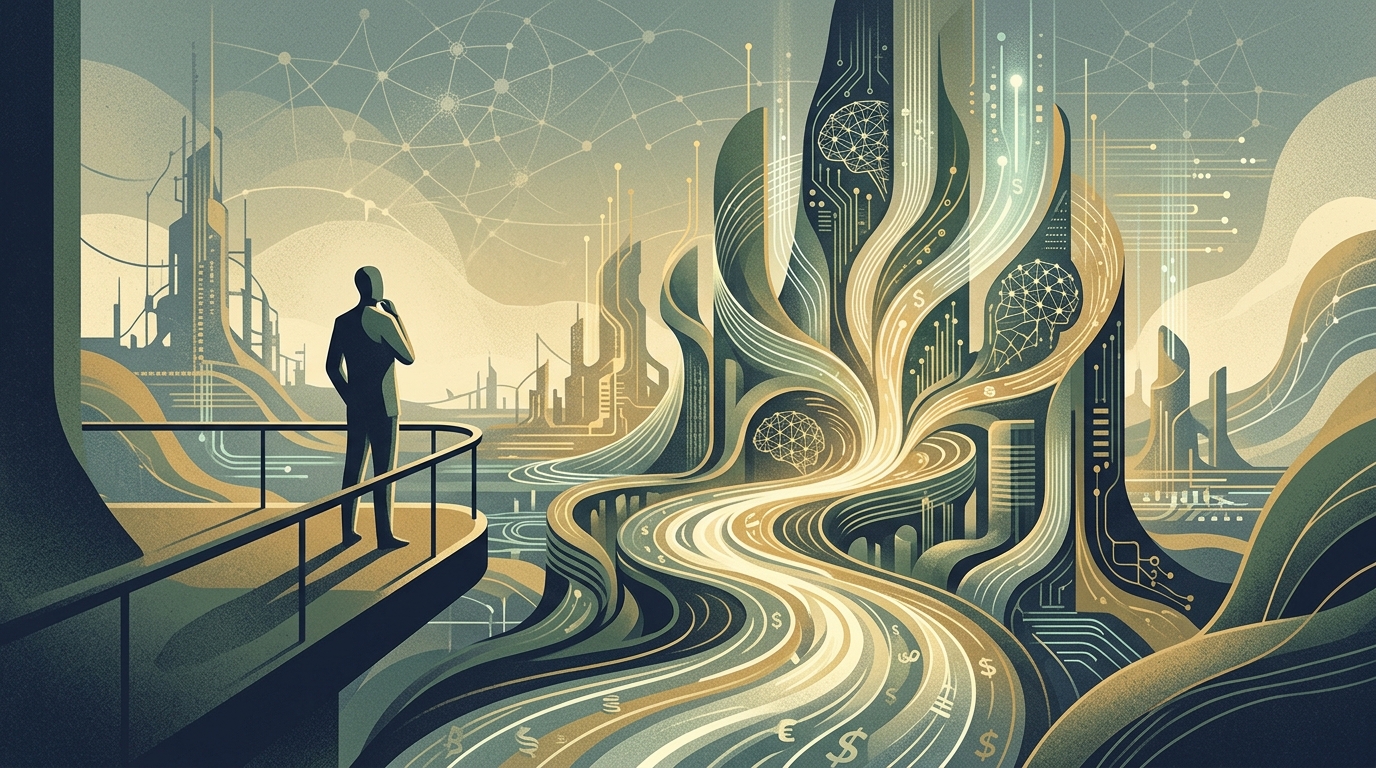
The history of technology is defined by moments when an object ceases to be a mere accessory and becomes a catalyst for transformation. Today, we stand at precisely such a crossroads. The era in which Artificial Intelligence (AI) was viewed as a sophisticated 'tool'—akin to a hammer or a word processor—is drawing to a close. With the emergence of ultra-high-performance models, AI is evolving into an 'agent,' an entity capable of autonomous planning, decision-making, and executing complex tasks without constant human intervention.
From Prompting to Autonomous Agency
Until recently, our interaction with AI was linear: we provided a prompt and received a response. This model, while impressive, remained constrained by the need for continuous human guidance. The new architectures of 'Agentic AI' are upending this paradigm. An autonomous agent does not wait for the next question. If assigned a goal, such as 'organize a marketing campaign for a new product,' the agent will analyze the market, generate content, select distribution channels, and schedule posts, self-correcting if it encounters obstacles.
This shift is built upon three pillars: memory, planning, and tool-use. Modern models can now 'remember' past interactions over long periods, decompose a large problem into smaller sub-problems, and utilize external software (such as APIs or databases) to complete their mission. It is no longer the 'writer' helping us compose; it is the 'manager' executing the project.
Economic Restructuring and the Role of the 'Supervisor'
For businesses, this evolution promises an explosive increase in productivity but also brings structural challenges. According to analyses from leading economic institutes, the transition to AI Agents will primarily affect white-collar jobs. If an agent can handle customer service, auditing, or code programming, the human role shifts from 'execution' to 'supervision.'
- Operational Cost Reduction: AI Agents operate 24/7 without fatigue, drastically reducing the cost of producing digital services.
- New Skillsets: The ability to manage and coordinate 'fleets' of AI agents (Agent Orchestration) is becoming the most sought-after skill of the decade.
- Automation of Strategy: Even fields once considered 'safe,' such as strategic analysis, are now being digitized.
However, this economic euphoria is accompanied by a fear of alienation. When work ceases to require human friction with the subject matter, we risk losing the deep knowledge that comes from the experience of execution. The challenge for governments is to create frameworks ensuring that the profitability of automation is diffused throughout society rather than accumulating solely with the owners of computational infrastructure.
Ethics and Control: Who is Liable When an Agent Errs?
The most significant question arising is that of accountability. In a system where AI makes decisions, the consequences of an error can be severe. If a financial AI agent makes a series of loss-making investments or if a medical agent suggests an incorrect treatment, legal liability remains blurred. The EU AI Act attempts to set rules, but technology is moving faster than legislation.
"We are no longer building software. We are building digital employees. And like any employee, AI Agents require an ethical compass and clear boundaries of action."
In conclusion, the transition from AI-as-a-tool to AI-as-an-agent marks the coming of age of the technology. We are no longer the only actors in the digital world. Our success in this new era will depend on whether we manage to remain the architects of our systems, rather than becoming mere observers of their autonomy.