The promise of the solid-state battery (SSB) has long been the "Holy Grail" of the automotive and technology industries. It promises greater range, faster charging, and, most importantly, absolute safety compared to traditional lithium-ion batteries. However, the recent revelation by Ryan Inis Hughes, known to the public through his YouTube channel Ziroth, has effectively dismantled the house of cards built by Donut Lab—a company that claimed to have already cracked the code for mass-producing these cells.
The investigation by Hughes, initially published via video and subsequently analyzed by The Verge, leaves no room for misinterpretation. According to the findings, Donut Lab did not present a revolutionary technology but instead engaged in a "deliberate and calculated deception," passing off modified liquid electrolyte batteries as true solid-state cells. This case echoes the infamous Theranos scandal, raising serious questions about how investors and regulators failed to spot the glaring holes in the company's promises.
The Anatomy of a Technological Hoax
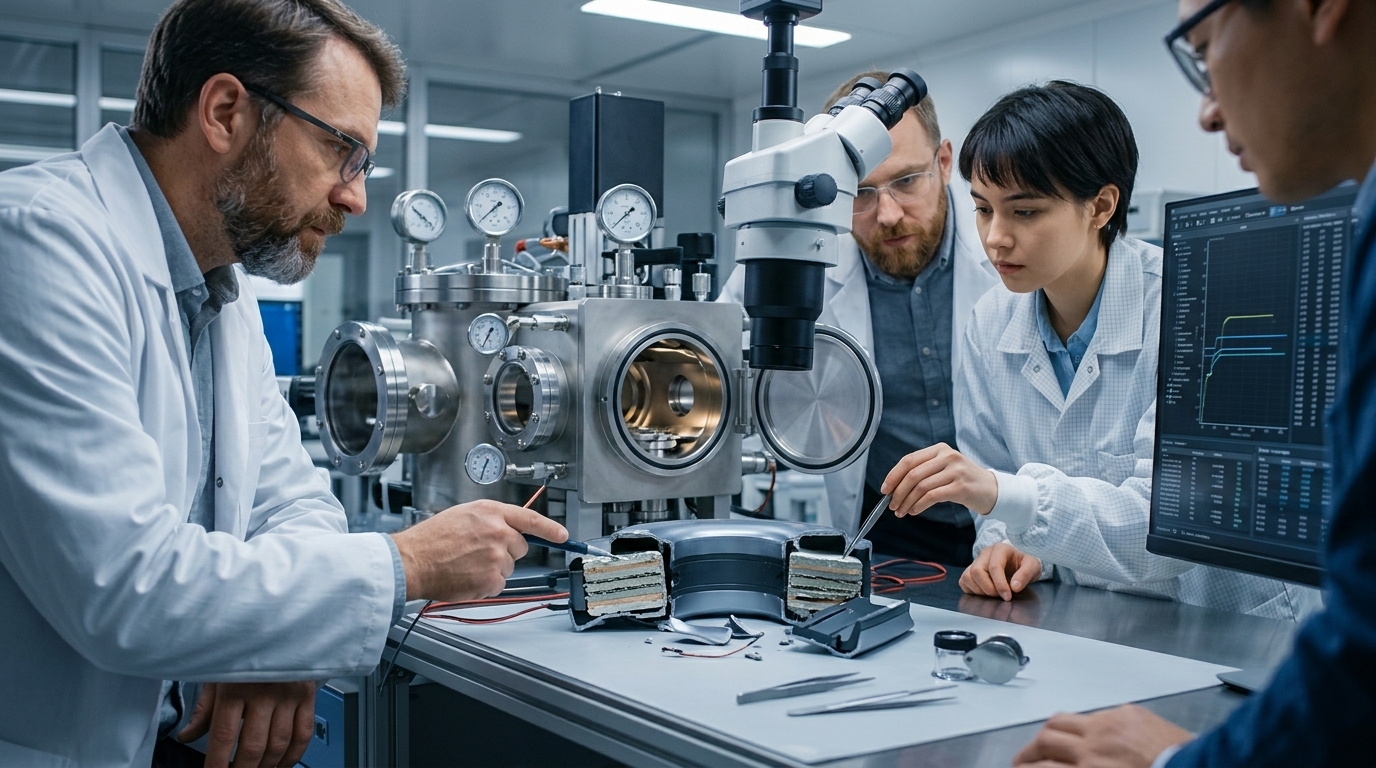
Hughes, aided by independent chemists and engineers, performed an "autopsy" on samples Donut Lab had sent to select partners. The results were shocking. Instead of a solid electrolyte that would prevent dendrite formation and allow for the use of lithium-metal anodes, researchers found a common polymer electrolyte with high solvent content, essentially functioning as a gel. This type of "semi-solid" technology has existed for years, but it falls far short of the specifications Donut Lab was advertising.
The most damning evidence, however, concerned the falsification of performance data. Donut Lab claimed its batteries retained 95% of their capacity after 1,000 charge cycles at room temperature. Ziroth proved these tests were conducted under controlled conditions of extreme high pressure and elevated temperatures—conditions that are not feasible in a commercial electric vehicle. Furthermore, the company allegedly used software that "smoothed out" energy loss curves in charts presented to investors.
Market Impact and the Perils of Greenwashing
This revelation does more than just ruin Donut Lab's reputation; it casts a long shadow over the entire green energy sector. At a time when the climate crisis demands a rapid transition to electromobility, such scandals fuel skepticism and distrust. Investors, chasing the next big revolution, often overlook basic scientific verification, satisfied with flashy videos and promises of billions in future revenue.
- Stock prices of partner companies are expected to plummet as the news spreads.
- Regulators in the US and EU are launching investigations into investor fraud.
- The credibility of independent testing laboratories is being called into question.
"This isn't just an engineering failure; it's a moral bankruptcy that jeopardizes public trust in science itself," Hughes stated in the conclusion of his report.
The Future of Battery Technology Post-Scandal
Despite the scandal, research into genuine solid-state batteries continues by reputable players such as Toyota, QuantumScape, and Solid Power. The lesson from the Donut Lab case is that hardware innovation does not follow the same rules as software. You cannot "move fast and break things" when dealing with chemistry and physics. Safety and stability require decades of rigorous testing, not just clever marketing campaigns.
In the future, transparency must be the prerequisite for any claim. The community of open-source researchers and technical analysts, exemplified by Ziroth, is proving to be more effective at policing corporations than traditional oversight mechanisms. Donut Lab will likely go down in history as a stark reminder that on the road to a sustainable future, shortcuts often lead to a dead end.