Human history is a continuous sequence of technological displacements. From the steam engine to electricity, every major revolution has redefined what it means to "work." However, the advent of Artificial Intelligence (AI) appears qualitatively different. It does not just replace muscles; it replaces the mind. In this context, the recent intervention by Bill Gates, who argued that only three professional sectors will remain truly essential and "safe" in the future, has sent shockwaves through labor markets and academic circles alike.
The Three Pillars of Gates: Energy, Biology, and AI
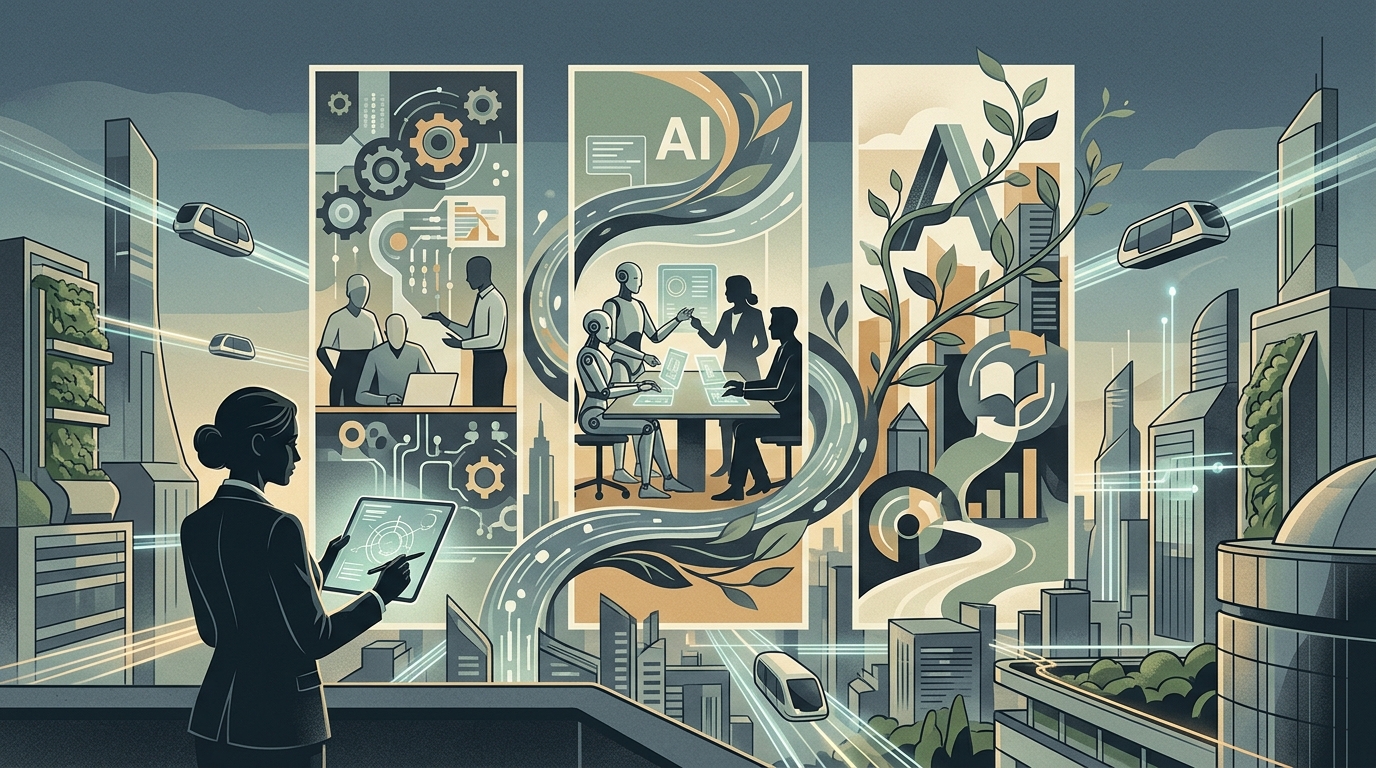
According to Gates, the sectors that will dominate and require continuous human intervention are Energy, Biosciences, and the development of Artificial Intelligence itself. The logic behind this selection is deeply systemic. Energy is the backbone of our civilization, and the transition to clean sources is a challenge requiring complex geopolitical and engineering thought. Biology concerns the very survival and quality of life of our species, a field where ethical and biological complexities transcend algorithms. Finally, AI itself needs its architects to evolve safely and in alignment with human values.
However, this statement raises a critical question: What happens to the other billions of workers? If Gates' prediction holds true, we are facing a radical restructuring of the social pyramid. Traditional white-collar jobs, such as legal support, accounting, and even entry-level programming, are already in the crosshairs of automation. AI does not get tired, does not strike, and most importantly, it learns at exponential rates.
AI's Reaction and Moravec's Paradox
It is fascinating to observe how AI itself "reacts" to these predictions. Large Language Models, when asked about the future of work, tend to agree with Gates but add a significant footnote: Moravec's Paradox. This paradox suggests that while high-level reasoning requires very little computational effort, low-level sensorimotor skills (like moving through a room or fine manual labor) require enormous resources. Simply put, it is easier to replace a stock analyst than a plumber or a nurse providing physical care.
This observation complicates Gates' vision. While the sectors he mentions are indeed of strategic importance, the daily functioning of society relies on a multitude of professions that require empathy, physical presence, and adaptability in unstructured environments. AI can write a sonnet or diagnose a cancer, but it still struggles to make a bed or comfort a child in the way a human does.
Social and Political Implications
The prospect of a world where work is the privilege of a few specialized scientists is daunting. If productivity skyrockets due to AI, but wealth is concentrated in those who own the technology, social cohesion will be tested. Gates has previously proposed taxing robots, an idea gaining ground as governments look for ways to fund a potential Universal Basic Income (UBI).
- Educational Reform: Educational systems must stop training students to be "human calculators" and focus on critical thinking and creativity.
- AI Ethics: The development of technology cannot be left solely to market forces.
- Psychological Adaptation: Human identity is inextricably linked to one's work. What happens when this connection is severed?
In conclusion, Bill Gates' prediction serves more as a warning than a fatalistic observation. He calls on us to invest in the skills that make us unique and to prepare for an economy where value will be produced not just by the time we spend, but by the innovation and humanity we offer. The future is not something that happens to us, but something we design — provided we have the right tools and the right foresight.