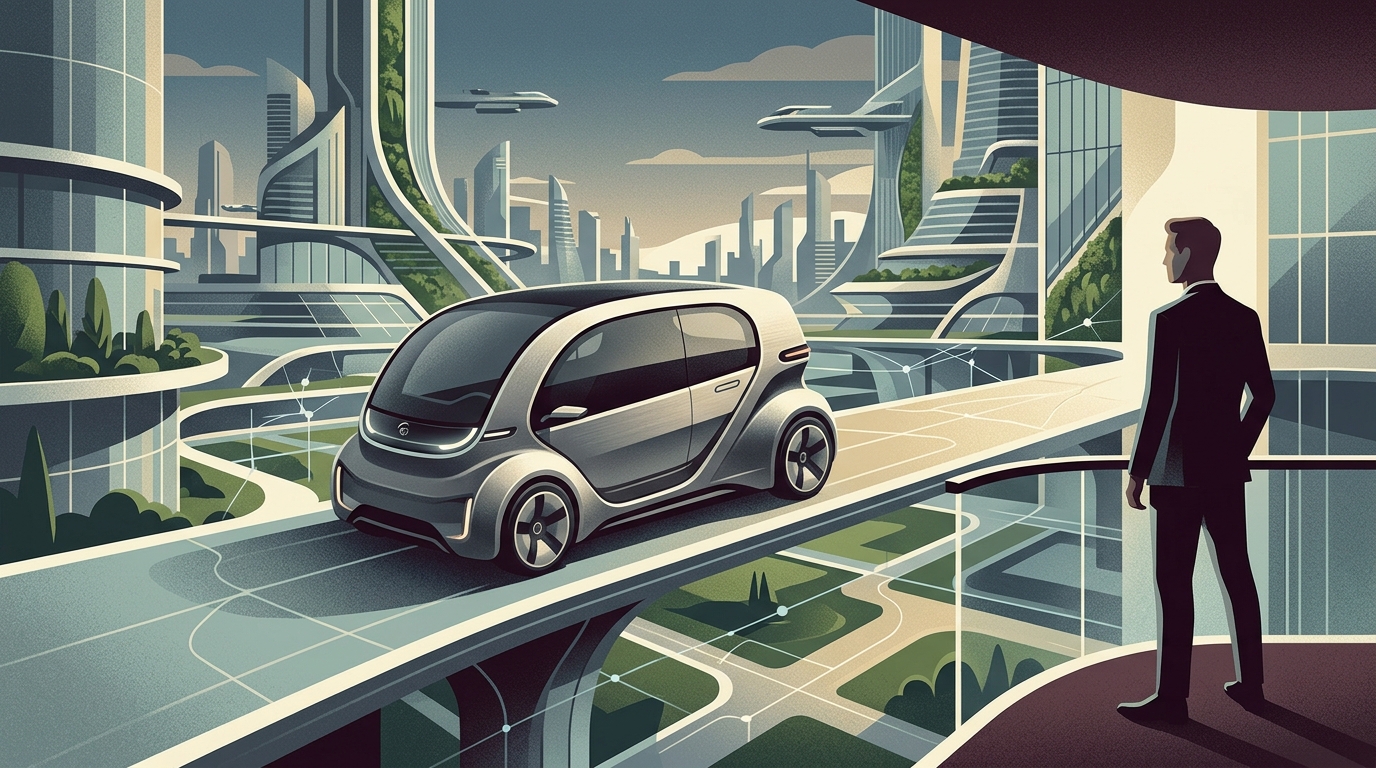
When we think of Apple’s design language, images of sleek lines, minimalist surfaces, and a near-religious devotion to functionality immediately come to mind. Now, that same philosophy is migrating from the screens of iPhones to the wheels of a vehicle many considered a mere after-thought: the golf cart. Julian Hoenig, a veteran of Jony Ive’s legendary design team at Cupertino, is the man behind Amble, a startup promising to revolutionize Neighborhood Electric Vehicles (NEVs).
The Cupertino Pedigree Hits the Turf
Hoenig is no ordinary designer. With a background at Audi and Lamborghini before joining Apple, he blends automotive precision with technological elegance. Amble isn't just an "upgraded" golf cart; it is a radical reimagining of short-range mobility. At Apple, Hoenig learned that design isn’t just about how something looks, but how it works in the user’s daily life. This approach is evident in Amble’s first prototype, which discards the traditional, boxy shape of legacy brands like Club Car and EZ-GO in favor of an organic, open structure that feels more like a mobile lounge than a utility tool.
The material choice is also groundbreaking for the category. Instead of the cheap plastics that dominate the market, Amble utilizes recycled aluminum and sustainable textiles, offering a sense of luxury that appeals to an audience valuing quality as much as ecological consciousness. As Hoenig himself notes, “We wanted to create something people would be proud to have in their driveway, not something they just use because they have to.”
Beyond the Fairway: The NEV Market Opportunity
While the name suggests golf, Amble’s strategic roadmap extends far beyond the fairways. The Neighborhood Electric Vehicle market is seeing explosive growth, particularly in gated communities, coastal resorts, and urban campuses. With increasing urbanization and the need for sustainable "last-mile" solutions, Amble positions itself as the premium choice for those who want to ditch the car for short trips but find electric scooters or bikes impractical.
- AI integration for navigation and obstacle detection.
- A range exceeding 50 miles (80 km) on a single charge.
- Modular design for easy adaptation (passenger transport vs. light cargo).
- Connectivity with smart home ecosystems for seamless integration.
In many parts of the world, including the Mediterranean, such a solution could be transformative. Imagine historic coastal towns free from the noise of gas-powered scooters, replaced by silent, elegant electric pods gliding through the streets. Amble isn't just selling transportation; it’s selling a lifestyle that respects the environment without sacrificing aesthetic appeal.
The Challenge of Production and Competition
However, the path from the design studio to the assembly line is fraught with obstacles. Apple’s history is full of successful products, but the automotive industry—even at the micro-vehicle scale—operates by different rules. Supply chain management, safety certifications, and the establishment of a service network are hurdles Amble must clear. Furthermore, competition from traditional players who are beginning to electrify their fleets is intensifying.
“Design is the soul of a creation, but execution is its body. Without the latter, the former remains just a beautiful idea,” says Hoenig, acknowledging the difficulties ahead.
Amble aims for a price point that places the vehicle in the premium segment, potentially competing with small electric city cars. The bet here is that consumers will pay a premium for the user experience and the brand prestige associated with an Apple-pedigree designer. It is a move reminiscent of Tesla’s early days, where the Model S wasn’t just an electric car, but a status symbol of technological superiority.
Conclusion: The Future of Micro-Mobility
Amble represents a broader trend in technology: the "Applefication" of everyday objects. When technology becomes invisible and user experience takes center stage, the result is products that change how we interact with the physical world. Whether it’s a ride across a golf course or a trip to the local grocery store, Julian Hoenig invites us to wonder why utility has to be boring. Amble might just be the answer to a question we didn’t know we were asking, setting new standards for the aesthetics of the cities of tomorrow.