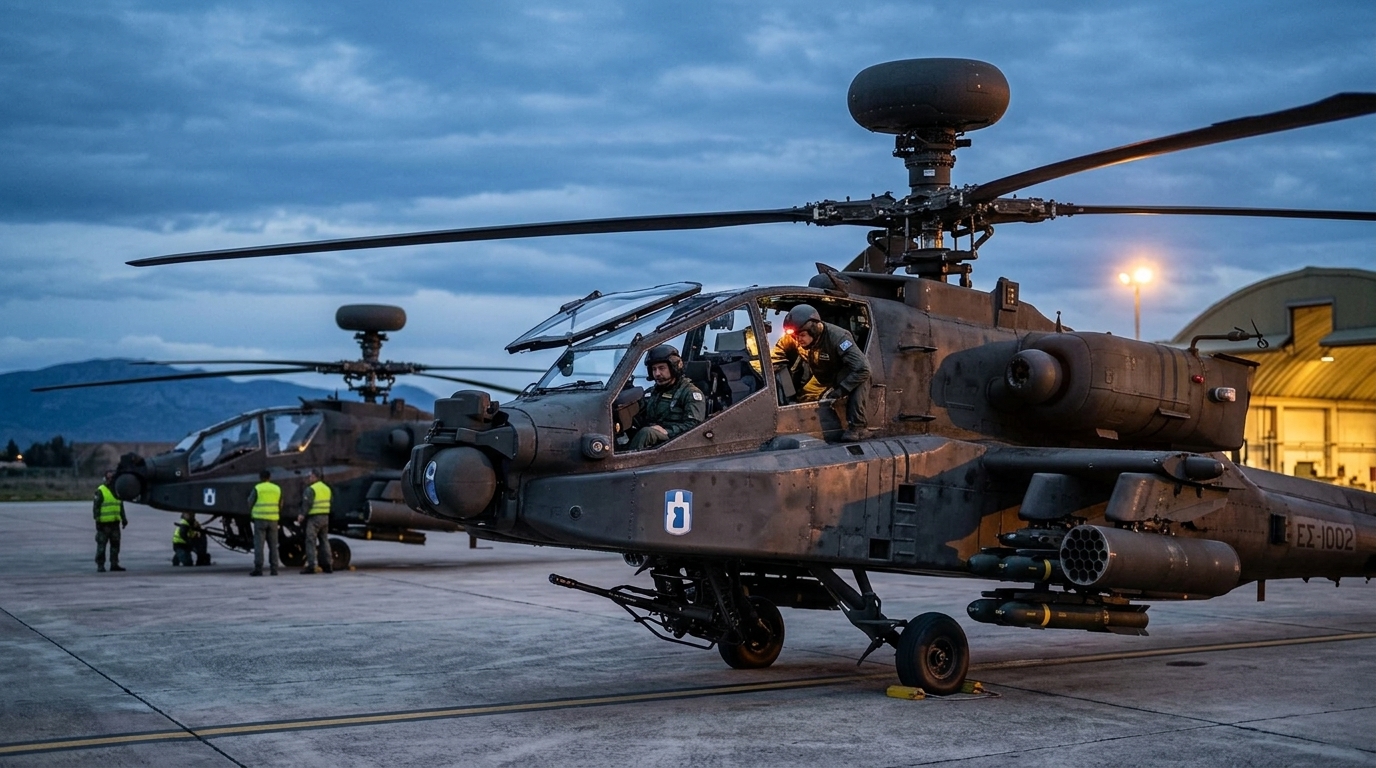
Dominance on the modern battlefield is no longer just about firepower; it is about a system's ability to "see" where others are blind. Lockheed Martin's recent announcement of securing a $502.4 million contract to support and upgrade the sensors of AH-64 Apache helicopters marks a new era for the world's most recognizable attack helicopter. The contract concerns the M-TADS/PNVS (Modernized Target Acquisition Designation Sight/Pilot Night Vision Sensor) system, which constitutes the "eyes" of the Apache, allowing operators to engage with absolute precision in total darkness and adverse weather conditions.
The Technological Superiority of Arrowhead Sensors
The M-TADS/PNVS system, also known as "Arrowhead," is not merely a night vision camera. It is a highly sophisticated system of electro-optical sensors providing pilots with long-range targeting and low-altitude navigation capabilities. This upgrade allows for faster image processing, higher resolution, and, most importantly, the ability to interface with other friendly assets in the digital battlefield. Essentially, the Apache is transformed into a flying information hub, capable of directing artillery fire or collaborating with unmanned aerial vehicles (MUM-T - Manned-Unmanned Teaming).
The significance of this contract for the US Army is clear, as it maintains the operational readiness of the fleet for decades to come. However, this news has direct implications for international users of the helicopter as well, as the production and support line remains active and evolving, ensuring that spare parts and upgrades will be available for allied nations.
The Greek Reality: From Stefanovikeio to the Aegean
Greece was one of the first countries to believe in the Apache's potential, integrating the AH-64A+ into its arsenal in the early 1990s. Today, the Hellenic Army Aviation operates two types: the older AH-64A+ and the more modern AH-64D Longbow. The status of the Greek fleet has intensely concerned military leadership in recent years, especially following the catastrophic floods at the Stefanovikeio base, which raised questions about the operational availability of these assets.
Athens finds itself at a critical crossroads. While the AH-64Ds remain potent, the AH-64A+ models are now considered technologically obsolete, despite the valiant efforts of technicians to maintain them. The need to upgrade the fleet to the AH-64E Guardian standard is imperative if Greece wishes to maintain a qualitative edge over Turkey, which is developing its own indigenous T129 ATAK attack helicopter and investing heavily in armed drones.
"The Apache is not just a weapon; it is a power multiplier that imposes its presence on the field before the sound of its rotors is even heard," military sources state.
Geopolitical Balance and Deterrence
In the environment of the Aegean and Evros, the Apache plays the role of the "predator." Its ability to hide behind terrain or islands and strike targets at long distances with Hellfire missiles makes it the ultimate deterrent. The new sensor upgrade promoted by Lockheed Martin could serve as the basis for a future Greek modernization program through FMS (Foreign Military Sales) procedures.
Furthermore, the integration of new technologies allows the Apache to counter modern threats, such as electronic warfare systems and kamikaze drones. Athens is closely monitoring developments, as maintaining a combat-ready fleet of attack helicopters is an integral part of national defense strategy. The challenge remains funding, as procurement programs for the Air Force (Rafale, F-35) and the Navy (Belharra) have absorbed the bulk of the budget.
Conclusion
Lockheed Martin's investment in the Apache "family" confirms that this helicopter will remain the sovereign of the skies for years to come. For Greece, the challenge is not to fall behind in technological developments. Upgrading sensors and transitioning to more modern versions is not a luxury but a necessity to ensure territorial integrity in a constantly shifting geopolitical landscape.