For nearly two years, the technology world has revolved around the orbit of Large Language Models (LLMs). ChatGPT and its competitors have dazzled us with their ability to compose essays, write code, and simulate human conversation. However, for leading AI researchers like Meta’s Yann LeCun, current models are merely a "detour" on the road to true intelligence. The next great revolution will not be about the statistical prediction of the next word, but about understanding the very structure of the world.
The Limits of Language Models and the Need for Physical Intelligence
Today's AI models, despite their superficial brilliance, suffer from fundamental flaws. They operate as "stochastic parrots," recognizing patterns in vast amounts of text data without having the slightest clue what the concepts they use mean in real life. An LLM can explain Newton's laws, but if asked to predict how a key will fall off a table, it often fails because it lacks a "World Model."
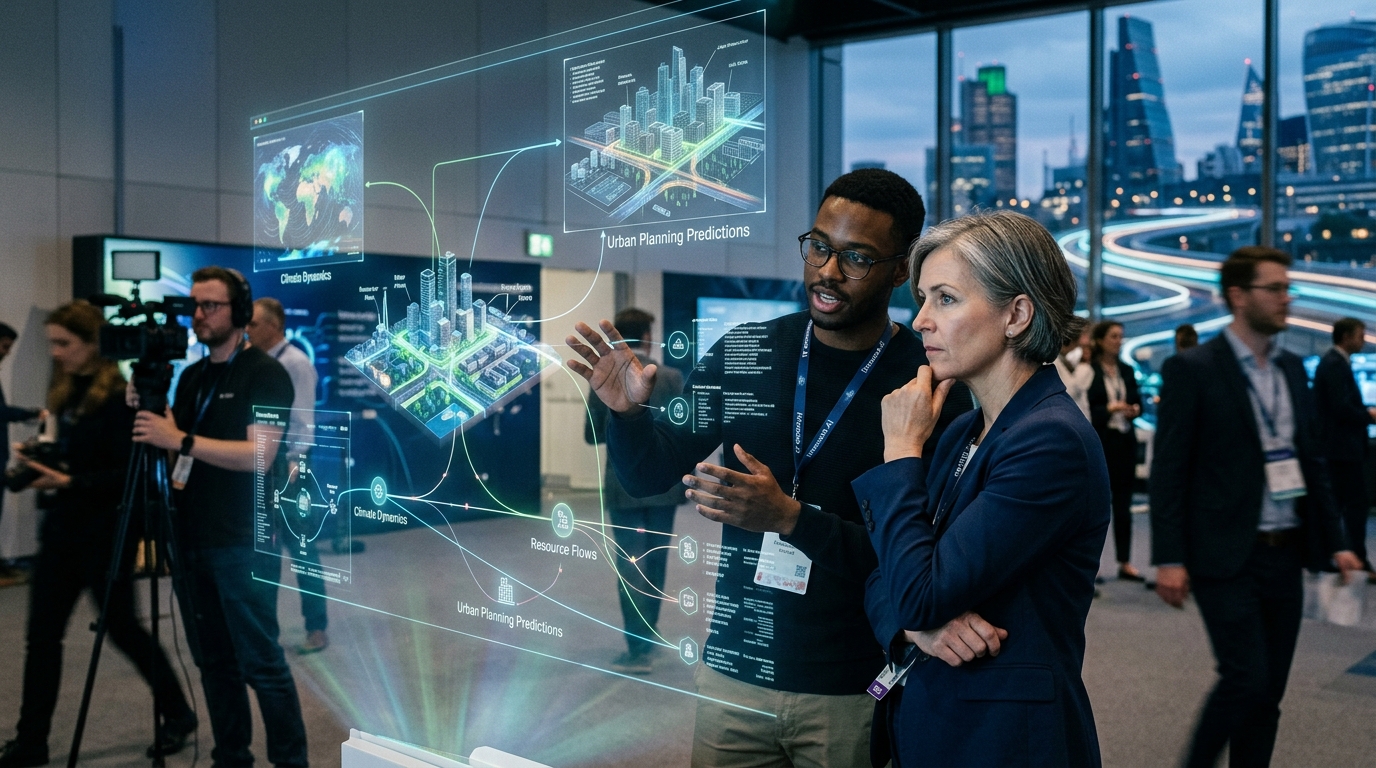
The new generation of AI aims to bridge this gap. Instead of being trained exclusively on text, new models are being trained on video and sensory data, learning the laws of physics, causality, and the three-dimensional structure of the environment. This approach allows AI to develop what scientists call "common sense"—something dramatically missing from today's chatbots.
The JEPA Architecture and Yann LeCun’s Vision
At the heart of this shift is the JEPA (Joint-Embedding Predictive Architecture) developed by Meta’s FAIR (Fundamental AI Research) team. Unlike generative models (Generative AI) that attempt to reconstruct every pixel of an image—an extremely expensive and often pointless process—JEPA tries to predict missing information at an abstract level. It learns to ignore irrelevant details (like the flickering of leaves in the wind) and focuses on significant interactions (like an object moving in a specific direction).
- Abstract Representation: The AI doesn't just see colors; it perceives entities and their relationships.
- Future Prediction: World models can "imagine" the evolution of a situation based on physical constraints.
- Efficiency: They require less computational power to reach conclusions, as they do not waste resources on unnecessary details.
From the Digital Cloud to Physical Robotics
The significance of this evolution is immense for the field of robotics. Until now, programming robots to perform simple tasks, such as emptying a dishwasher, was a nightmare. Robots did not understand that glass breaks or that objects have weight and volume. With World Models, AI gains a "spatial intelligence" that allows it to interact with the physical environment safely and accurately.
"Intelligence is not just the ability to speak, but the ability to act and predict the outcome of your actions in the real world," industry analysts note.
This means we will soon see a new generation of autonomous agents. These systems won't just answer questions; they will be able to plan and execute complex tasks, from managing a warehouse to assisting in surgical procedures, with full awareness of the consequences of every move.
Challenges and the Future of AGI
Despite the progress, the road to Artificial General Intelligence (AGI) remains long. Understanding the structure of the world requires vast reserves of video data and a new approach to self-supervised learning. Furthermore, integrating ethics and human values into models that "think" in terms of physics presents a new challenge for ethics researchers.
In conclusion, ChatGPT was only the beginning—the "toddler" of AI that learned to talk before it learned to walk. The next phase will give AI a "body" and "eyes," allowing it to understand reality in a way that approaches biological intelligence. The transition from text processing to world understanding is perhaps the most critical step in the history of computing.