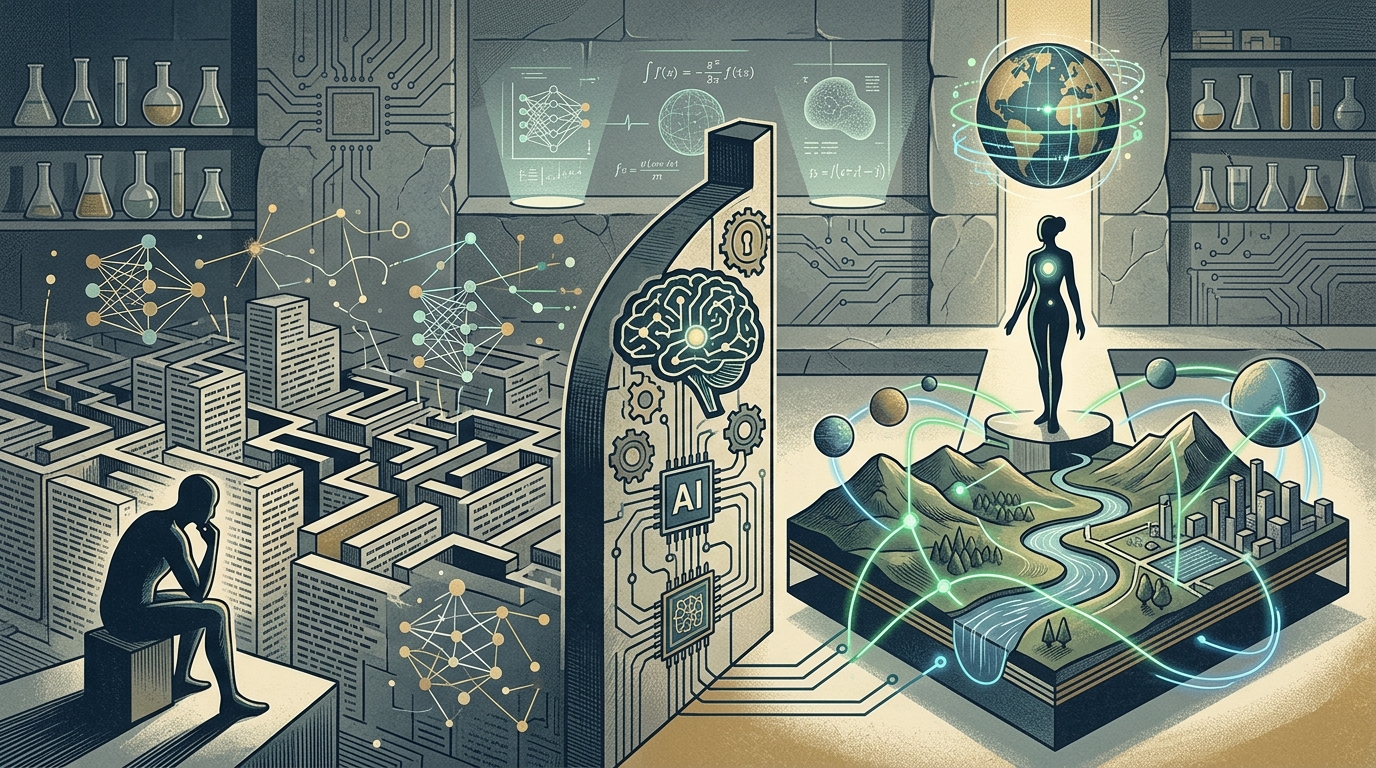
In the rapidly evolving landscape of artificial intelligence, the prevailing narrative has long focused on the pursuit of the 'singular'—a monolithic model so vast and powerful that it could master every domain of human knowledge. However, the release of Hermes MoA 2.0 by the innovative team at Nous Research challenges this paradigm. It is not a new model trained from scratch, but a sophisticated 'Mixture of Agents' (MoA) architecture that functions as a digital conductor, orchestrating a symphony of the world’s leading AI minds: OpenAI’s GPT-4o, Anthropic’s Claude 3.5 Sonnet, and the formidable DeepSeek-V3.
The Architecture of Synergy: How MoA Works
The fundamental philosophy behind Hermes MoA 2.0 is the 'wisdom of the crowd.' Rather than relying on a single set of weights and biases, the system divides the cognitive workload into multiple layers. In the first layer, a cohort of 'proposer' models receives the user's prompt. Each model generates its own independent response, leveraging its unique strengths—for instance, Claude’s nuanced reasoning, GPT’s vast general knowledge, and DeepSeek’s rigorous technical and coding proficiency.
In the subsequent stage, an 'aggregator' or 'synthesizer' model takes over. Its task is not merely to pick the best answer but to synthesize a new, superior response that incorporates the insights of all proposers while filtering out hallucinations or errors that might have bypassed a single model. This iterative process allows Hermes MoA 2.0 to achieve benchmark scores that consistently outshine any individual model operating in isolation.
The Strategic Role of DeepSeek
The inclusion of DeepSeek in this ensemble is a calculated and brilliant move. The Chinese-developed model has sent shockwaves through Silicon Valley due to its incredible cost-to-performance ratio. Within the Hermes MoA 2.0 framework, DeepSeek acts as a high-precision specialist, providing technical depth that often rivals much more expensive American counterparts. Nous Research has effectively demonstrated that integrating open-source or highly efficient models into an MoA structure can elevate total output quality without exponentially increasing the computational budget.
- Enhanced Reasoning: Cross-referencing multiple outputs fills logical gaps.
- Error Mitigation: Models peer-review each other in real-time.
- Future-Proofing: The architecture allows for 'hot-swapping' models as newer versions emerge.
Toward a Democratized AI Landscape
Hermes MoA 2.0 represents more than just a technical milestone; it is a manifesto for the future of the industry. As the cost of training 'frontier' models climbs into the billions, the ability for developers to build super-intelligence through the synthesis of existing technologies democratizes access to top-tier AI. One no longer needs to be a trillion-dollar tech titan to possess the 'best' model; one simply needs the architectural ingenuity to coordinate existing ones.
"The era of the monolithic model is drawing to a close. The future belongs to systems that can collaborate, debate, and ultimately synthesize," noted lead researchers during the unveiling.
Nevertheless, significant challenges remain. Latency is a primary concern, as waiting for responses from multiple models sequentially or in parallel adds time to the user experience. Furthermore, the cumulative API costs of querying GPT and Claude simultaneously can be prohibitive for mass-market applications. Yet, Hermes MoA 2.0 points the way forward: AI is no longer a race to build the biggest brain, but a quest to assemble the most effective council of experts.