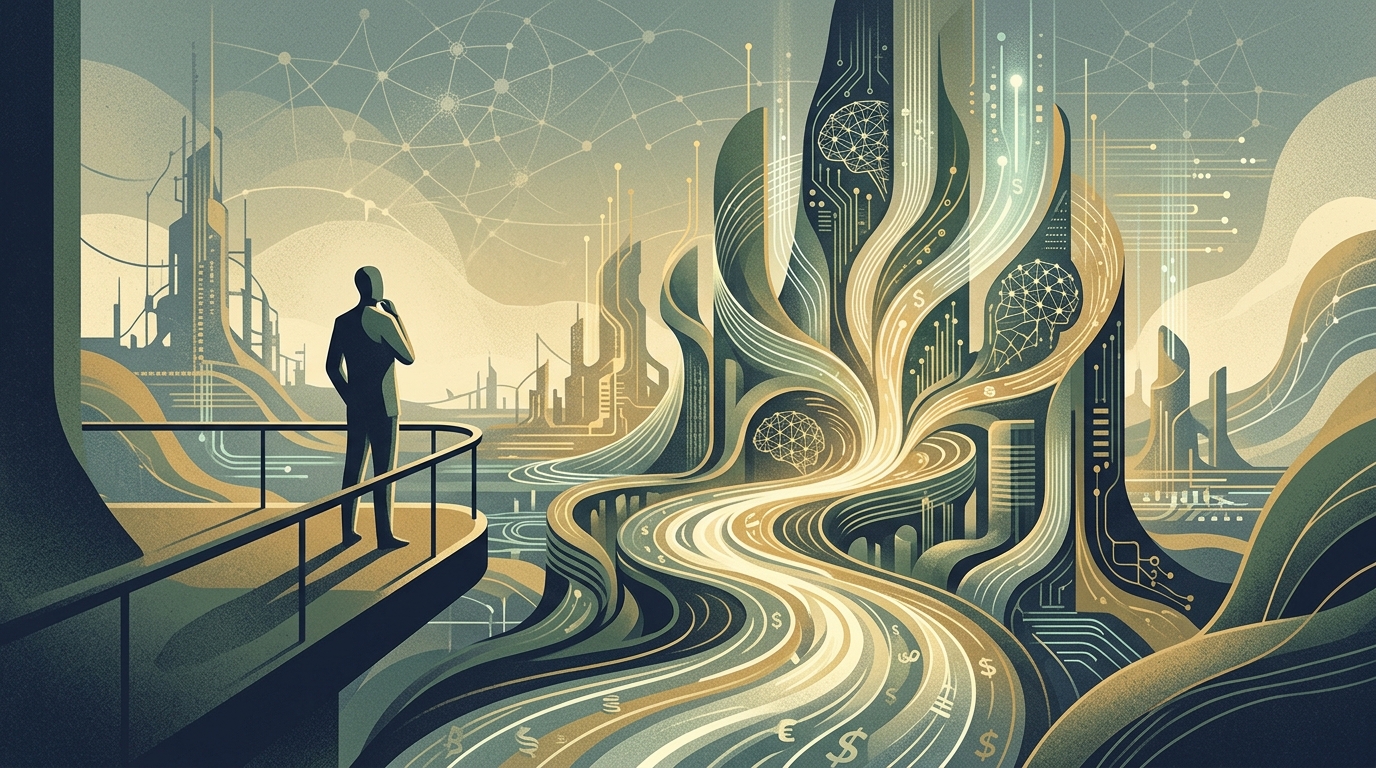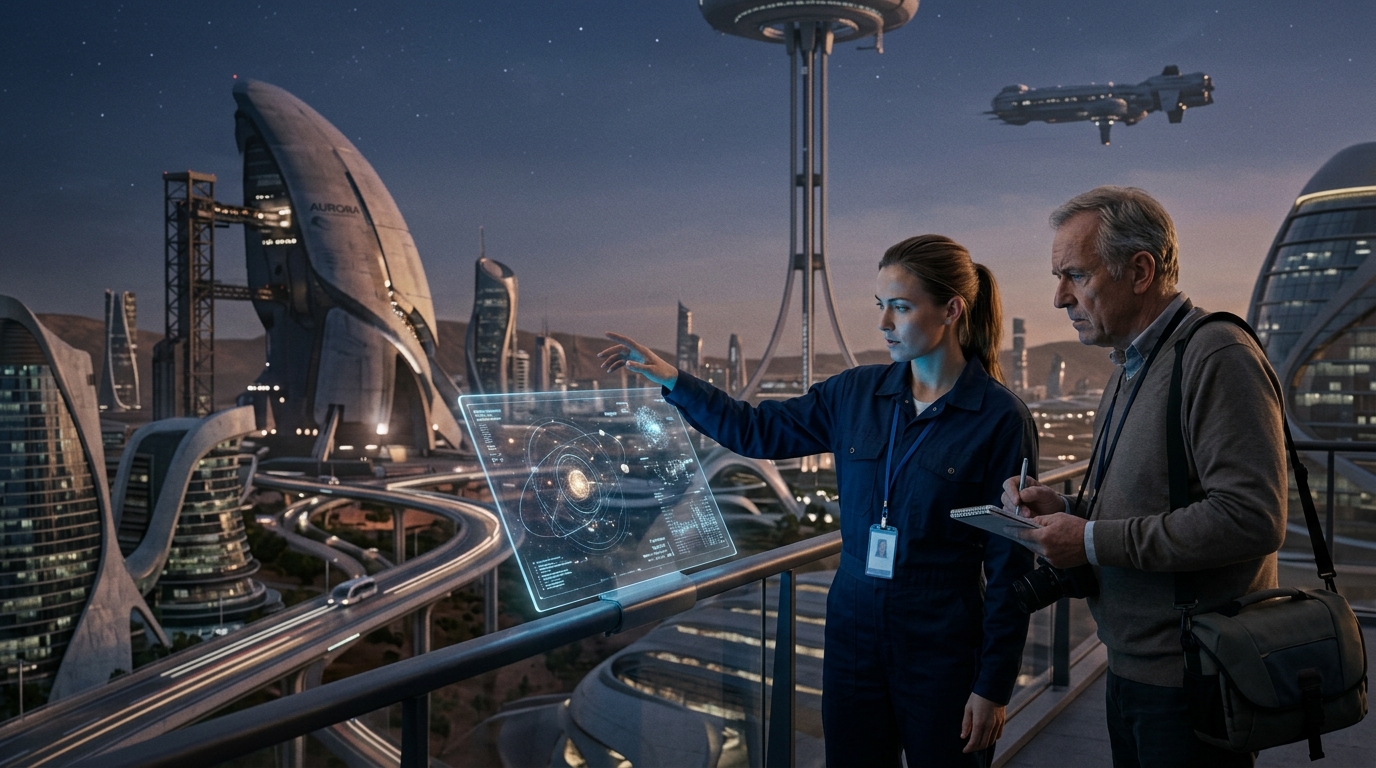
Humanity stands on the threshold of a new era, where the boundaries between terrestrial existence and the cosmic unknown are becoming increasingly blurred. Artificial Intelligence (AI) is no longer just an automation tool on our screens; it is the central pillar upon which our expansion into the solar system and beyond is being built. Recent trend analysis indicates that the fusion of AI and astronautics is the catalyst that will transform science fiction into daily reality.
Autonomy as a Prerequisite for Survival
In the inhospitable environment of space, communication latency is the greatest enemy of exploration. When a spacecraft is on Mars, a signal takes anywhere from 3 to 22 minutes to reach Earth. In critical moments, such as landing or avoiding an unforeseen hazard, human intervention is practically impossible. This is where Artificial Intelligence steps in. Autonomous navigation systems, like those used in NASA's latest rovers and ESA missions, allow spacecraft to make real-time decisions, processing vast amounts of sensor data without the need for commands from mission control.
This autonomy extends to life support. Future colonies on the Moon or Mars will rely on smart grids that manage limited resources—oxygen, water, energy—with absolute precision. AI can predict failures in critical systems before they occur, ensuring the safety of astronauts in environments where the slightest mistake can be fatal.
Decoding the Universe: AI as the Astronomer
Beyond navigation, Artificial Intelligence is revolutionizing scientific discovery. Modern telescopes, such as the James Webb, produce such a volume of data that human analysis would take decades to process. Machine learning algorithms can "scan" the night sky, identifying exoplanets with conditions favorable to life, analyzing their atmospheric signatures with speed and accuracy that surpasses any precedent.
- Detection of gravitational waves indicating black hole collisions.
- Classification of billions of galaxies based on their morphology.
- Prediction of solar activity to protect satellite telecommunications.
The ability of AI to recognize patterns within the "noise" of the universe allows us to answer fundamental questions about the origin of the cosmos. It is not just about speed, but the ability to see things that human senses and traditional analytical methods fail to perceive.
Ethics and the Existential Dimension of Expansion
As AI becomes the "brain" of our space missions, serious ethical questions arise. Who bears responsibility for a decision made by an autonomous system that could lead to loss of life or the destruction of an ecosystem on another planet? Furthermore, the use of AI in space is inextricably linked to geopolitical competition on Earth. Mastery of AI-space technologies is now considered the new "high ground" of global power, with the US, China, and Europe investing billions to secure the lead.
"Artificial Intelligence is not just an assistant to the astronaut; it is humanity's precursor to the stars. Perhaps the first 'intelligence' to encounter other civilizations will not be biological, but our digital footprint."
Ultimately, our relationship with space through AI reflects our own evolution. Our need to explore the unknown finds its ideal ally in technology. The future of humanity is no longer confined to the boundaries of Earth, and Artificial Intelligence is the vehicle that will lead us safely to our next great adventure.