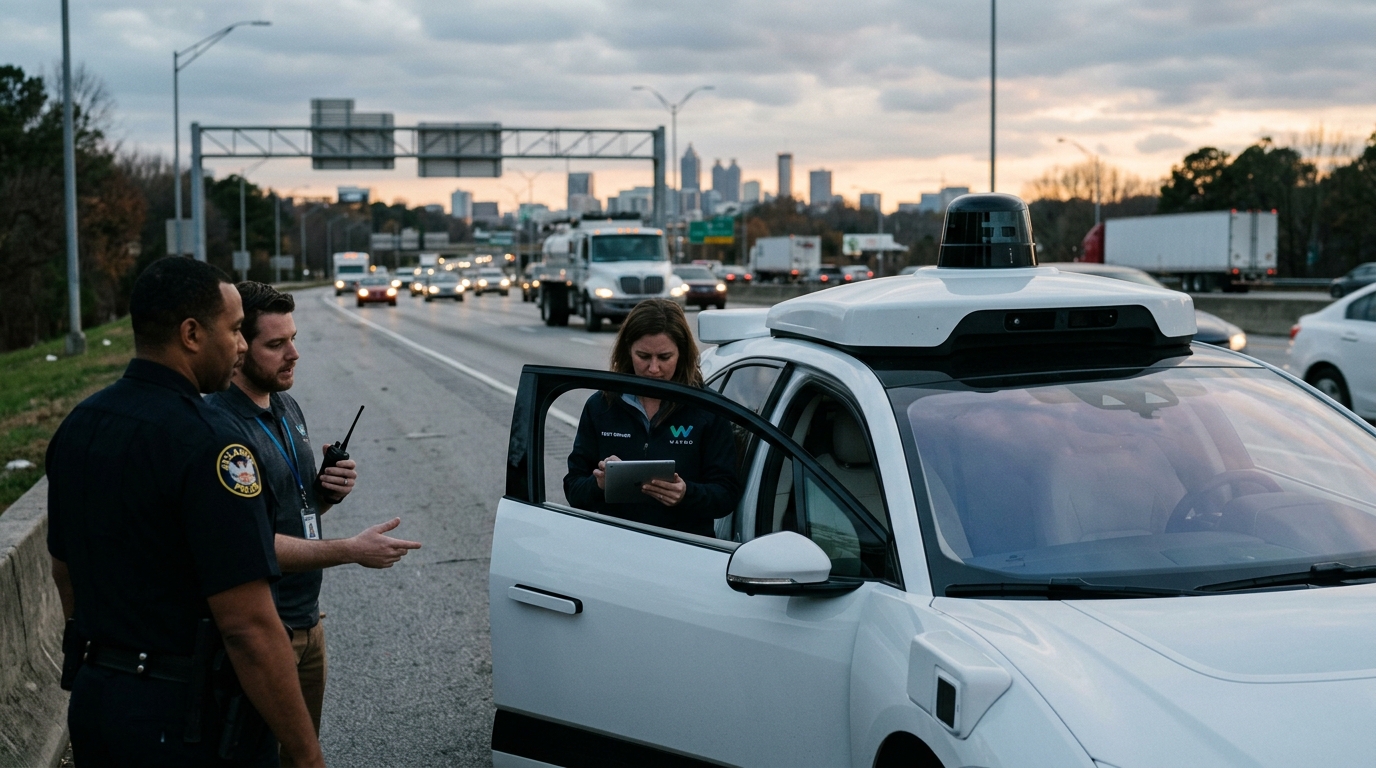
The promise of autonomous vehicles dominating our roads has taken another significant hit as Waymo, the Alphabet-owned subsidiary widely considered the industry leader, announced a temporary suspension of its freeway operations and a pause in its Atlanta expansion. This decision comes at a pivotal moment, with robotaxi technology under intense scrutiny from regulators and the public following a string of incidents that raise profound ethical and technical questions.
The High-Speed Frontier
Freeways represent both the 'Holy Grail' and the ultimate challenge for autonomous vehicles. While urban driving is complex due to pedestrians and cyclists, freeways demand split-second reactions at much higher speeds. A software glitch at 65 mph carries far more catastrophic potential than a similar error at 20 mph on a side street in San Francisco. Waymo, recognizing this inherent risk, has decided to pull its fleet from high-speed routes until critical safety software updates are finalized.
This move is more than a routine technical patch. It is a candid admission that the complexity of real-world driving still outpaces the capabilities of current AI algorithms when the margin for error narrows. LiDAR sensors and cameras must process data in milliseconds to predict the behavior of human drivers, who are often unpredictable, distracted, or aggressive. On a freeway, the 'physics of failure' are unforgiving.
The Shadow of Cruise and Regulatory Heat
One cannot analyze Waymo's pivot without looking at the broader industry landscape. The recent high-profile failures of Cruise, the General Motors-backed rival, served as a stark warning. After incidents led to the suspension of Cruise’s permits in California, the National Highway Traffic Safety Administration (NHTSA) has adopted a zero-tolerance stance. Waymo, seeking to avoid a similar fate that would devastate its reputation and investor confidence, is opting for a strategy of 'prudent retreat.'
- Increased NHTSA oversight for all Level 4 autonomous systems.
- Stricter requirements for transparency regarding collision data and 'near-misses.'
- The urgent need to re-evaluate 'edge case' protocols in high-velocity environments.
The pause in Atlanta is particularly telling. Atlanta was slated to be the next major hub for Waymo’s commercial expansion after Phoenix and Los Angeles. This delay suggests that the commercial viability of robotaxis on a national scale is receding further into the future, prompting questions about when, if ever, this technology will achieve true profitability.
Ethics and the Social Contract
From an ethical standpoint, Waymo’s decision is both commendable and revealing. On one hand, it demonstrates a corporate willingness to prioritize human life over rapid scaling—a departure from the 'move fast and break things' mantra of Silicon Valley. On the other hand, it highlights the fact that residents in testing cities are essentially acting as beta testers for a technology that is clearly not yet universal in its reliability.
"Safety is not a static feature but a continuous learning process. Pausing operations allows us to integrate lessons from recent testing without compromising passenger integrity," sources close to the company suggest.
The lingering question is whether society is truly ready for autonomous vehicles. Every time a robotaxi is involved in an incident, the public outcry is exponentially greater than it would be for a human-caused accident. This asymmetry in risk perception forces AI companies to strive for a level of perfection that may be statistically impossible in a chaotic world, yet ethically required for public acceptance.
Conclusion: A Necessary Breath
Waymo’s suspension of freeway rides and the Atlanta delay do not signal the end of autonomous driving, but rather a necessary recalibration. AI technology has made leaps, but the physical reality of high-speed travel does not forgive errors. Waymo is choosing to be the tortoise that pauses to check the terrain, hoping that this caution will secure its long-term dominance in a market that offers no second chances for those who fail the safety test.