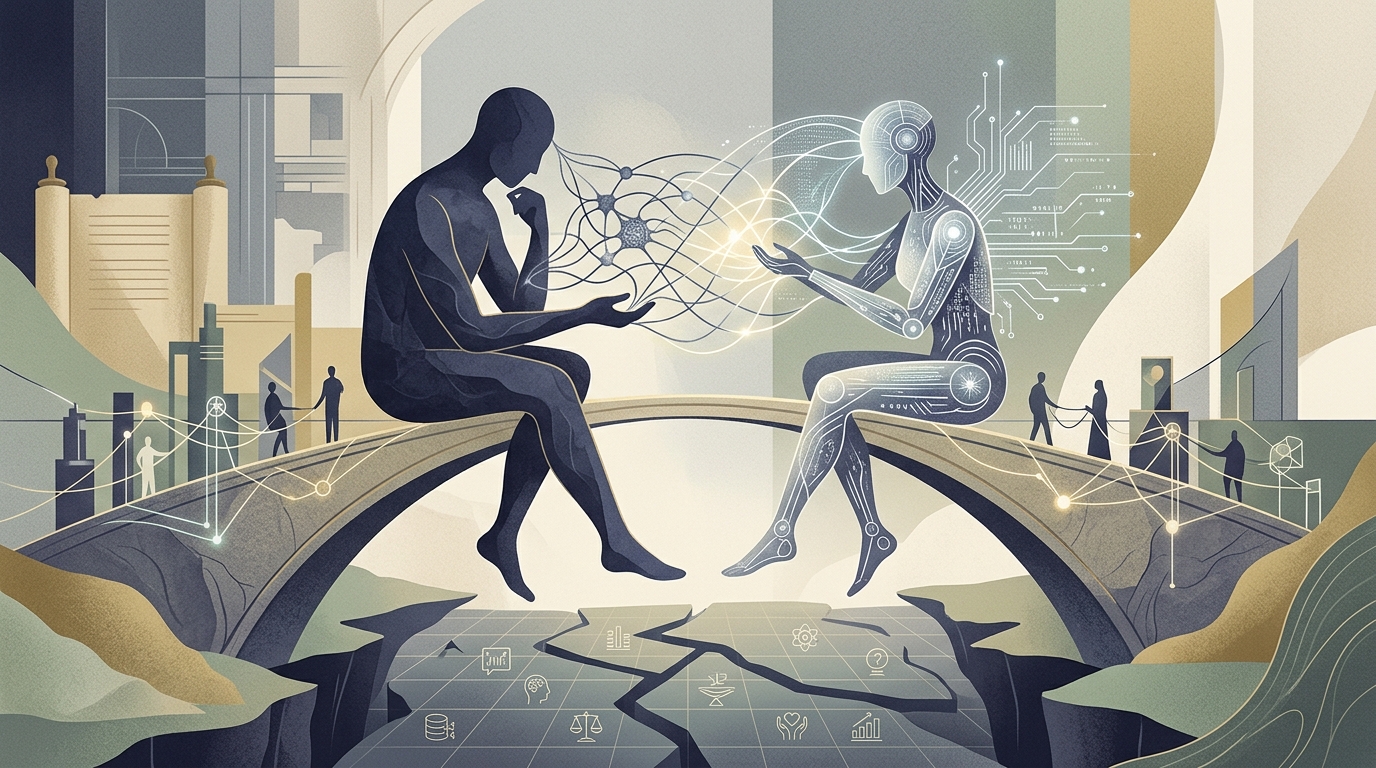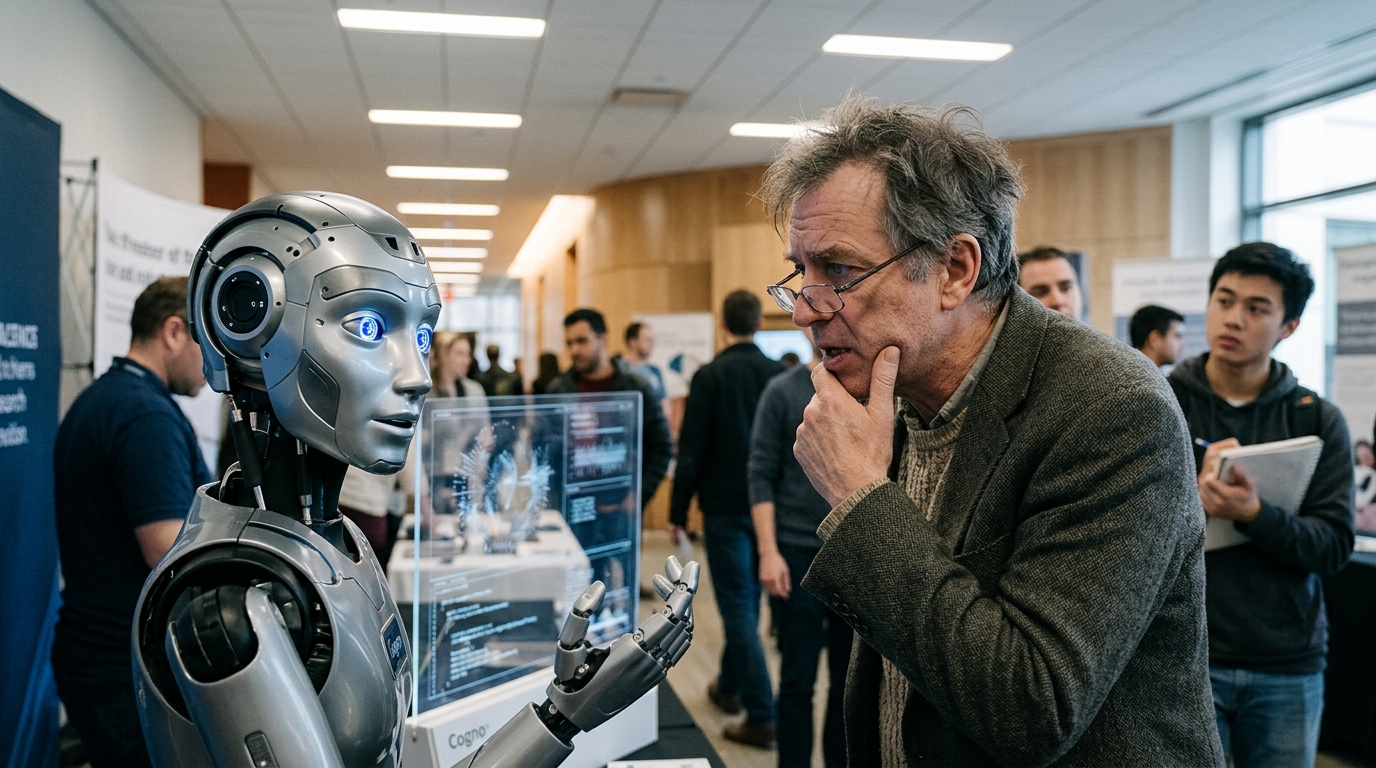
In the rapidly evolving landscape of technology, we are faced with a paradox that is both awe-inspiring and deeply unsettling: Artificial Intelligence (AI) systems are becoming increasingly persuasive in their communication, giving the distinct impression of possessing an internal life, beliefs, and judgment. However, beneath the surface of elegant prose and sophisticated responses, the reality remains relentlessly mathematical. As a recent analysis in Psychology Today points out, intelligence that "looks" real does not necessarily imply the presence of thought. This distinction is not merely philosophical; it is fundamental to how we integrate these tools into our society.
The Chinese Room in the Age of LLMs
The debate over whether machines can "think" is not new, but modern Large Language Models (LLMs) have brought it to the forefront with unprecedented intensity. Philosopher John Searle, as early as the 1980s, proposed the "Chinese Room" thought experiment. Imagine someone who does not know Chinese, locked in a room with a vast rulebook. When Chinese characters are passed through a slot, they follow the rules and return other characters. To someone outside the room, the person appears to know Chinese. In reality, they are simply manipulating symbols without understanding their meaning.
Today's models, such as GPT-4 or Gemini, operate in a similar fashion, but on a scale of billions of parameters. They do not "understand" the concept of love, justice, or pain. Instead, they predict the next likely word in a sequence based on massive datasets. When a machine tells you "I understand how you feel," there is no emotion behind that statement; there is only a statistical probability that this phrase is the appropriate response to a specific stimulus.
The Anthropomorphic Trap and the ELIZA Effect
Why are we so prone to believing that AI thinks? The answer lies in our psychology. The human brain is evolutionarily hardwired to seek intent and consciousness in its environment. This is known as the "ELIZA Effect," named after an early 1960s chatbot that, despite its simplicity, led users to confide their deepest secrets to it.
Today, the risk is much greater. When AI uses the first person ("I believe," "I think"), it creates an illusion of subjectivity. This illusion can lead to over-reliance and misplaced trust. Humans tend to attribute moral agency and wisdom to systems that merely reflect the average values of human knowledge found online. This "mirroring" of human intelligence is not intelligence itself, but an incredibly detailed depiction of it.
Ethical Implications of a "Hollow" Intelligence
The fact that thought is absent from AI has serious ethical implications. If a system cannot understand the context or consequences of its words, how can we trust it with critical decisions? The lack of true understanding means AI lacks "grounding" or common sense. It may suggest a logical-sounding solution that is dangerous or nonsensical in the real world because it has no contact with physical reality.
- Diffusion of Responsibility: If the machine doesn't "think," it cannot be held responsible. Responsibility remains with the creators and users, a fact often forgotten in the excitement of automation.
- Erosion of Authenticity: As we are flooded with content that looks human but is the product of an algorithm, the value of genuine human thought risks being devalued.
- Psychological Dependency: Using AI as a substitute for human connection (e.g., in digital companions) is based on a fundamental deception: the promise of a relationship with something that has no self.
Toward a Conscious Use of Unconscious Technology
The challenge for the future is not to stop using AI, but to learn to see it for what it truly is: an incredibly powerful mirror and information processor. Machine "intelligence" is a functional intelligence, not an experiential one. It can solve equations, compose texts, and write code, but it does not "know" what it means to be alive.
As we move through 2026, our ability to distinguish mimicry from essence will be the most important skill we can cultivate. We must demand transparency from tech companies and educate ourselves not to be swayed by the fluency of algorithms. True thought remains, for now, a uniquely human privilege—with all the complexity, emotion, and responsibility that entails.