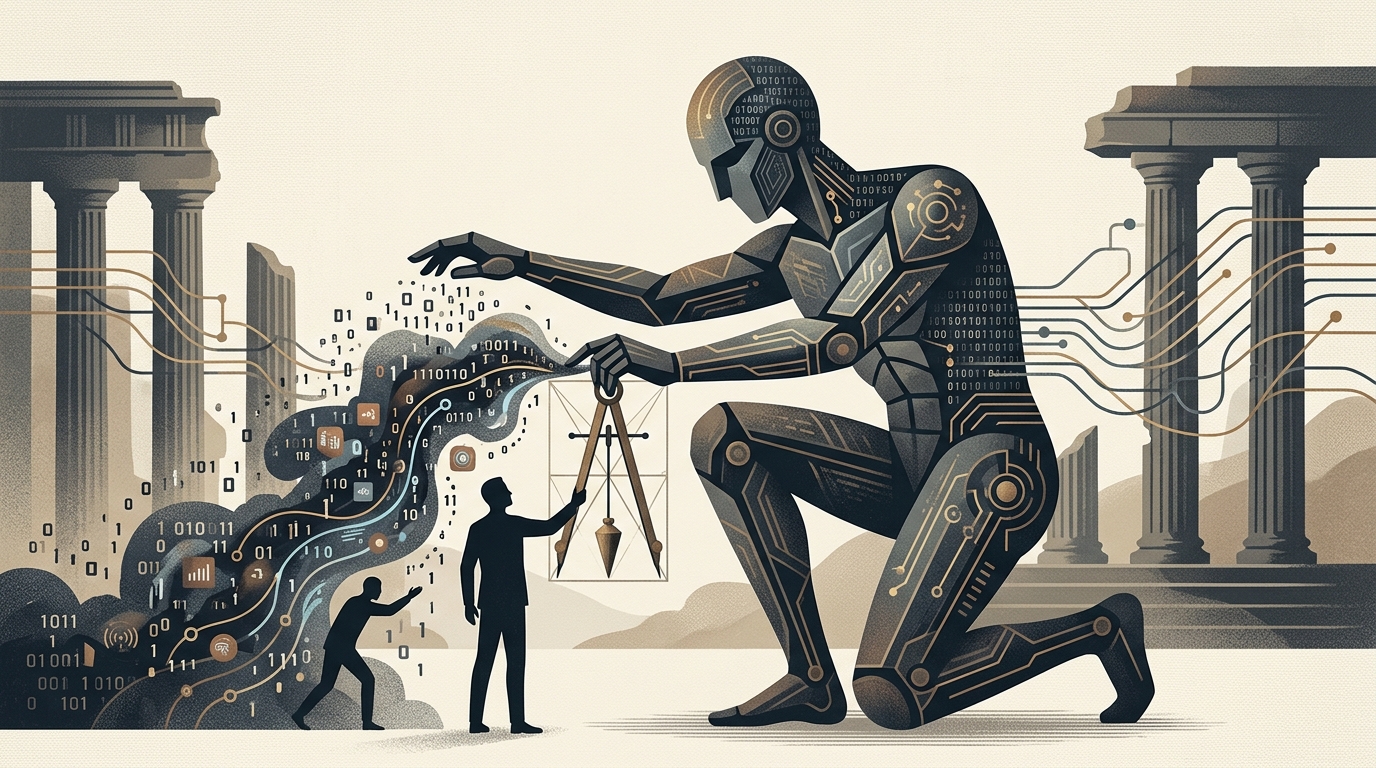
The dawn of 2026 finds humanity at a critical crossroads. Artificial Intelligence (AI), once a promising technology in Silicon Valley labs, has transformed into an omnipresent force shaping the economy, politics, and our very social cohesion. However, behind the impressive capabilities of generative intelligence models and autonomous agents lies a dark side that demands urgent attention. These are no longer science fiction scenarios, but tangible threats undermining the foundations of modern civilization.
The Erosion of Truth and the Information Crisis
Perhaps the most immediate and dangerous consequence of the new AI wave is the total collapse of trust in information. Deepfake technology has reached such a level of perfection that distinguishing between reality and fabricated content is practically impossible for the average citizen. During recent global elections, we witnessed how the strategic use of fake videos and audio clips can polarize societies and taint the democratic process.
Furthermore, the "Dead Internet Theory" is no longer a fringe conspiracy. With the majority of online content now produced by algorithms for algorithms, human creativity is drowning in an ocean of synthetic mediocrity. This phenomenon affects not only our aesthetics but also our ability to communicate authentically, creating echo chambers where truth is optional.
The Hidden Environmental Cost
While AI is often presented as a "clean" tool that will help solve the climate crisis, the reality is much grayer. Training and operating Large Language Models (LLMs) require massive amounts of energy and, crucially, water to cool data centers. According to recent reports, water consumption by tech giants has skyrocketed, causing local water shortages in regions hosting these "digital factories."
- Data center energy consumption is expected to double by 2028.
- Every short conversation with a chatbot is equivalent to consuming about 500ml of water.
- Rare earth mining for AI hardware causes irreparable ecological damage in the Global South.
The Concentration of Power and the New Digital Oligarchy
Another dark aspect is the unprecedented concentration of power in the hands of a few companies. The infrastructure of modern intelligence is controlled by a handful of giants who possess the computing power and data to dominate. This creates a new form of "digital feudalism," where states and citizens become dependent on private platforms for essential services, from education to healthcare.
"Artificial Intelligence is not just a tool; it is a new system of governance operating without the consent of the governed," note digital rights analysts.
Algorithmic bias continues to reinforce social inequalities. From hiring systems to policing, algorithms often reproduce and amplify biases related to race, gender, and social class, hidden behind a cloak of "objectivity."
The Threat to Mental Health and Social Cohesion
Finally, we must not overlook the psychological dimension. Increasing reliance on AI companions and assistants leads to a gradual alienation from human contact. In a world where algorithms are optimized to keep our attention captive, our capacity for deep thought and empathy is atrophying. The "dark side" of AI is not just the technology itself, but how it reshapes our human nature, making us more predictable and controllable.
Addressing these challenges requires more than just regulation. It requires a radical reassessment of our relationship with technology and the assertion of our autonomy against a future that seems to be designed without us.