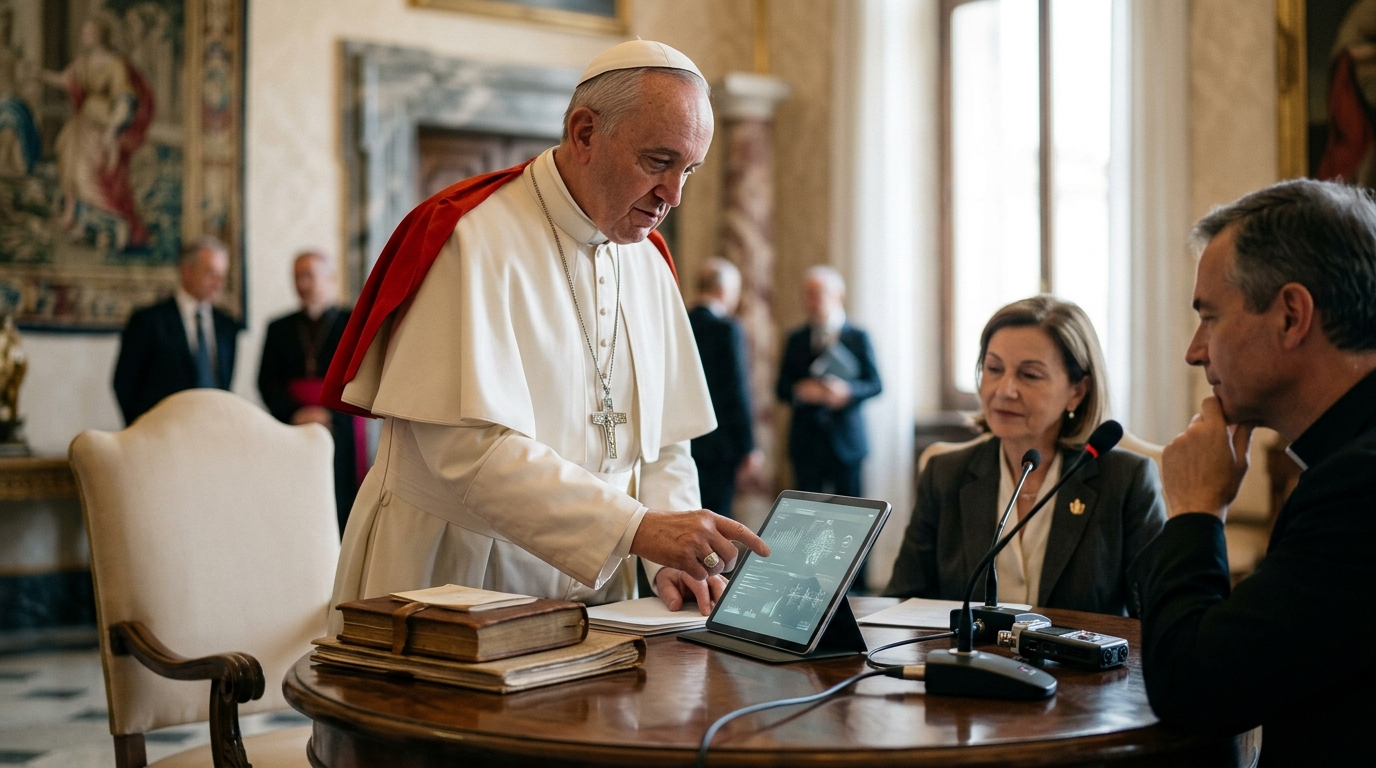
In the heart of the Vatican, beneath the frescoes of the Sistine Chapel that celebrate the creation of man, Pope Leo has announced a decision that aims to redefine the relationship between faith and advanced technology. The establishment of the new Commission for Artificial Intelligence is not merely an administrative reshuffle; it is a profound spiritual and political intervention in a world rapidly being reshaped by algorithms.
This move comes as the culmination of years of fragmented efforts by various ecclesiastical bodies, such as the Pontifical Academy for Life and the Dicastery for Culture and Education. Pope Leo, recognizing that Artificial Intelligence (AI) is no longer a tool but an "environment" in which humanity exists, has mandated the unification of these voices under a single, authoritative leadership.
'Algorethics': The Vatican's New Doctrine
The central pillar of the new commission is the concept of "Algorethics." This term, which has gained traction in recent years, refers to the ethical design of algorithms so that they serve human dignity rather than undermining it. The commission will not limit itself to theoretical inquiries but will issue practical guidelines for the development of AI systems that impact labor, social welfare, and personal liberty.
According to sources close to the Holy See, the commission will be staffed not only by theologians and ethicists but also by leading data scientists, sociologists, and legal experts. The goal is clear: the Church wants a seat at the table with the giants of Silicon Valley and China, reminding the world that progress without an ethical compass can lead to a new form of "digital totalitarianism."
Social Justice and the Digital Divide
One of Pope Leo’s most pressing concerns, reflected in the commission's mission, is the risk of widening inequalities. AI promises immense productivity gains, but the question remains: who will reap these benefits? The Catholic Church, with its global reach, is focusing on the Global South, where a lack of access to technology could lead to a new era of exclusion.
- Protecting labor rights in the face of widespread automation.
- Ensuring that algorithms do not embed racial or social biases.
- Promoting "digital inclusion" as a fundamental human right.
The commission is expected to lobby for international regulations that treat AI as a "global public good." This stance is likely to cause friction with corporations that prioritize intellectual property and profit over open access and shared benefits.
The Theological Question: The Machine and the Soul
Beyond ethics and economics, the new commission is called to confront existential questions. As Generative AI becomes increasingly convincing in simulating human consciousness, the Church must delineate what makes human beings unique.
"Intelligence can be replicated, but wisdom and love remain exclusive gifts from the Creator to the ensouled being,"the Pope stated during the founding ceremony.
The commission will also examine the use of AI in worship and catechesis. Can a chatbot provide spiritual guidance? Can an algorithm analyze Scripture in a way that touches the human heart? For the Vatican, the answer leans toward a firm "no," emphasizing that faith requires the presence of the "Other" as a person, not as a line of code.
Conclusion: A Voice of Conscience in the Digital Age
Pope Leo’s initiative marks a new phase for the Catholic Church. Moving from an era where science was often viewed as a threat, we are entering a time where religion attempts to become the guardian of humanity within technology. The success of the commission will be judged not by the documents it produces, but by its ability to influence legislators and AI creators, ensuring that our future is not only smart but fundamentally human.