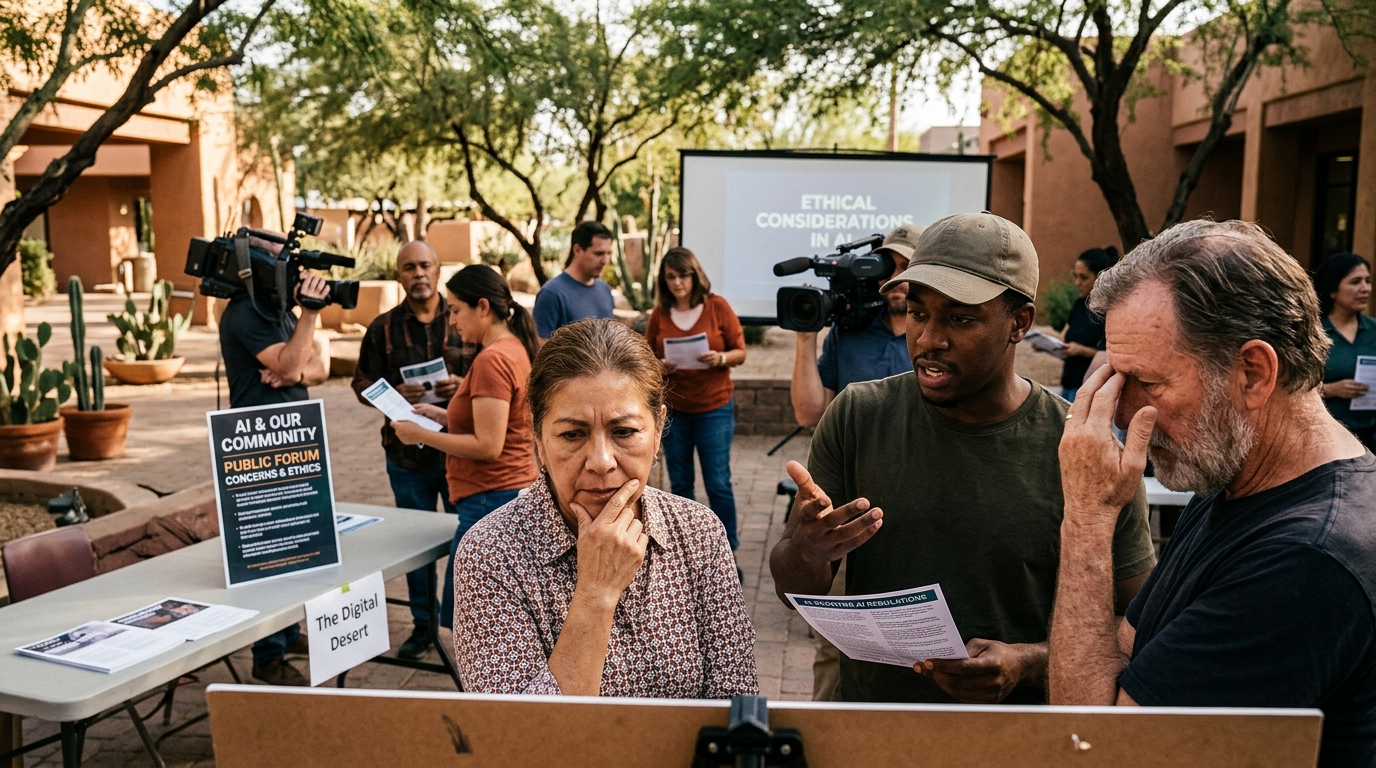
In the heart of the Sonoran Desert, the city of Phoenix, Arizona, is no longer just known for its scorching temperatures, but for being the epicenter of one of the largest social and technological experiments in human history. The rapid expansion of Artificial Intelligence (AI) has transformed the city's streets into a testing ground, sparking a storm of public reactions ranging from excitement to existential dread.
From Highways to Daily Life
The presence of AI in Phoenix is more visible than perhaps anywhere else in the world, primarily due to Waymo's autonomous vehicles constantly navigating the streets. However, recent coverage by FOX 10 Phoenix highlights that resident anxiety has expanded far beyond road safety. AI is now encroaching on jobs, education, and the very concept of privacy. Residents describe a feeling that their city has become a "living laboratory" without their explicit consent.
In recent interviews, many citizens expressed surprise at how quickly generative AI tools have been integrated into local businesses. From automated customer service at Scottsdale-area restaurants to the use of algorithms for tenant screening in real estate, AI is ubiquitous. This penetration brings with it a critical ethical question: Who controls the algorithms that determine the lives of citizens?
The Fear of Replacement and the Digital Divide
A dominant theme in resident discussions is job insecurity. Arizona, a state with a strong service and logistics sector, is at the forefront of automation. Workers in warehouses and call centers see AI not as a support tool, but as an invisible competitor that doesn't need a break, a salary, or insurance. The ethical dimension of "profit-centric" automation is a major point of friction, with many calling for stricter regulatory frameworks to protect human labor.
- The loss of human touch in customer service.
- The potential for bias in hiring algorithms.
- The need for workforce retraining in a rapidly growing city.
Furthermore, a digital divide is emerging. While young tech professionals moving to Phoenix from California see AI as an opportunity, older residents and lower-income groups feel excluded. The technology seems to be creating a new social hierarchy, where access to and understanding of AI constitute the new "currency" of power.
The Ethics of Surveillance and Privacy
In a state with deep traditions of individual liberty, the constant collection of data by AI sensors provokes strong reactions. Autonomous vehicles are equipped with cameras that record everything in their path. Residents wonder: Where does this data go? Who owns it? The concern over the creation of a "persistent surveillance" society is pervasive. Citizens fear not only state monitoring but also corporate exploitation of their daily movements and habits.
"It’s not science fiction anymore. It’s the reality we see every time we step out our front door. The question is whether we control the technology or if the technology is starting to define the boundaries of our freedom," said a downtown Phoenix resident.
A City in Transition: The Future
Phoenix stands at a crossroads. On one hand, the influx of investment from giants like Intel and TSMC promises an economic boom. On the other, social cohesion is being tested by the sheer speed of change. The case of Phoenix serves as a warning sign for cities worldwide. Technology is not neutral; it carries the values and priorities of those who create it. Arizona residents, with their candid and often blunt reactions, remind AI developers that at the end of the day, technology must serve humanity, not the other way around.
The conversation in Phoenix has only just begun. As elections approach and AI legislation is being drafted, the voice of the citizens will be decisive in whether the "Digital Desert" becomes an oasis of innovation or a parched landscape of social alienation.