In the heart of North Carolina, far from the neon glow of Silicon Valley, a quiet but colossal transformation is taking place. Massive complexes of concrete and steel, known as data centers, are proliferating across the state's landscape. Yet, behind the promises of high-tech jobs and economic growth lies a thirsty reality that threatens one of the region's most precious resources: water. As we move through June 2026, the AI boom has turned these facilities into energy and water "vampires."
The Mechanism of Thirst: Why the Cloud Needs Water
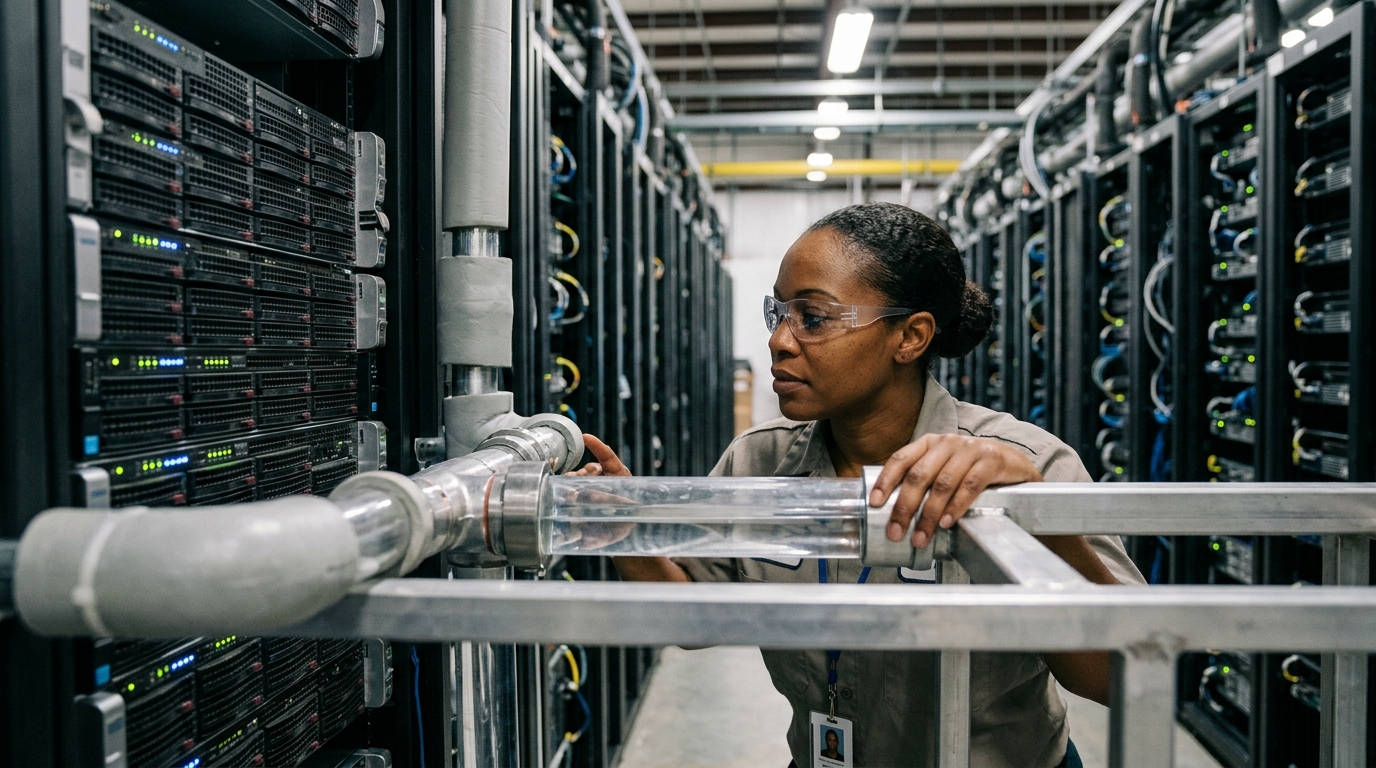
For the average user, the "Cloud" is an abstract concept—an ethereal space for storing photos and processing data. In reality, it is a profoundly physical infrastructure. Thousands of servers run non-stop, generating immense amounts of heat. To prevent hardware failure and system meltdowns, sophisticated cooling systems are required. The most common and cost-effective method is evaporative cooling, which consumes millions of liters of water every single day.
According to recent investigations in North Carolina, a single medium-sized data center can consume up to 1.5 million gallons of water per day—roughly equivalent to the daily usage of a small town of 10,000 residents. This water is evaporated to cool the processors running AI models like GPT-5 and its successors, which require significantly more computational power and generate more heat than traditional web searches.
The North Carolina Dilemma: Growth vs. Sustainability
North Carolina has become an attractive destination for tech giants like Google, Meta, and Apple, drawn by low tax rates and relatively cheap electricity. However, local communities are beginning to realize the hidden costs. In counties where these centers are established, water infrastructure is being pushed to its breaking point. Residents fear that during periods of drought, tech corporations will be prioritized over farmers and households.
The ethical question is profound: Is it fair to sacrifice a region's water security to serve global digital services? Local authorities often sign non-disclosure agreements (NDAs), preventing citizens from knowing the exact volume of water these centers consume. This lack of transparency fuels distrust and sparks protests from environmental advocacy groups.
The 'Water Positive' Mirage and the Regulatory Gap
Many tech companies promote goals to become "water positive" by 2030, promising to return more water to the environment than they consume. However, critics argue these pledges often rely on questionable wetland restoration projects in different locations, which do not replenish the immediate local aquifers being depleted by the data centers.
- The urgent need for stricter legislation mandating "closed-loop" cooling systems.
- The implementation of water usage fees that reflect the true environmental cost.
- Mandatory public disclosure of consumption metrics per facility.
In conclusion, the situation in North Carolina serves as a warning for the rest of the world. As our reliance on Artificial Intelligence grows, we must ask if we are willing to pay the price in natural resources. Technology cannot be considered "clean" when its basic operation requires the depletion of the planet's lifeblood.
"Water is the new energy. In the 21st century, conflicts won't just be about oil; they will be about who has the right to cool their servers at the expense of local agriculture," says a local environmental advocate.
Toward a Sustainable Digital Future
Are there solutions? Shifting toward air-cooling technology or utilizing recycled "gray water" are steps in the right direction. However, these methods are often more expensive and less energy-efficient, creating a vicious cycle between water consumption and electricity usage. The challenge for 2026 and beyond is to design a data architecture that respects ecosystem boundaries. North Carolina is at the epicenter of this struggle, and the decisions made today will shape the landscape for generations to come.