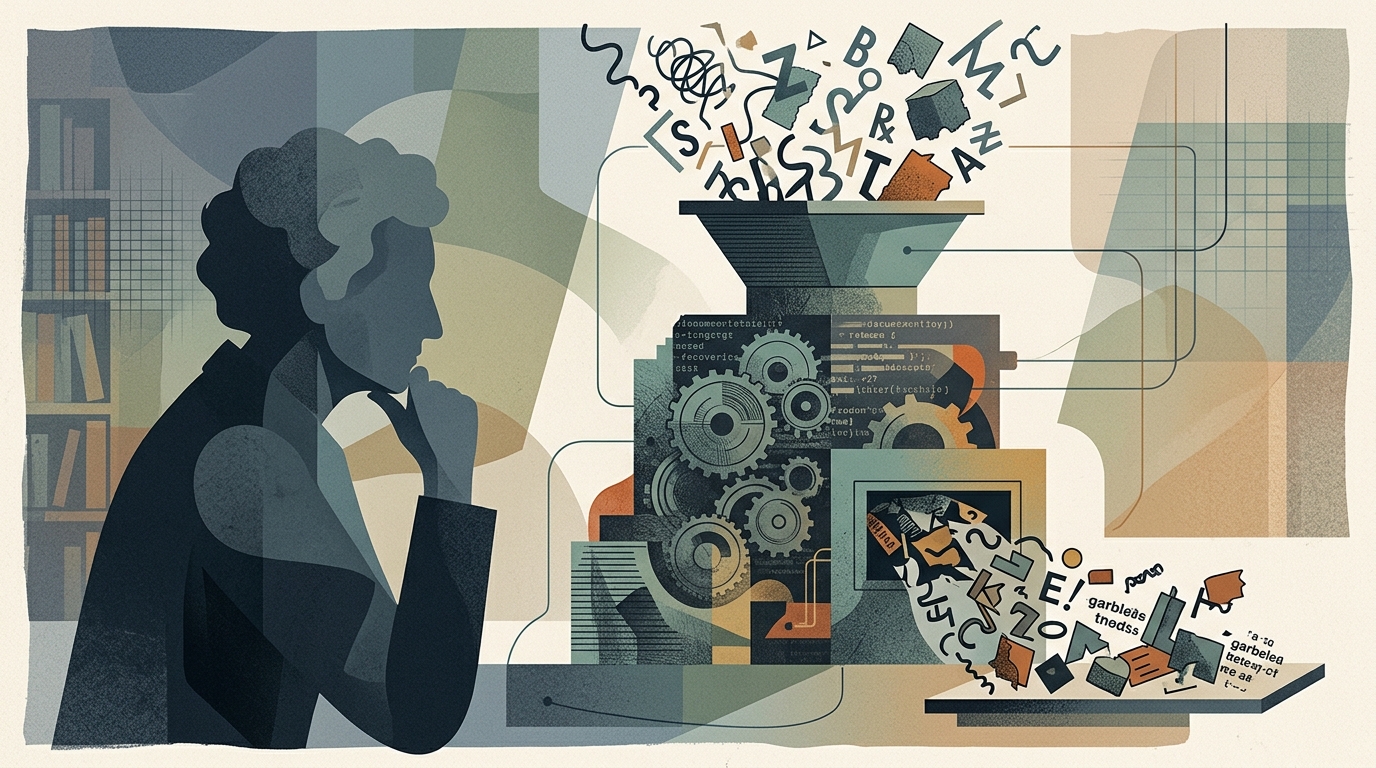
Margaret Atwood, the woman who has mapped the future's dystopias with chilling precision, is not one to be easily dazzled by the "wonders" of technology. At the recent Babel Literary and Cultural Festival in Porto, Portugal, the Canadian author was asked to comment on the rise of Generative Artificial Intelligence. Her response was as sharp as her prose: the problem is not the machine itself, but the fodder we feed it. The doctrine of "Garbage In, Garbage Out" (GIGO) is, according to her, the ultimate truth regarding the current state of the technology.
The Illusion of Creativity
Atwood argued that AI does not create anything truly new. Instead, it functions as a sophisticated recycling mechanism. "It’s a magpie," she noted, referring to the bird known for stealing shiny objects to decorate its nest. Large Language Models (LLMs) are trained on vast quantities of human-generated data—books, articles, social media posts, and code. When the training material is mediocre, biased, or simply incorrect, the AI's output will inevitably reflect those deficiencies.
For Atwood, literature is the crystallization of human experience, pain, and ambiguity. AI, lacking consciousness and lived experience, can only mimic the structure of a narrative without understanding its depth. "If you ask it to write a sonnet in the style of Shakespeare, it will do so, but it will be a sonnet based on the statistical patterns of Shakespeare, not his soul," she explained. This "statistical literature" risks flooding the market with low-quality content, drowning out authentic voices under an ocean of digital noise.
Ethics, Plagiarism, and the Theft of Intellectual Property
One of the most pressing issues Atwood addressed is the source of training data. The author was among the first to sign the Authors Guild's open letter, demanding that tech companies compensate creators for the use of their work. Her position is clear: using millions of protected books without permission to train profitable models is a form of industrial-scale piracy.
- AI does not "learn" like a human; it consumes data to produce marketable products.
- The lack of transparency regarding training datasets makes it impossible to monitor for plagiarism.
- The economic survival of emerging authors is threatened by automated content production.
Atwood warns that if we destroy the economic model that supports writers, we will stop producing the "quality material" that AI itself needs to evolve. It is a self-destructive cycle where the machine devours its creator, eventually ending up feeding on its own digital waste.
A Mirror of Our Biases
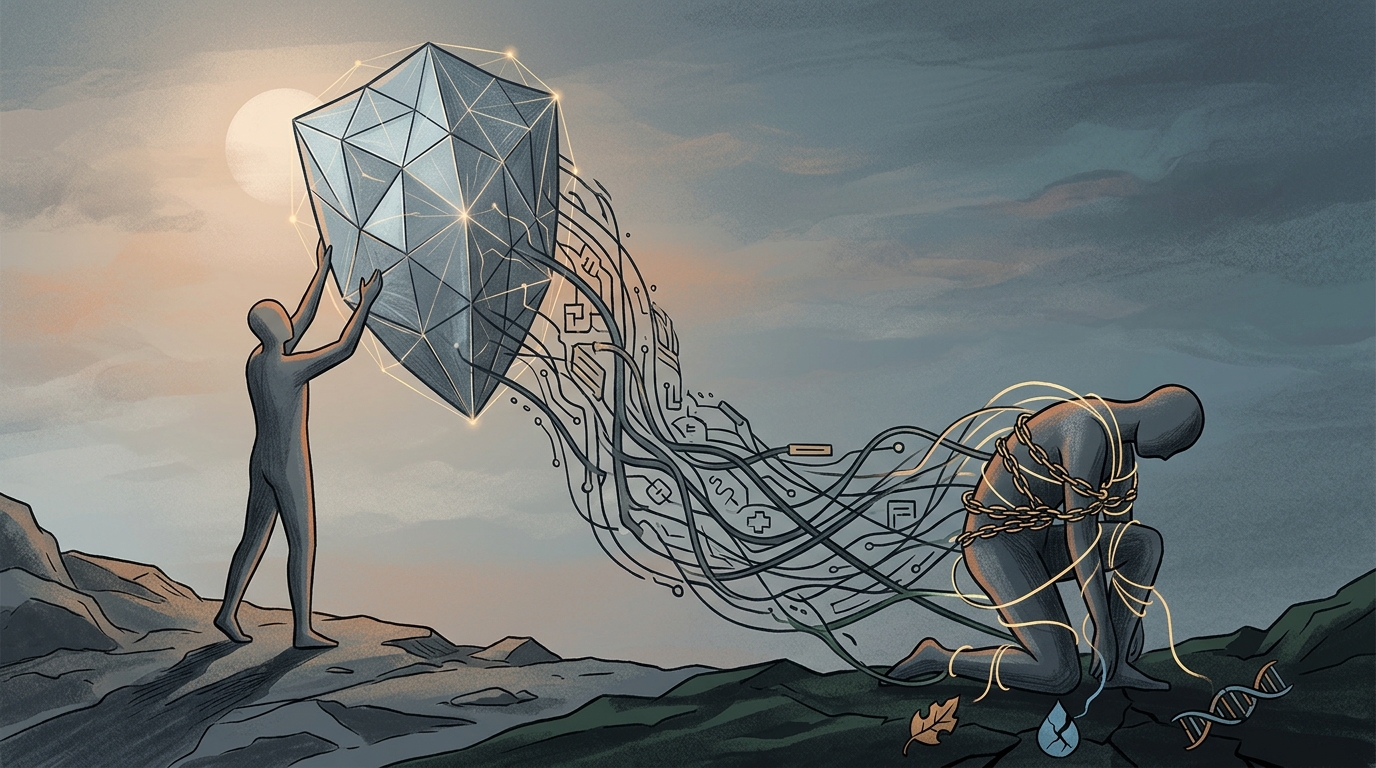
Beyond literature, Atwood focused on the societal implications of GIGO. If the data we feed AI contains the racism, sexism, and class biases of recent decades, the AI will reinforce them and present them as objective truth. In the universe of "The Handmaid's Tale," oppression is enforced through ideology and violence. In the modern world, Atwood fears that oppression may come through algorithms making life-altering decisions based on "soiled" data.
"AI is a mirror. If we don't like what we see in it, it's not the mirror's fault, but the face being reflected," she stated poignantly.
Her analysis concludes that technology is neither good nor bad in itself. It is a tool that magnifies human nature. The question Atwood poses is whether we are ready to take responsibility for the "garbage" we produce as a society before it becomes the foundation of our future intelligence. The solution is not prohibition, but strict regulation, the protection of intellectual property, and, above all, the cultivation of critical thinking that no machine can replace.