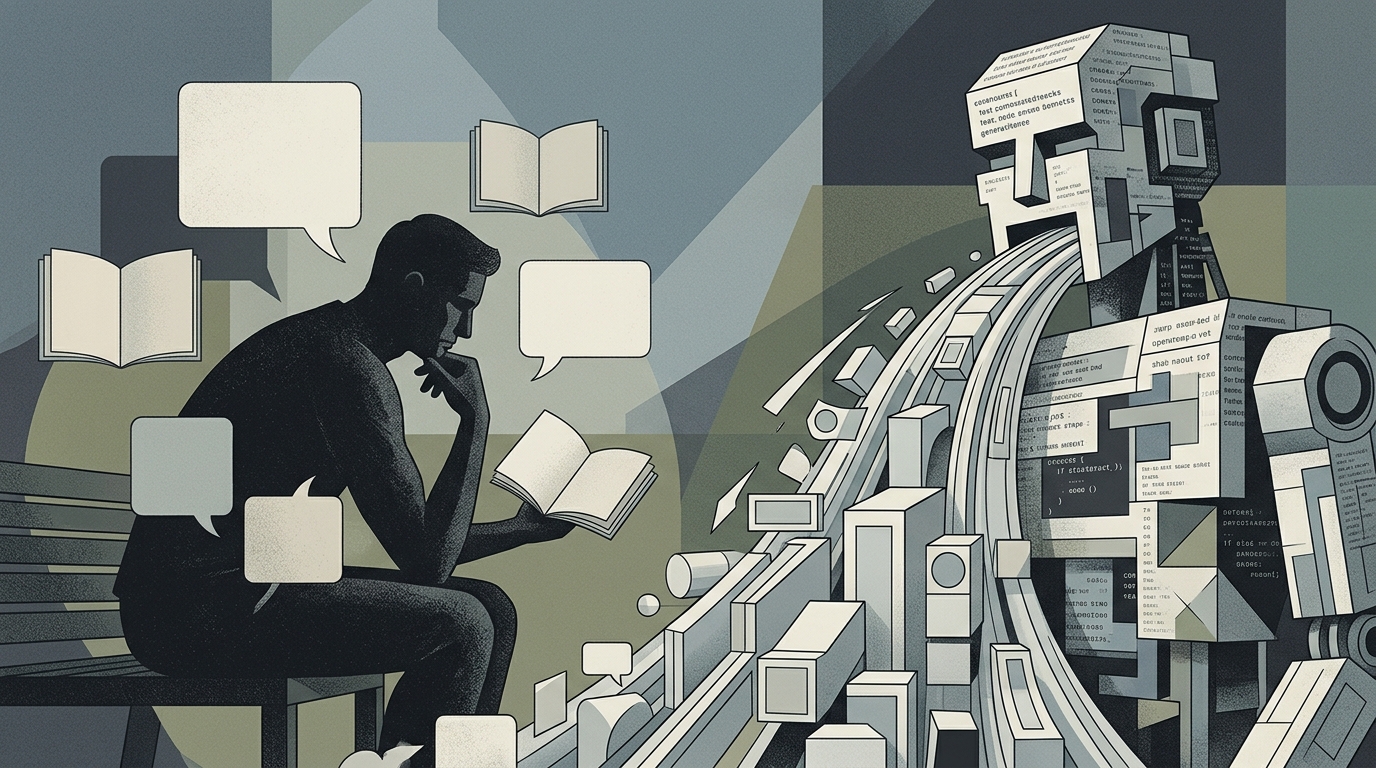
In the quiet halls of Hastings College, a student-led research project is shining a light on one of the most pressing questions of our digital era: Is Artificial Intelligence (AI), in its quest to make us more efficient, actually making us less capable? The study, which examines the correlation between the use of Large Language Models (LLMs) and declining literacy rates, highlights a disturbing trend of "cognitive offloading" that threatens the very foundations of education.
The Trap of Automated Thought
Literacy has never been just about the ability to read words on a page. It is a complex neurological process involving decoding, synthesis, and critical analysis. When a student delegates the summary of a text or the writing of an essay to a tool like ChatGPT, they bypass the most critical stage of learning: the intellectual struggle with the material. Research at Hastings College suggests that this "convenience" acts as a double-edged sword. While it increases the speed of output, it drastically reduces the depth of understanding.
As noted in the analysis, AI dependency creates a vicious cycle. As students' writing skills atrophy due to lack of practice, their need for AI increases, leading to further erosion of their core competencies. What was once a creative process—translating thoughts into structured language—is being transformed into an exercise in "curating" machine-generated content.
The Neuroscience of "Deep Reading"
The literacy crisis is not just about writing; it is also about reading. Maryanne Wolf, a renowned neuroscientist, has long warned about the loss of "deep reading" in the digital age. AI exacerbates this phenomenon by offering instant answers and summaries. When the mind becomes accustomed to receiving information in a pre-digested format, it loses the stamina required to navigate complex meanings and identify subtle nuances or logical fallacies.
- Loss of Lexical Richness: AI tends to use statistically probable words, leading to a homogenization of language.
- Reduced Attention Span: The ease of instant answers reduces the patience needed to study lengthy, challenging texts.
- Erosion of Authenticity: The difficulty in distinguishing between human and machine thought blurs the boundaries of the author's personal identity.
The Educational Paradox
Educational institutions, including Hastings College, find themselves in a precarious position. Banning AI seems futile, as the technology is now embedded in every facet of professional life. However, fully embracing it without rigorous frameworks risks producing a generation of graduates who possess degrees but lack the capacity for autonomous thought.
"AI must be an amplifier of human intelligence, not a replacement for it. If we lose the ability to write, we lose the ability to think clearly," the study suggests.
The proposed solution is not technophobia, but a new type of "AI literacy." This means students must be taught how to use AI as a tool for brainstorming or organization, while the final synthesis and critical evaluation must remain strictly human processes. The emphasis must return to oral examinations, in-class writing assignments, and real-time source analysis.
Social and Political Implications
On a broader scale, the decline of literacy due to AI poses a threat to democracy. A society that cannot read critically or express complex ideas is more vulnerable to manipulation and misinformation. If citizens rely on algorithms to interpret the world for them, then those who control the algorithms control the narrative of reality. The Hastings College study serves as a vital reminder that technological progress does not automatically equate to human advancement.