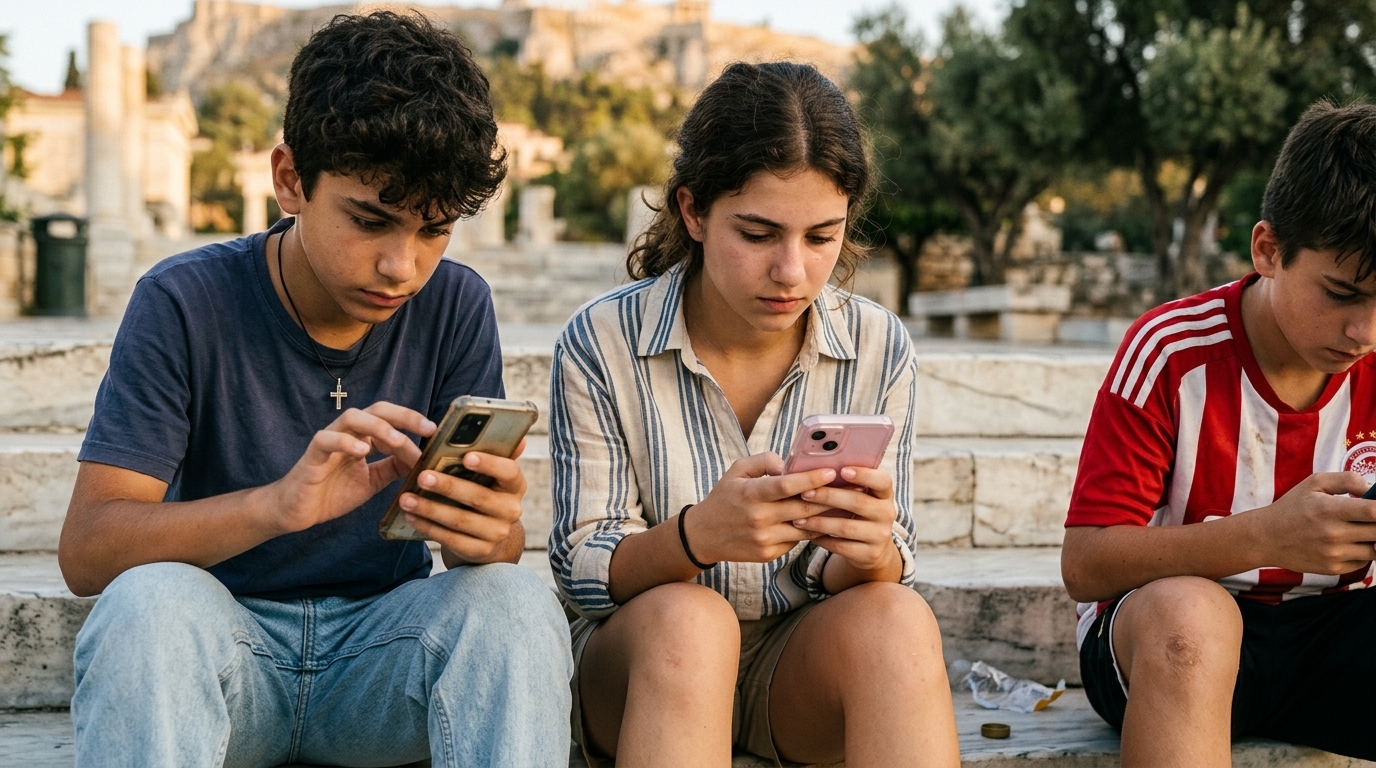
Greece, a country traditionally celebrated for its extroversion and vibrant social life in physical spaces, is now facing a harsh digital reality. Recent data, such as those highlighted by the World Health Organization (WHO) and the HBSC (Health Behaviour in School-aged Children) network, place Greek teenagers in the "red" zones of excessive and problematic social media use. This phenomenon is no longer limited to high school students but is expanding at an alarming rate to elementary school ages, creating an explosive cocktail of addiction, cyberbullying, and social isolation.
The Anatomy of a Digital Epidemic
Problematic social media use is not just a matter of spending "too many hours" in front of a screen. It is defined by the inability to control usage, withdrawal symptoms when access is interrupted, and the neglect of other activities such as sleep, studying, and interpersonal relationships. In Greece, the percentage of teenagers showing such symptoms is significantly higher than the European average. Experts point out that the lack of alternative creative outlets, combined with the ubiquitous nature of smartphones, has turned the digital world into the primary—and often only—field of socialization for the new generation.
- 15% of teenagers in Greece show signs of addictive behavior towards social media.
- Systematic use now begins as early as ages 9-10.
- Girls show higher rates of anxiety related to body image and social comparison.
The situation worsened rapidly following the pandemic, which acted as an accelerator. Screens, which were then the only window to the world, remained open, but the content became more toxic. Attention-grabbing algorithms, designed to keep users hooked, are now targeting brains that are still in development, making resistance almost impossible without external intervention.
Psychological Impacts and the FOMO Phenomenon
One of the most serious aspects of the problem is the impact on mental health. Constant exposure to an idealized reality creates feelings of inadequacy. FOMO (Fear of Missing Out) dominates the daily lives of Greek students. The need for constant validation through "likes" and "views" translates into a perpetual state of alertness that destroys the ability to concentrate and increases cortisol levels.
"This is not just a bad habit, but a structural change in the way young people perceive themselves and others," say psychologists specializing in addictions.
Furthermore, Greece records high rates of cyberbullying. The anonymity or distance provided by the screen weakens moral inhibitions, leading to incidents that often have tragic consequences. The lack of digital literacy in schools means that perpetrators often do not realize the severity of their actions, while victims feel trapped in a nightmare that doesn't stop at their front door.
The State's Response: Bans or Education?
The recent decision by the Ministry of Education to ban the visible possession and use of mobile phones in schools (the "phone in the bag" policy) is an attempt to curb the phenomenon. However, many analysts argue that bans alone are not enough. The root of the problem lies in the lack of digital literacy among both children and parents. In Greece, the generational gap in technology is vast, resulting in parents being unable to set boundaries or guide their children toward safe internet use.
A holistic approach is required, including the integration of digital ethics lessons into the curriculum, the creation of support structures for addicted teenagers, and, above all, the cultivation of a culture where technology serves humanity and not the other way around. Greece must view this problem as a national public health challenge, similar to smoking or obesity, before the effects become irreversible for its future generation of citizens.
Conclusion: The Need for a New Digital Deal
The fact that Greece is in the "red" must serve as a wake-up call. Digital overconsumption is not an individual problem but a collective failure. Protecting minors from the dangers of social media requires the cooperation of the state, educators, parents, and the tech giants themselves, who must finally take responsibility for the design of their products. Returning to "real" life does not mean rejecting technology, but regaining control over our time and attention.