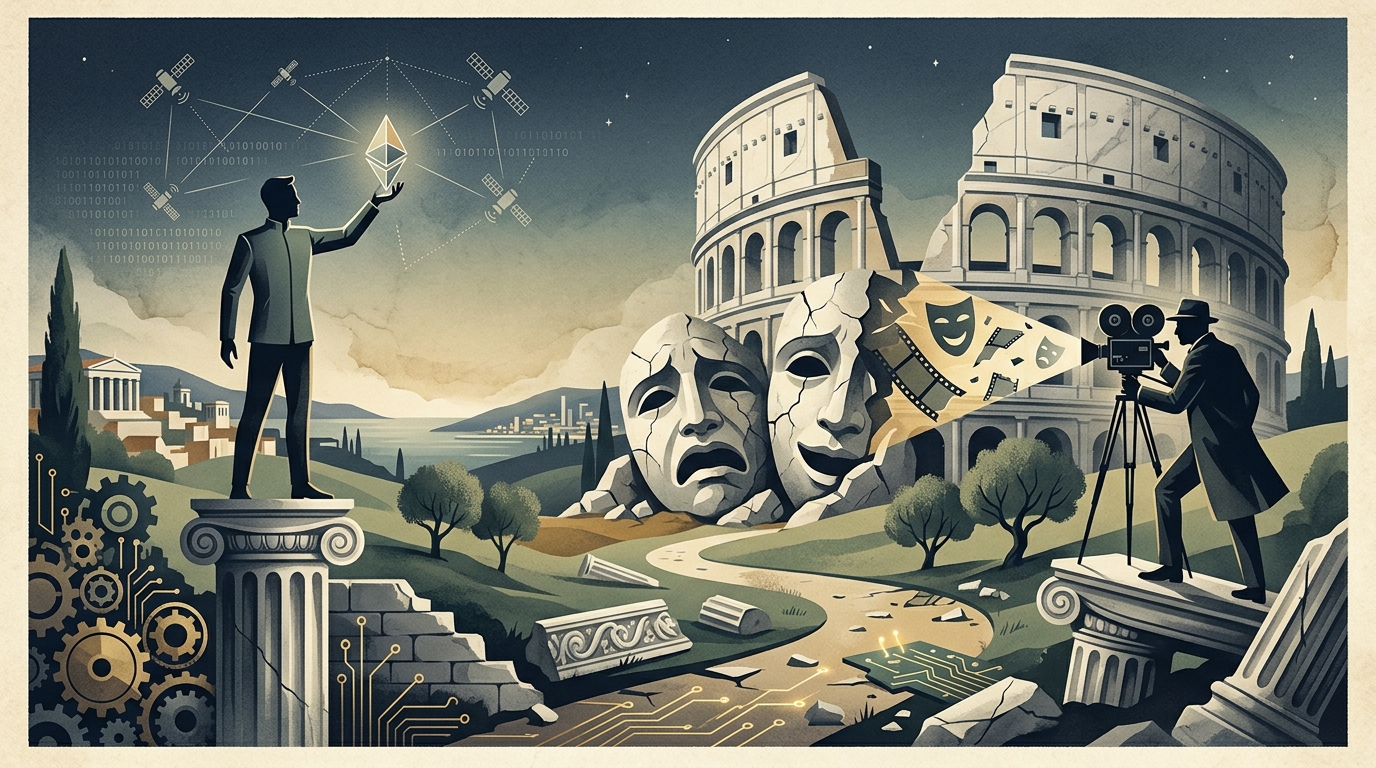
Ancient Greece has always been the cradle of the ideas that shaped the Western world. Today, in 2026, it has become the unexpected battlefield for one of the most intense cultural conflicts of the decade. On one side stands Elon Musk, the owner of X (formerly Twitter) and self-appointed crusader against the "woke mind virus." On the other is Christopher Nolan, the director who has redefined modern cinema with his commitment to complexity and authenticity. The bone of contention? A new blockbuster adaptation of Homer's "The Odyssey" and casting choices that, according to Musk, constitute an "insult to historical and cultural memory."
The Spark of Confrontation
It all began with a series of posts by Musk, in which he strongly criticized rumors regarding the casting of actors from diverse ethnic backgrounds in key roles, such as those of Odysseus and Penelope. Musk argued that Hollywood is attempting to "rewrite history" to satisfy a modern political agenda, sacrificing fidelity to the original text. "The Odyssey is the bedrock of European identity. Turning it into an exercise in social engineering is sacrilege," he stated, triggering waves of reaction worldwide.
For his part, Nolan, who rarely engages in public social media disputes, responded through a concise but meaningful statement. He emphasized that myth, by definition, is a living entity that belongs to all of humanity. "Homer did not write a historical record, but a universal archetype of the human experience, homecoming, and identity. Art should not be limited by the boundaries of DNA, but inspired by the depth of the soul," remarked the director of Oppenheimer and Interstellar.
Cultural Heritage as a Political Battlefield
This clash is not just about cinema; it is a profound political and philosophical struggle over who has the right to interpret the past. For Musk and his supporters, Nolan's move is part of a broader effort by "Woke Hollywood" to deconstruct European standards. They argue that "historical accuracy"—even within mythological contexts—is essential for respecting the peoples who gave birth to these works. In Greece, the debate has taken on significant dimensions, with academics and artists divided between protecting national heritage and the universality of the Greek spirit.
However, analysts point out that Musk is using this confrontation to bolster his narrative against traditional media elites. By attacking Nolan, one of the few directors who enjoys universal respect, Musk is attempting to show that no one is above criticism when it comes to "ideological purity." This is a tactic we have seen applied to series like "The Rings of Power" or "The Little Mermaid," but this time the stakes are higher due to the prestige of the individuals involved.
The Art of Interpretation vs. Visual Literalism
At the heart of the dispute lies the question: What does a "faithful adaptation" mean? For Nolan's supporters, fidelity is found in emotion, the rhythm of the language, and the moral complexity of the heroes. Ancient Greece, they argue, was a Mediterranean hub of cultures, and the attempt to impose modern racial divisions on an era that did not know them is itself anachronistic. Furthermore, the use of AI and digital effects in the film allows for a visual representation that transcends physical limits, making debates about skin color secondary to the grandeur of the direction.
On the other hand, Musk's side focuses on visual identity. In the age of the image, how a hero looks determines the viewer's connection to the story. "If you change the appearance of our gods and heroes, you change the very essence of the myth," critics say. This "visual literalism" is a powerful weapon in the hands of those who fear the dilution of traditions by globalization.
Conclusion: An Odyssey Without End
As the film's production progresses, it is certain that the debate will intensify. Nolan's "Odyssey" is no longer just a film, but a social experiment. Will art manage to bridge the gap, or will it become the definitive breaking point between the technological right and the artistic left? What is certain is that Homer remains relevant, not just for the adventures of Odysseus, but for his ability to force us to look at ourselves in the mirror of history, whoever the owner of that mirror may be.