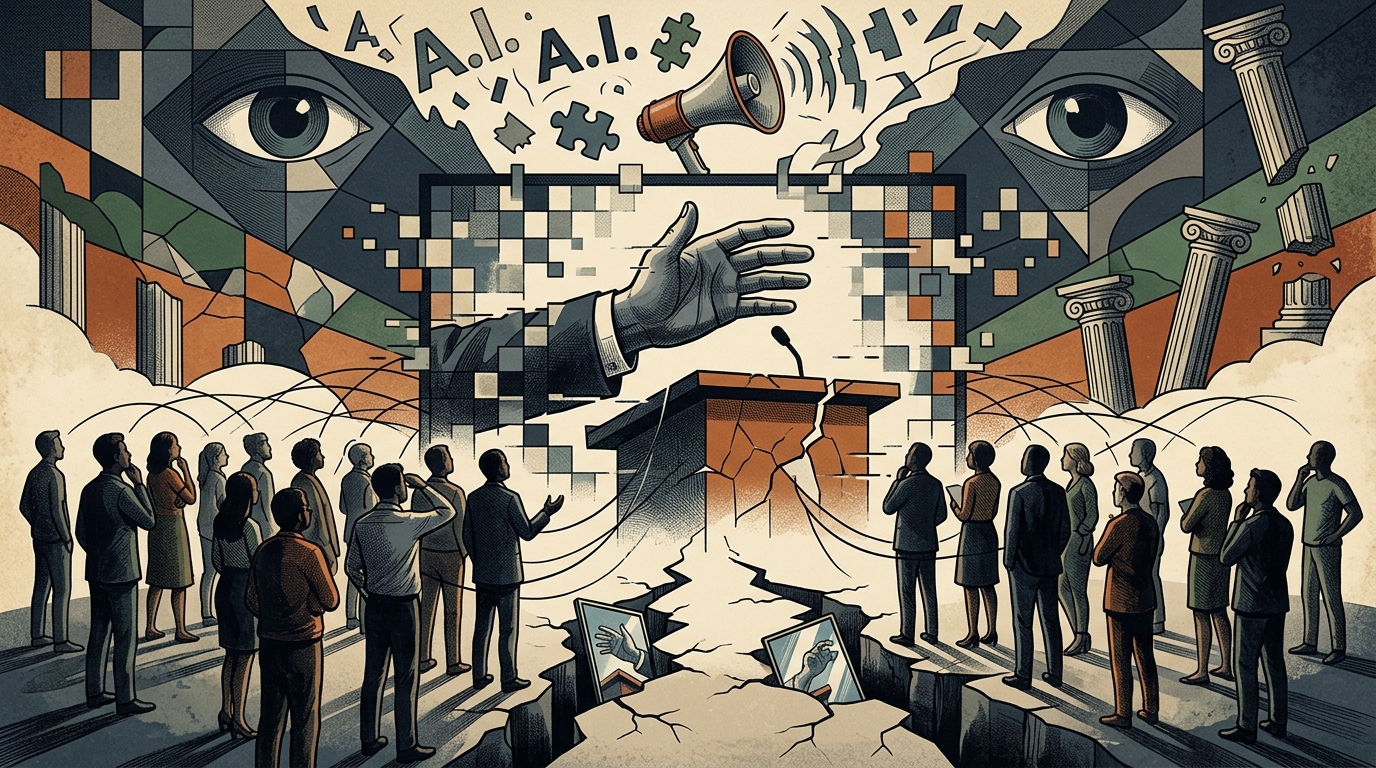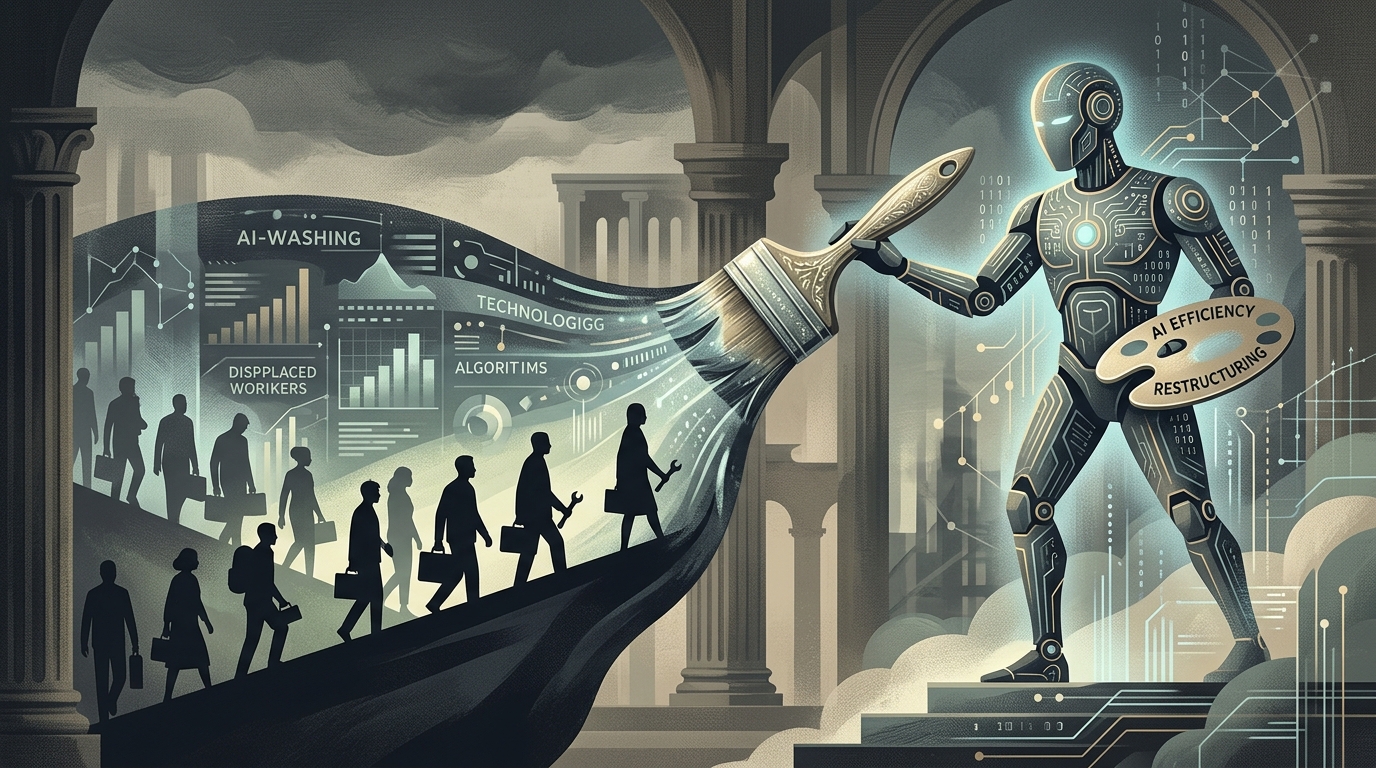
In the contemporary corporate landscape, the word "restructuring" has gained a new, more sophisticated ally: Artificial Intelligence (AI). As tech giants and multinational corporations announce waves of layoffs affecting tens of thousands of workers, a common pattern is emerging. Business leaders no longer cite only "economic uncertainty" or "post-pandemic corrections"; they now foreground the need to invest in AI as the primary driver for shrinking their human workforce. However, beneath the sheen of innovation lies a more cynical reality.
The Narrative of the "Inevitable" Transition
The rhetoric is nearly identical across Silicon Valley and beyond. Companies like Google, Amazon, and Duolingo have directly linked their layoffs to a strategic pivot toward Generative AI. The argument is simple: technology can now perform tasks that previously required human intervention, rendering those positions redundant. This narrative serves two purposes. First, it frames the layoff as a logical technological evolution rather than a harsh business decision. Second, it reassures investors that the company is "future-ready," often leading to a spike in stock prices immediately following the announcement of cuts.
Yet, many analysts point out that the current state of AI in no way justifies such large-scale replacement of workers. AI tools remain prone to errors ("hallucinations"), require significant human oversight, and often create more management work than they save. The real cause of layoffs appears to be the pressure for higher profit margins in a high-interest-rate environment, with AI serving as the perfect "laundry" for corporate public image.
The Ethical Erosion of the Corporate Social Contract
Using AI as a pretext for layoffs raises serious ethical questions. For decades, the promise of technological progress was the augmentation of human capability, not its total elimination. When a company records billions in profits while simultaneously firing thousands of workers citing "AI efficiency," it ruptures the social contract between capital and labor. Labor is no longer treated as an investment in human capital but as a disposable cost to be eliminated at the first opportunity.
- The alienation of remaining workers, who watch their colleagues being replaced by algorithms.
- The degradation of service quality, as AI often fails to grasp the context and empathy required in many roles.
- The creation of a culture of fear, where innovation is met with suspicion instead of excitement.
Furthermore, there is the risk of "AI-washing" in labor: companies claiming to use AI to justify layoffs while actually just shifting the workload to remaining staff or cheaper outsourced labor, using technology as a smokescreen.
The Role of Shareholders and Wall Street Pressure
One cannot analyze this phenomenon without looking at the financial data. During the era of "easy money" (low interest rates), companies hired aggressively. Now, under shareholder pressure for immediate profitability, they are seeking ways to slash operating expenses. Artificial Intelligence is the "magic word" that Wall Street loves. An announcement containing the words "AI integration" and "headcount reduction" is almost guaranteed to trigger a positive market reaction.
"We are not seeing a replacement of labor by technology, but a replacement of long-term strategy by short-term profit," notes a labor ethics expert.
This approach is dangerous. History has shown that companies sacrificing talent at the altar of quarterly results often lose their capacity for true long-term innovation. AI should be a tool for creating new opportunities and freeing human potential from repetitive tasks, not an excuse for mass unemployment.
The Future and the Need for Regulatory Frameworks
As we move through 2026, the need for a stricter regulatory framework becomes imperative. The European Union, with the AI Act, has taken initial steps, but protecting workers from the arbitrary use of AI as a reason for dismissal remains in a gray zone. Governments must demand transparency: if a company fires due to AI, it must prove that the technology actually replaces that specific function and invest in the reskilling of its workers.
In conclusion, Artificial Intelligence is a transformative force, but its current use as a justification for layoffs is more a matter of corporate governance and less about technological necessity. Society must challenge the corporate narrative and demand technological progress that includes humans, rather than casting them aside in the name of an algorithm.