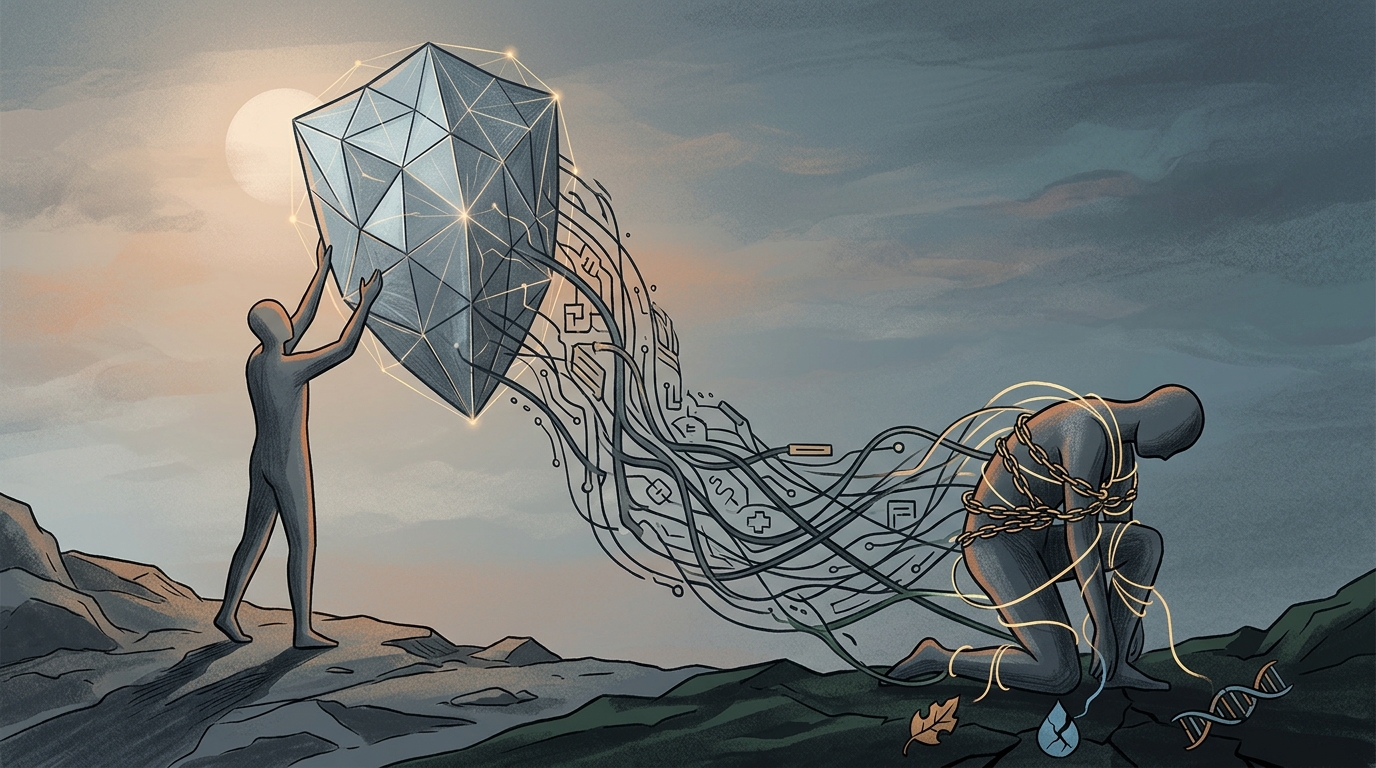
The image of a student hunched over a library desk, struggling to synthesize an original thought, is becoming an anachronism. Today, university halls are being flooded by a new, darker emotion: a pervasive sense of resignation and despair. According to recent reports and testimonies gathered by Futurism, students aren't just using Artificial Intelligence (AI) to "cheat"; they now feel coerced into integrating it into every facet of their academic lives, often prompted by the educational institutions themselves.
The Institutional Push for "Efficiency"
The paradox of modern higher education lies in the fact that while professors warn against AI-driven plagiarism, the universities themselves rush to market themselves as "AI-ready." This double-speak creates a toxic environment for students. Many report that their assignments are no longer evaluated for the depth of their thought, but for their ability to produce content that looks "professional"—something AI achieves in seconds. The pressure for speed and volume of output is crowding out the process of critical analysis, leaving young people feeling like mere "prompt engineers" rather than thinking beings.
- The devaluation of personal effort in the face of automated perfection.
- The fear that traditional learning is now obsolete in the labor market.
- The constant suspicion of AI detection algorithms that often "convict" the innocent.
The Erosion of Trust and the "Witch Hunt"
One of the most painful aspects of this transition is the collapse of the trust relationship between professor and student. AI detection tools, which have been repeatedly proven inaccurate, are being used as the ultimate arbiters of truth. Students who spend hours writing an essay find themselves facing accusations of fraud because their style was deemed "too standardized" by an algorithm. This climate of suspicion leads to psychological dissociation. Why should one try to write something authentic if there is a risk of being punished for it? The answer for many is complete surrender to AI: "If I'm going to be accused anyway, at least let the machine do the work."
"I feel like my voice doesn't matter anymore. If I don't use AI, my work looks incomplete. If I do use it, I feel like I haven't learned anything. It's a vicious cycle with no exit," says a third-year sociology student.
The End of Intellectual Cultivation?
The despair described in the Futurism report is not just about grades, but about the very essence of education. The educational process has historically been a journey of self-discovery through difficulty. The "removal of friction" promised by AI simultaneously removes the possibility of developing neural connections and critical capacity. If universities continue to push for an AI-based education without redefining the value of human effort, we risk creating a generation of graduates who possess the tools but lack the vision and the ability to challenge them. This crisis is a warning: technology must serve learning, not replace it.