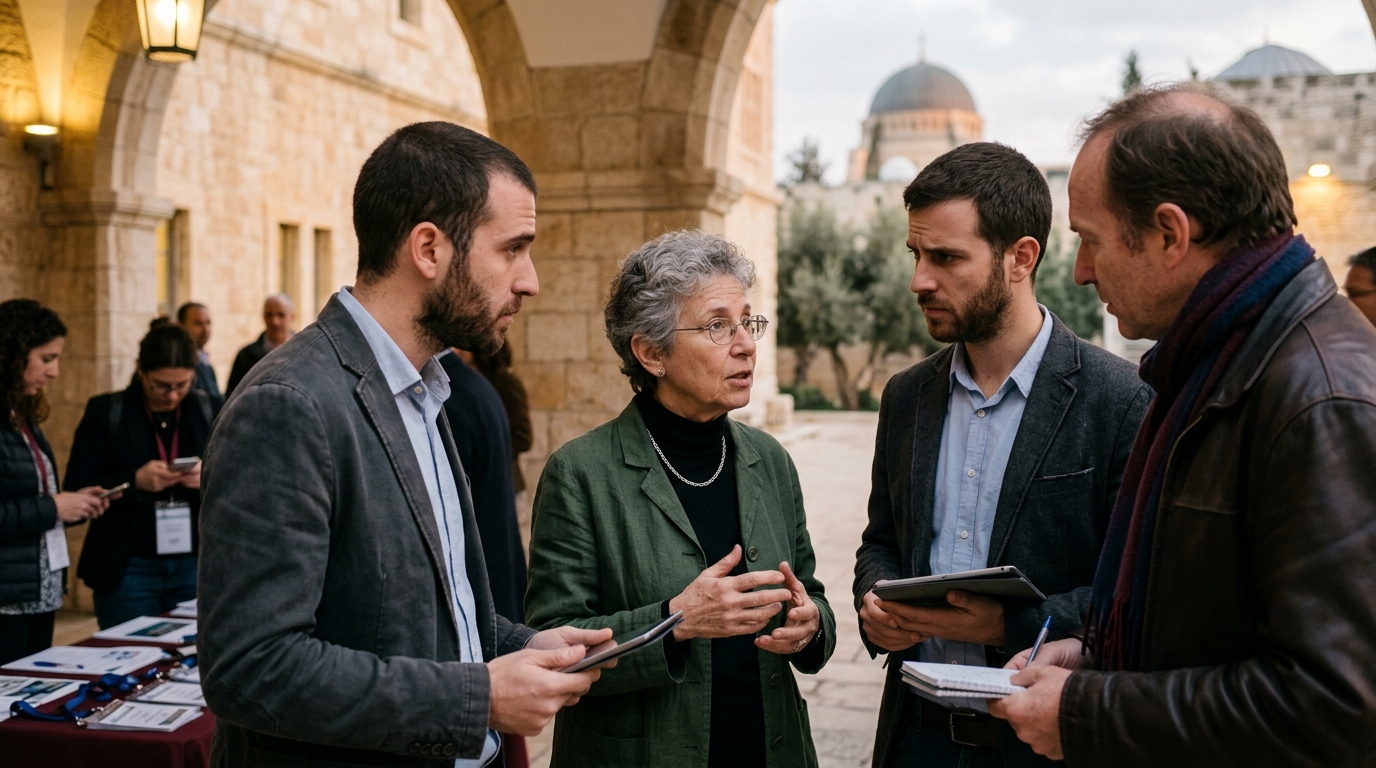
As we navigate the mid-point of 2026, humanity finds itself at a crossroads that mirrors the ancient biblical narratives of Babel and Jerusalem. Artificial Intelligence (AI), having permeated every facet of our social and personal existence, is no longer merely a tool for productivity but an ontological challenge. A recent profound analysis by The Catholic Weekly poses a critical question: Will AI become the new Tower of Babel—a monument to human hubris leading to fragmentation—or can it serve as a new Jerusalem, a place of encounter and shared meaning?
The Hubris of the Digital Babel
The allegory of Babel in the age of Artificial Intelligence is strikingly relevant. In the biblical story, the attempt to build a tower reaching the heavens was not punished for its architectural ambition, but for its motive: the human desire to replace the divine with a self-made construct, assuming that technical prowess equates to moral self-sufficiency. Today, Large Language Models (LLMs) and autonomous agents promise a universal "common language" for communication and problem-solving.
However, this homogenization carries hidden dangers. As theologians and ethicists observe, reliance on algorithms that function as "black boxes" can lead to a new form of alienation. When decision-making—ranging from judicial sentencing to medical diagnostics—is delegated to systems without consciousness, we risk losing the personal responsibility that defines human nature. The Babel of AI is not a confusion of tongues, but a confusion between information and wisdom, between data processing and true understanding.
The Vision of Jerusalem and 'Algorethics'
In contrast to Babel stands the symbol of Jerusalem—a space where technology is placed at the service of the community and the dignity of the individual. The Vatican, under the guidance of Pope Francis, has pioneered the term "Algorethics," emphasizing that ethics must be embedded into the very design of algorithms. The challenge here is to ensure that AI does not widen social inequalities but acts as a bridge.
- Inclusivity: Ensuring that minorities and marginalized communities are not excluded from technological benefits.
- Transparency: The demand for explainable AI that respects human judgment.
- Accountability: Maintaining "human-in-the-loop" control over critical decisions.
The Jerusalem of the digital age does not reject progress; it sanctifies it through moral purpose. Instead of a tower rising selfishly toward the sky, it proposes a network that spreads horizontally to support the vulnerable. This approach requires a deep philosophical shift: from asking "what can we build?" to "what must we protect?"
The Anthropological Crisis in the Machine Age
The deeper issue raised by the Babel vs. Jerusalem conflict is anthropological. What does it mean to be human when a machine can write poetry, compose music, or simulate empathy? The Christian tradition, like many other humanistic schools of thought, insists that human value does not stem from productivity or computational power, but from the capacity for relationship, self-sacrifice, and the search for the transcendent.
"Artificial intelligence can store all the knowledge in the world, but it cannot feel the weight of a tear or the joy of forgiveness."
This distinction is vital as we move toward 2027. If we allow AI to define our truth, we have already laid the foundations of a new Babel. But if we use AI to liberate humans from soul-crushing labor and grant them the time to cultivate their spirit, we approach the ideal of Jerusalem. The ethical challenge of our time is not technical, but spiritual: it is the need to remember that the creator must always be greater than the creation—not in power, but in moral stature.
Conclusion: The Choice is Ours
As governments worldwide rush to establish regulatory frameworks, such as the EU AI Act, the religious and philosophical perspective offers something laws cannot: a compass of meaning. Artificial Intelligence is a mirror. If we see in it only our desire for dominance, we will end up in the confusion of Babel. If we see an opportunity for service and understanding, we might find the way to a new Jerusalem. The stakes for 2026 are to remain the architects of our destiny, preserving the sanctity of the human person in a world made of silicon.