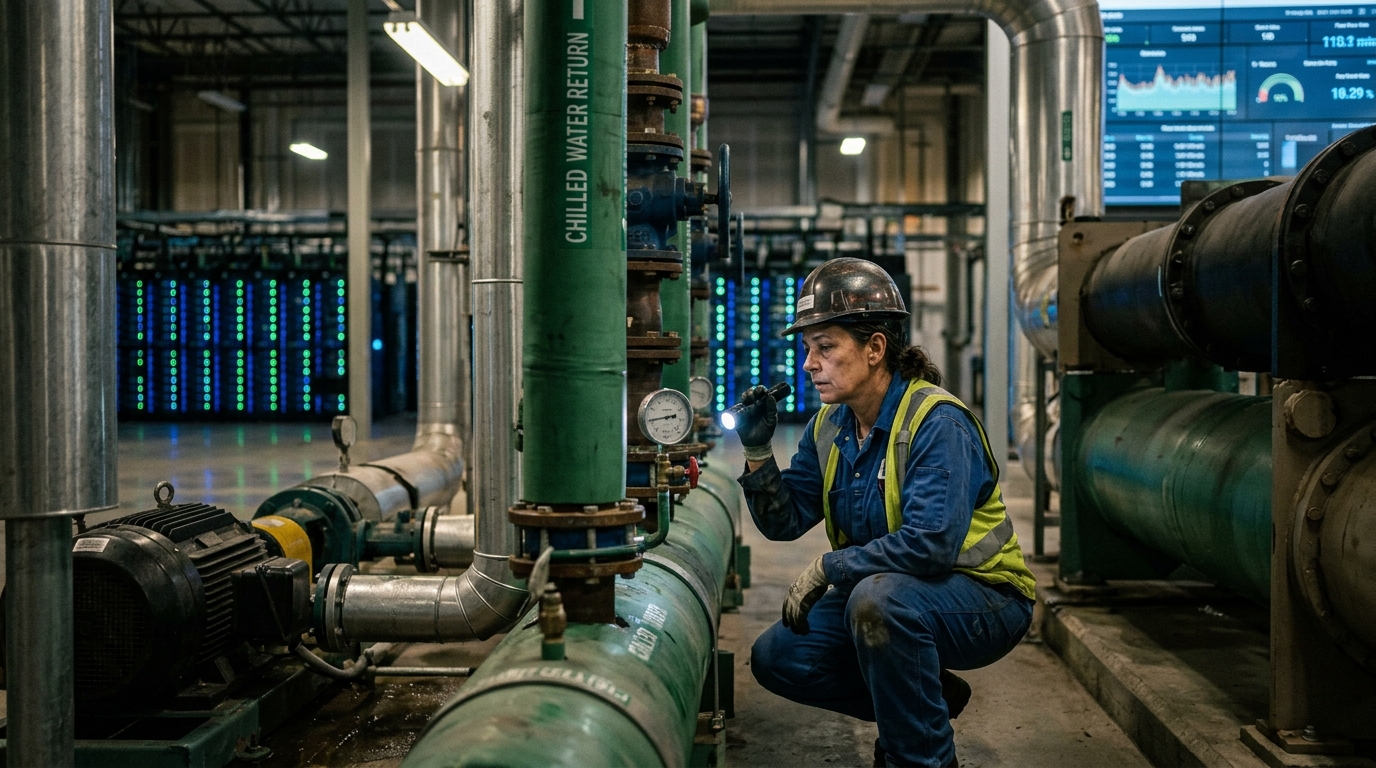
When we type a prompt into ChatGPT or ask a generative AI to create an image, we rarely consider the physical consequences of that action. Behind the "ethereal" nature of the cloud lies a harsh, material reality: massive facilities filled with powerful processors generating heat at levels that require millions of liters of water to prevent them from melting down. The recent revelation that annual water consumption for AI needs is expected to reach 9.3 trillion liters by 2026 highlights an environmental crisis that the tech industry has spent years trying to keep in the shadows.
The Physics of Cooling and the "Water Footprint"
The problem begins with the very design of data centers. Graphics Processing Units (GPUs), such as Nvidia's H100s which form the backbone of AI, consume enormous amounts of energy. Most of this energy is converted into heat. To maintain system stability, data centers use two primary cooling methods: air conditioning (which requires vast amounts of electricity) and evaporative cooling.
Evaporative cooling is the most cost-effective method for companies but the most expensive for the environment. Water is drawn from local grids, used to absorb heat from the servers, and then a large portion of it is evaporated into the atmosphere, rather than returning to the groundwater. According to studies by researchers at the University of California, Riverside, a typical conversation of 20-50 queries with GPT-4 "costs" the environment about 500ml of water—roughly the size of a small plastic bottle.
The Conflict with Local Communities
The thirst of tech giants is no longer a theoretical problem. In regions like Arizona in the US, Uruguay, and Chile, the construction of new data centers by Google and Microsoft has sparked intense backlash. During periods of drought, residents see drinking water supplies dwindle while multinationals secure preferential water contracts to keep their algorithms "cool."
- In Uruguay, in 2023, protests erupted against Google's plans with the slogan "It's not drought, it's pillage."
- In London, the Water Authority warned that data centers consume enough water to supply thousands of households.
- In the Netherlands, it was revealed that a Microsoft data center was consuming 84 million liters of water a year, despite initial promises of minimal usage.
Ironically, many of these facilities are marketed as "green" because they use renewable energy sources for electricity. However, water consumption remained outside of sustainability reports (ESG) for years, creating a false image of ecological neutrality.
From Transparency to Action: Is There a Solution?
Pressure on Big Tech is mounting. The European Union, through the Energy Efficiency Directive, now requires data center operators to disclose their water footprint. At the same time, new technologies are being developed, such as "closed-loop cooling," where water is continuously recycled without evaporating, and "liquid cooling," where specialized coolants come into direct contact with the chips.
"We cannot speak of ethical artificial intelligence if it deprives future generations of the most basic necessity of life," the GreenBusiness report notes.
The solution is not just technical but political. It requires a stricter regulatory framework that prohibits the construction of data centers in water-stressed areas and mandates the use of air instead of water, even if it increases the companies' operating costs. Artificial intelligence promises to solve many of humanity's problems, but if the price for this progress is the desertification of the planet, then the cost is immeasurable.