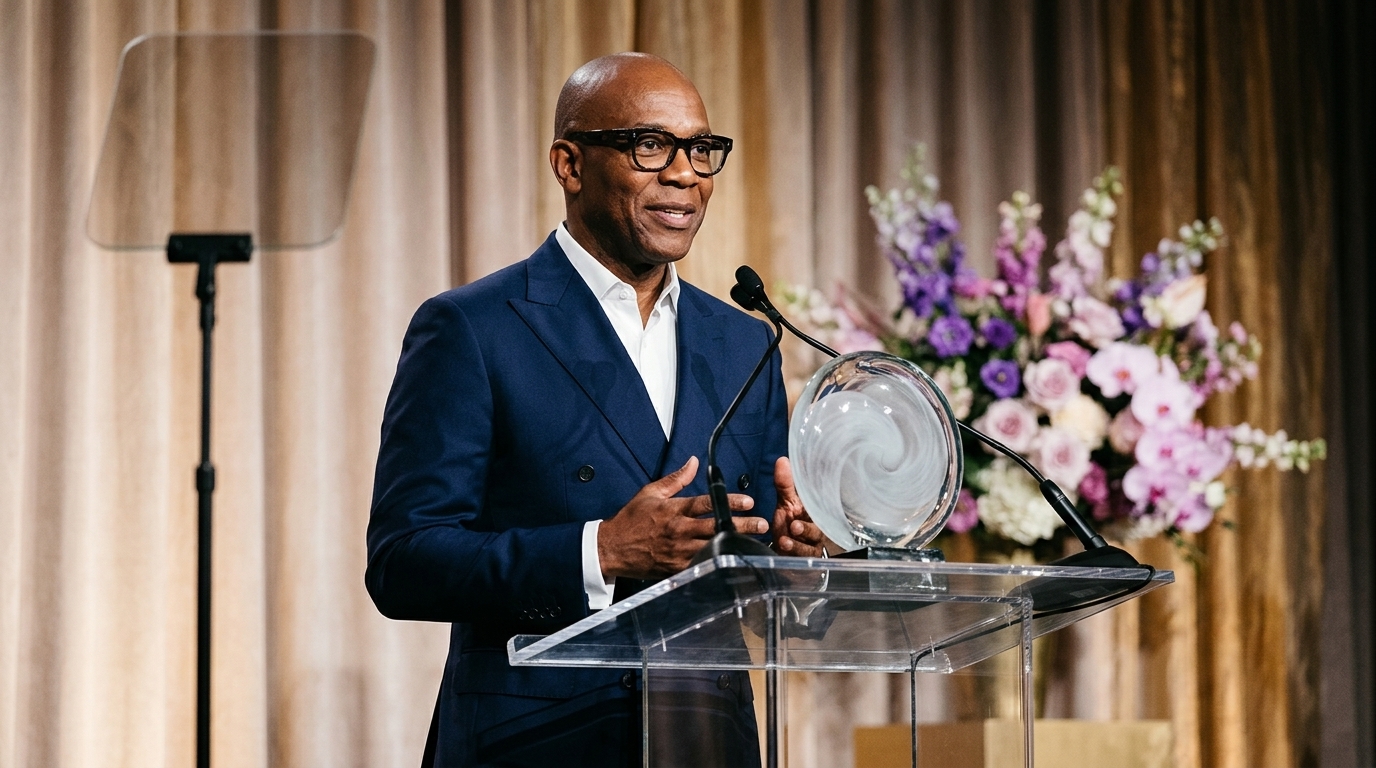
Against the sun-drenched backdrop of the French Riviera, where the global advertising elite gathers for the Cannes Lions festival, Edward Enninful issued a clarion call that resonates far beyond the runways of London or Milan. As the former editor-in-chief of British Vogue, Enninful has long been a barometer for cultural shifts. Now, in the summer of 2026, his focus has moved from the page to the very fabric of our sensory experience, which he argues is being eroded by the relentless tide of Artificial Intelligence.
The central premise of Enninful’s latest discourse is that AI is creating a state of "sensory overwhelm." With his new creative platform, EE72, Enninful is not launching a jihad against technology, but rather advocating for a strategic retreat into the physical. In a world where digital content is generated at a scale and speed that defies human comprehension, the true luxury of the future—and perhaps our greatest ethical necessity—is the tactile, the permanent, and the human-curated.
The Deluge of the Digital Soul
We are currently living through what critics call the "Slop Era" of the internet—a period where generative AI fills our feeds with high-fidelity but low-substance imagery. Enninful argues that this deluge is numbing our senses. When everything is visually perfect, nothing is visually significant. This creates an ethical vacuum where the value of human labor and the uniqueness of artistic vision are liquidated into a sea of pixels.
"We are losing the ability to feel the weight of an image," Enninful noted during his sessions at Cannes. His response is to champion physical media. Whether it is a limited-edition print publication or a physical art installation, the goal is to provide a sensory anchor in a digital storm. By re-emphasizing the physical, Enninful is making a moral argument for the preservation of human attention, suggesting that we owe it to ourselves to engage with media that requires more than a mindless swipe.
The Google Paradox: AI as a Tool, Not a Master
Perhaps the most intriguing aspect of Enninful’s vision is his partnership with Google. It seems contradictory for a man preaching the gospel of the physical to align with the world’s largest data company. However, Enninful views this as a necessary synthesis. He is utilizing Google’s advanced AI models, such as the latest iterations of Gemini, to empower a new generation of diverse creators who might otherwise lack the technical resources to compete.
The ethical distinction here is one of agency. In Enninful’s model, AI is the apprentice. It handles the heavy lifting of data processing and rapid visualization, allowing the human creator to focus on the "soul" of the project. This collaboration with brands like Moncler demonstrates how AI can be used to design physical spaces and garments that are deeply rooted in human history and tactile reality. It is a philosophy of "AI-augmented humanity," where the final output is something you can hold, wear, or walk through.
Curation as a Defense Against Algorithmic Bias
Beyond the sensory experience, Enninful’s push for physical media is a strike against the inherent biases of AI. Algorithms are trained on the past, often reinforcing outdated stereotypes and Western-centric beauty standards. By moving away from the algorithmic feed and back toward curated physical platforms, Enninful aims to protect the diversity he fought so hard to bring to Vogue.
Physical media requires a deliberate choice. You have to buy the book, visit the gallery, or wait for the print. This friction is where ethics reside. It allows for a slower, more critical engagement with content. In the AI age, speed is often the enemy of depth. Enninful’s EE72 seeks to reintroduce that depth, ensuring that the stories of underrepresented communities are not just lost in a fleeting digital scroll but are given the permanence of ink and thread. As we navigate the complexities of 2026, the return to the physical may be our most effective way to remain grounded in our own humanity.