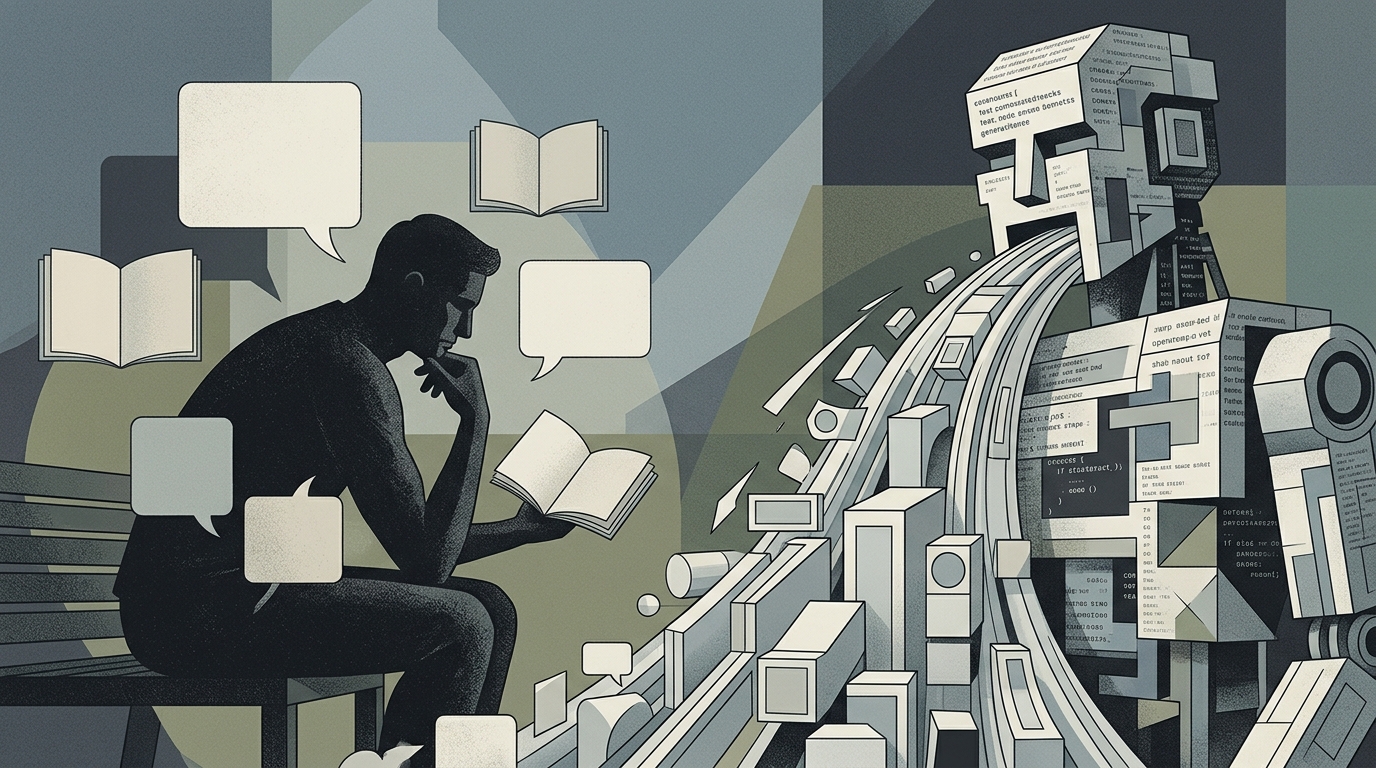
The music industry stands at a critical crossroads where technology is no longer merely a supportive tool but an autonomous creator threatening to displace the human element from art. The recent intervention by esteemed Greek composer Yannis Glezos brings to the fore a debate that transcends technical boundaries and touches the very core of our cultural identity. Glezos, a creator synonymous with the sophisticated musical setting of poetry, expresses profound concern over the AI "invasion" of music creation, warning that art is in danger of becoming a sterile product of algorithmic processing.
The Deepfake Hit Phenomenon and Ethical Erosion
In recent months, the internet has been flooded with songs utilizing the voices of famous artists—living or dead—without their consent. From Drake and The Weeknd to the late Greek legends like Pantelis Pantelidis or Stelios Kazantzidis, Voice Conversion technology allows anyone to "borrow" a legendary timbre and apply it to any melody. The results are often so convincing that audiences struggle to distinguish the authentic from the fabricated. Yannis Glezos points out that this practice is not just a technological showcase but a deep violation of an artist’s personality and body of work.
The problem with "deepfake" hits is not solely legal; it is primarily ethical. When software can replicate the emotion and the subtle tremors of a voice built through years of lived experience, music is stripped of its truth. Glezos argues that music is a spiritual act, a communication between souls—something AI, no matter how advanced, fails to comprehend. Generating "music" via prompts transforms the listener into a passive consumer of content that lacks inherent meaning and historical context.
The Legal Battle for Intellectual Property
Glezos' intervention coincides with a period of intense global litigation. Major record labels have filed lawsuits against AI companies like Suno and Udio, accusing them of mass copyright infringement. These companies allegedly used millions of protected songs to "train" their models without compensating the original creators. In Greece, the Hellenic Copyright Organization (OPI) is closely monitoring these developments, as existing legislative frameworks struggle to keep pace with technological velocity.
- Voice as Property: Should a vocal timbre be protected under copyright law?
- Model Training: Is the algorithmic analysis of millions of songs truly "fair use"?
- Mandatory Labeling: Should AI-generated content be legally required to carry a disclaimer?
Glezos emphasizes that without strict regulations, new creators will find themselves in a market where economic survival is impossible, competing against machines that produce thousands of tracks per minute at zero cost. This trajectory leads to cultural homogenization, where quality is sacrificed for quantity and speed.
The Human Soul vs. The Algorithm
Concluding his warning, Yannis Glezos makes a plea to the public and institutions: protect the "human footprint." Music that endures is not that which possesses perfect production, but that which carries the pain, joy, and experience of its creator. AI can mimic the sound, but it cannot experience the emotion. This invasion, if not checked by an ethical and deontological framework, risks turning our culture into a vast digital echo of the past, devoid of a future.
The discussion initiated by the Greek composer serves as a reminder that technology must serve humanity, not replace it. The "success" of a deepfake song on the charts might be a fleeting technological triumph, but it represents a strategic defeat for human creativity. Protecting intellectual property and artistic integrity is, ultimately, protecting our very humanity in an increasingly artificial world.