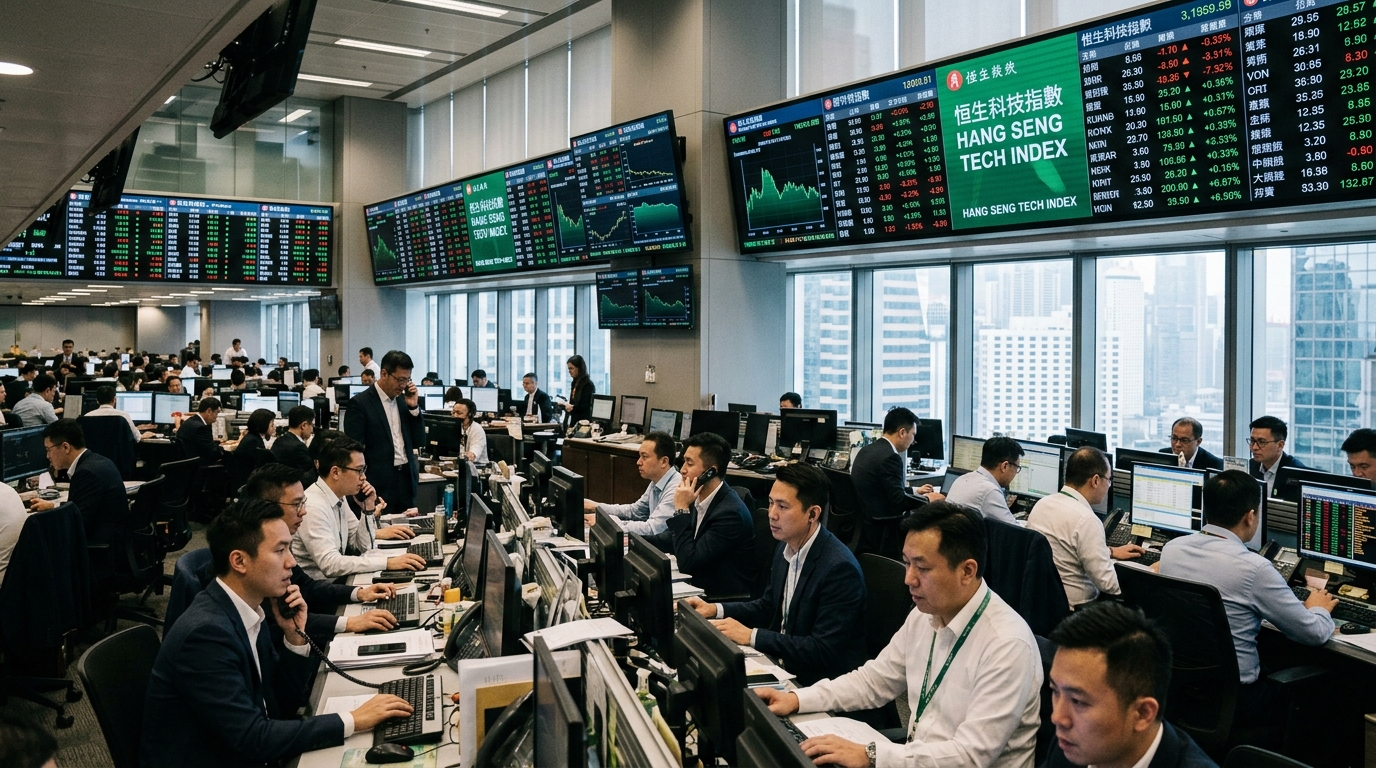
The announcement that Chinese artificial intelligence firms Zhipu AI and MiniMax are set to join Hong Kong’s Hang Seng Tech Index is far more than a routine market update. It represents the official coronation of a new generation of "national champions" tasked with leading China’s response to the global dominance of OpenAI and Google. At a time when geopolitical friction between Washington and Beijing is increasingly centered on semiconductors and Large Language Models (LLMs), this move highlights the maturation of China’s AI ecosystem and its urgent need for fresh capital.
The "AI Tigers" and the Rise of Zhipu AI
Zhipu AI, frequently dubbed the "OpenAI of China" by industry analysts, is the quintessential example of academic excellence pivoting into industrial might. Born out of the prestigious Tsinghua University, the company has successfully secured funding from tech titans like Alibaba, Tencent, and Meituan, alongside state-backed funds. Its flagship model, ChatGLM, has demonstrated remarkable proficiency in understanding the nuances of the Chinese language and cultural context—areas where Western models often falter due to training data limitations and cultural misalignment.
Joining the Hang Seng Tech Index provides Zhipu AI with a platform of visibility that extends beyond the closed circles of private venture capital. For a company already valued in the billions, access to the liquidity of the Hong Kong market is vital for sustaining the capital-intensive research and development required to stay competitive. This is especially true as the company navigates the complex landscape of U.S. export controls on high-end Nvidia GPUs, forcing a reliance on domestic hardware and algorithmic efficiency.
MiniMax: The Power of Social AI
On the other hand, MiniMax has carved out a distinct and equally successful path. By focusing on the "social" dimension of AI and the creation of digital personas with distinct personalities, the company has captured the imagination of China’s younger generation. Its app, Talkie, has even seen success in international markets, proving that Chinese AI is not solely focused on enterprise productivity or state surveillance, but also on entertainment and human-centric interaction.
The inclusion of MiniMax in the Hang Seng Tech Index signals a shift in investor sentiment toward companies that have already achieved "product-market fit." Unlike the hype-driven cycles of the past, today’s market demands tangible results. MiniMax, with its ability to generate revenue through subscriptions and digital goods, serves as a blueprint for the sustainable AI enterprise in a post-growth era.
The Hang Seng Tech Index as a Geopolitical Tool
The Hang Seng Tech Index, which already hosts giants like Alibaba and Tencent, has been searching for its "next big thing" for years. With the traditional e-commerce market reaching saturation, AI offers a fresh narrative for growth. However, the inclusion of these firms carries significant political weight. Hong Kong is striving to redefine itself as the primary tech bridge between mainland China and the global financial system, despite mounting pressure from Western regulators and shifting trade dynamics.
Investors are closely watching how these companies will navigate the dual challenges of domestic censorship and strict Beijing-led AI regulations. Their success on the index will depend on their ability to balance technological innovation with political mandates in an environment where "digital sovereignty" has become the ultimate objective. The index is no longer just a collection of stocks; it is a barometer of China’s technological self-reliance.
Conclusion: A New Era for Chinese Tech Equities
The entry of Zhipu AI and MiniMax into the Hang Seng Tech Index is not the finish line, but the beginning of a high-stakes competitive phase. As the U.S. tightens technology export restrictions, China is compelled to accelerate its domestic development. These companies are no longer mere followers of Silicon Valley trends; they are the architects of a parallel technological reality. For global investors, their presence on the index offers a rare, albeit high-risk, opportunity to bet on the future of Chinese intelligence and its role in the 21st-century economy.