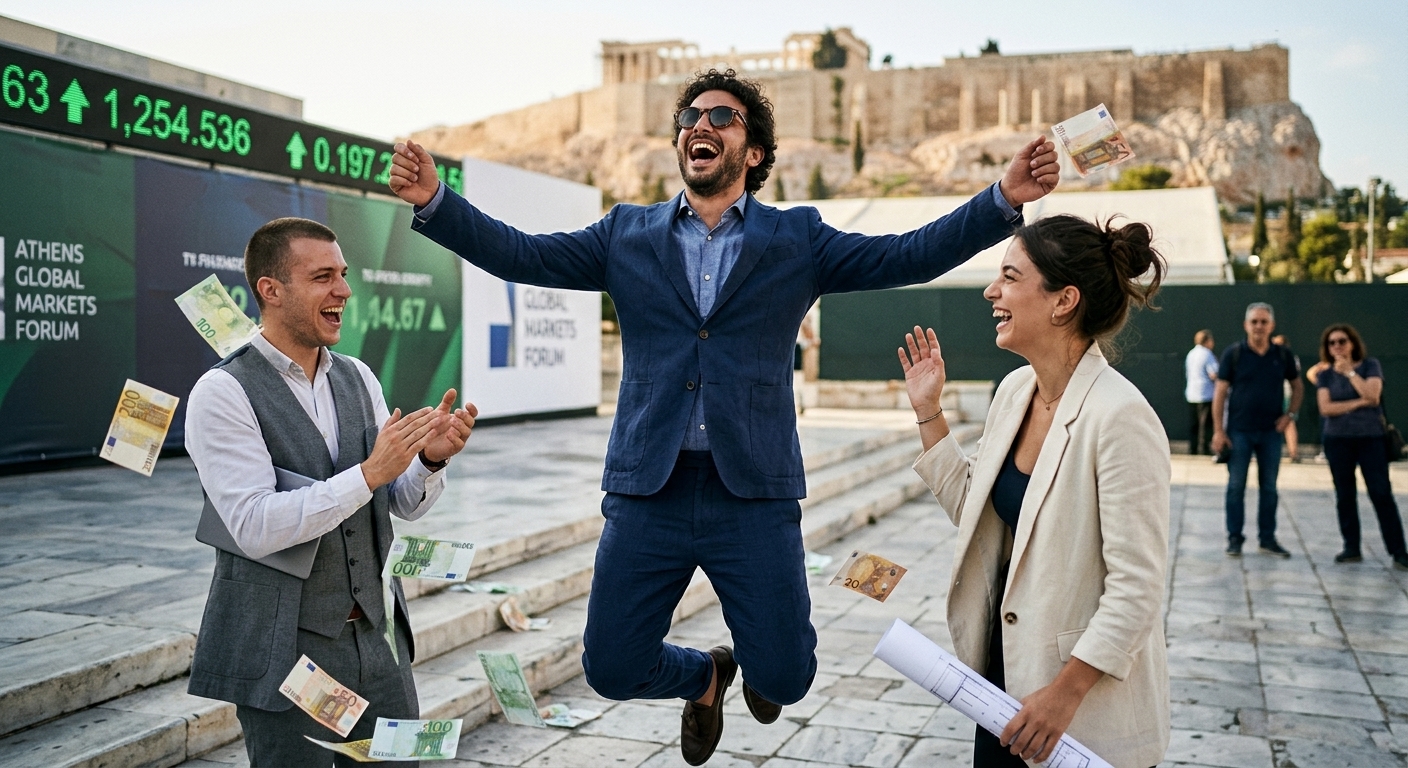
The global economic chessboard is witnessing one of its most dramatic shifts in decades. While traditional wealth hubs like London and New York face headwinds from shifting tax regimes and geopolitical volatility, new magnets for capital are emerging. In this evolving landscape, Greece is no longer the "sick man of Europe" but a nation prominently featured in forecasts for the growth of Ultra-High-Net-Worth Individuals (UHNWI) through 2031.
The Transformation of the Greek Investment Profile
Greece's entry into the global Top 20 for wealth creation is no accident. According to international analyses and reports from Fortune Greece, the country is benefiting from a blend of strategic reforms and natural advantages. The implementation of the "Non-Dom" tax regime for foreign residents, coupled with Golden Visa programs (despite recent tightening), has created a compelling framework for international capital.
However, this "new wealth" is not solely about foreign inflows. There is a domestic renaissance occurring in sectors such as technology, renewable energy, and an upgraded luxury tourism industry. Greek entrepreneurs, having survived a decade-long crisis, are now exhibiting an extroversion that translates into significant capital accumulation. The stability of the banking system and the return to investment-grade status act as catalysts, reducing country risk and enabling long-term strategic planning.
The Global Map and Competition
At the top of the list where wealth is being "born," we find nations like the UAE, Singapore, and the United States. Greece’s presence in this Top 20 places it alongside economies with significantly larger footprints. This is partly due to the trend of "Lifestyle Migration" – where wealthy individuals choose their residence based on quality of life, safety, and climate, without sacrificing connectivity to global financial hubs.
"Greece is transforming from a country that exported talent to one that imports capital and expertise, creating a new wealth ecosystem that transcends traditional shipping."
The challenge for Athens is to maintain this momentum until 2031. Greece's geographical position as the EU's gateway to the Middle East and Asia makes it a strategic hub. Infrastructure investments, such as the Ellinikon project and port upgrades, create an environment where wealth is not merely "parked" in real estate but invested in productive activities.
Risks and Social Implications
Despite the optimism, ascending the wealth pyramid brings serious challenges. An increase in the number of multi-millionaires often correlates with pressure on the real estate market, making housing unaffordable for the middle class. The gentrification of entire areas of the Athenian Riviera and the islands is already evident. Furthermore, there is a risk that this wealth remains within a luxury "bubble," failing to trickle down into the wider economy through high-skilled job creation.
For Greece's position in the Top 20 to be sustainable, political leadership must balance attracting the ultra-rich with strengthening social cohesion. Tax fairness and investment in public education and healthcare are essential prerequisites to ensure that "new wealth" does not become a source of social polarization, but rather a lever for holistic national prosperity.