In the grand AI gold rush, the old adage suggests that the real winners are those selling the picks and shovels. However, as we navigate through 2026, the reality has become far more nuanced. It is no longer enough to possess the world's fastest processor; one must be able to power it and, more crucially, prevent it from melting down. Enter Vertiv Holdings (VRT), a company once categorized as a 'staid' data center equipment provider, which has now managed to outperform even the semiconductor titan Nvidia in market returns.
The Physics of the AI Boom
Vertiv’s meteoric rise is not a matter of luck. As Nvidia rolls out its Blackwell architecture chips, power consumption per server rack has surged to levels that traditional air cooling can no longer handle. When a single rack demands upwards of 100kW, the heat generated is so intense that advanced liquid cooling systems become a necessity rather than a luxury. Vertiv holds the pole position in this specialized market, offering everything from coolant distribution units to high-capacity uninterruptible power supplies (UPS).
Analysts emphasize that Vertiv has built a formidable 'moat' around its business. It is not just about manufacturing hardware; it is about the capability to install and maintain these critical infrastructures on a global scale. The company's recent deals with major cloud providers (Hyperscalers) for next-generation system supplies have created a massive backlog, insulating its revenue against potential market volatility and cyclical downturns in chip demand.
Vertiv vs. Nvidia: A Performance Comparison
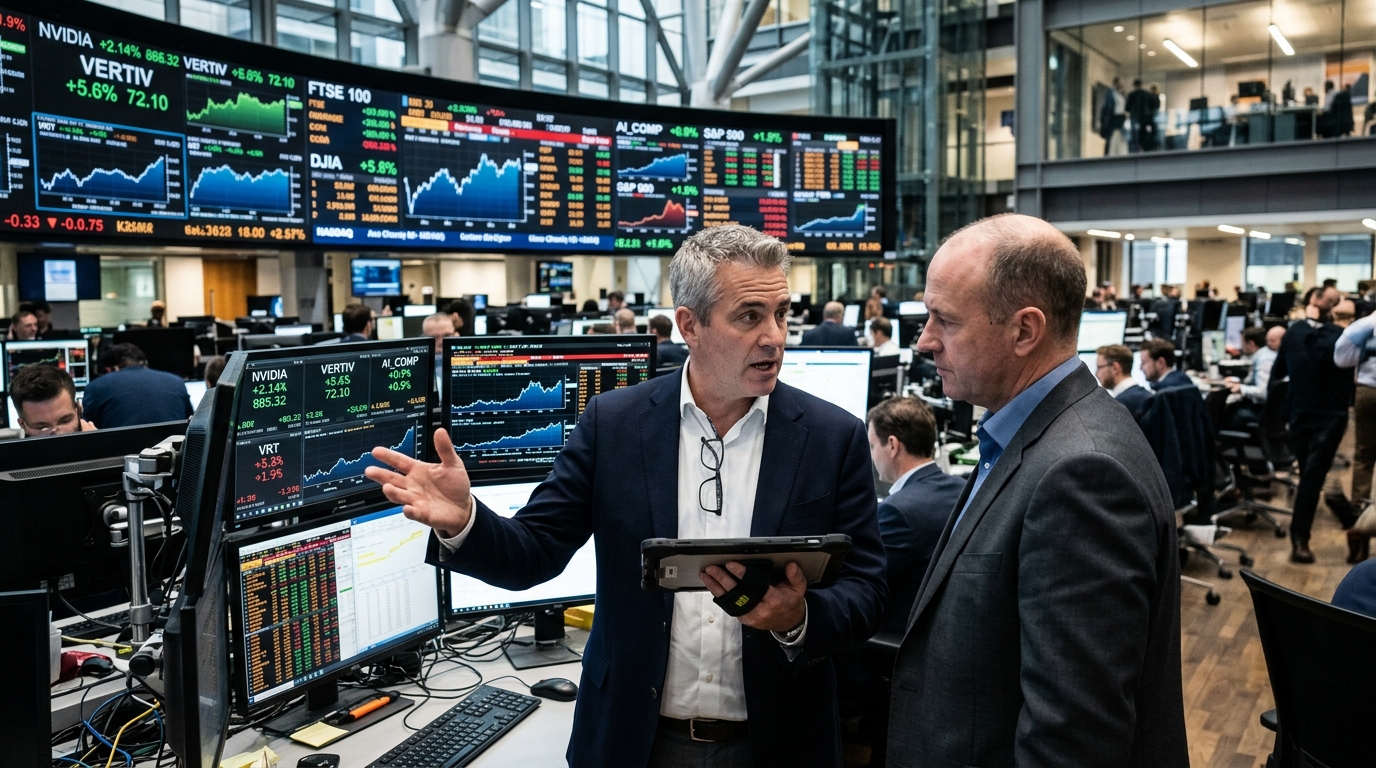
A look at the charts reveals a compelling story. While Nvidia remains the undisputed king of GPUs, Vertiv’s stock has shown higher percentage gains during specific windows over the past year. This shift occurred as the market realized that physical infrastructure is the true bottleneck for AI expansion. Without Vertiv's thermal management, Nvidia's high-end chips are essentially expensive pieces of silicon prone to thermal throttling.
Vertiv’s early investment in liquid cooling is now paying significant dividends. Through strategic acquisitions and internal R&D, they have developed solutions that lower the total cost of ownership for data centers while improving energy efficiency—a critical factor as sustainability becomes a core pillar of corporate strategy and regulatory compliance.
The Power of Strategic Partnerships
The latest major deal, highlighted by Yahoo Finance and other financial outlets, involves Vertiv's technologies being integrated directly into the reference designs of major chipmakers. This means that when a client purchases an AI server cluster, Vertiv’s cooling solution is often the pre-validated, default choice. This level of integration into the supply chain is what is driving the stock toward new record highs.
- Liquid cooling demand is projected to grow at a 40% CAGR through 2030.
- Vertiv maintains the industry's largest technical support network, a significant barrier to entry for competitors.
- Big Tech CAPEX remains aggressive, with a primary focus on hardening data center infrastructure.
In conclusion, Vertiv has transitioned from a mere vendor to a strategic architect of the digital economy. As artificial intelligence moves from the experimental phase to full-scale production, the demand for robust, efficient, and scalable infrastructure will make companies like Vertiv even more central to the investment landscape. The AI revolution is not just happening in the code; it is happening in the pipes and power lines that sustain it.