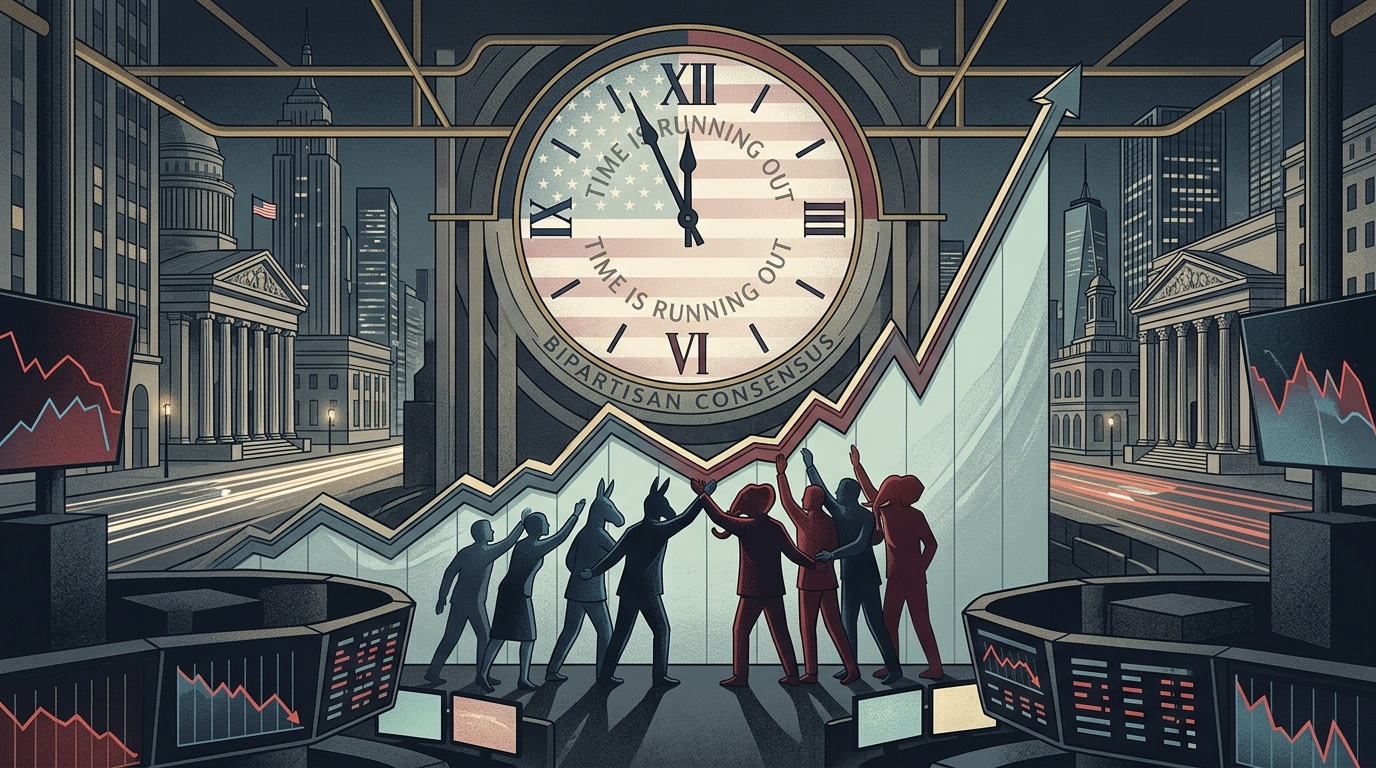
In the current political landscape of the United States, where polarization seems to have eroded almost every possibility for dialogue, an unexpected common denominator is emerging. According to recent data from the Pew Research Center and analyses released in May 2026, the U.S. national debt has become the top issue causing concern across the entire political spectrum. Paradoxically, voters appear more aligned regarding the risks of fiscal instability than they are on issues like inflation, healthcare, or the labor market.
The Arithmetic of Anxiety: Why Debt Scares Everyone
For decades, the national debt was a topic used primarily as a political "bludgeon" by the opposition to strike at the incumbent administration. However, in 2026, the situation has fundamentally shifted. With total debt surpassing $36 trillion and the cost of servicing it—interest payments—now exceeding the national defense budget, the threat is no longer theoretical. Voters realize that the state's ability to respond to future crises, whether a new pandemic or a geopolitical conflict, is being undermined by the weight of past borrowing.
Data analysis reveals that over 75% of registered voters from both parties consider the debt a "major threat" to the country's prosperity. This percentage is higher than those concerned about climate change (among Democrats) or border security (among Republicans). The sense that the nation is "living on borrowed time" has permeated the social consciousness, creating a rare moment of national unity, even if it stems from fear.
The Disagreement on Solutions: The Gap Remains
While the diagnosis of the problem is shared, the cure remains the major sticking point. Republican voters focus almost exclusively on spending cuts, targeting social programs and bureaucracy. On the other hand, Democrats see the solution in increasing taxes on large corporations and high earners, as well as closing tax loopholes.
- Republican Approach: Drastic reduction of the federal government, reform of Social Security and Medicare.
- Democratic Approach: Fair taxation, investments in green energy for long-term yields, reducing prescription drug costs.
Despite these differences, the pressure on politicians in Washington is mounting. Voters are no longer satisfied with mere promises. "Debt fatigue" is leading to a demand for fiscal responsibility that might force the two parties into a historic compromise, similar to those of the 1990s. However, the economic environment of 2026 is far more fragile, with interest rates remaining at levels that make every dollar of new borrowing extremely expensive.
The Shadow of Inflation and the Jobs Market
It is noteworthy that debt has overtaken inflation in the hierarchy of concerns. While inflation affects daily life at the supermarket, debt is now viewed as the "root cause" of many economic ills. The perception that excessive money printing and government borrowing fuel price increases has taken root in public opinion.
"We aren't just worried about how much bread costs today, but whether there will be a state left to protect our children tomorrow," a Pew analyst noted.
In the labor market, the connection is also evident. Businesses hesitate to make major investments when the country's fiscal future is uncertain. The fear of a sudden fiscal adjustment (austerity) or a downgrade of the U.S. credit rating acts as a brake on growth. Thus, the debt is no longer an abstract number on a balance sheet but a tangible threat to job security and economic stability.
Conclusion: An Opportunity for Leadership?
The alignment of voters on the national debt issue offers a unique opportunity for political leaders. Instead of using the debt as a tool for petty political gain, they could leverage this shared concern to push through bold reforms. The question remains: will Washington be able to meet the demands of its base, or will ideological rigidity lead the country into an inevitable fiscal crisis? History will judge whether 2026 was the year of awakening or the beginning of a prolonged decline.