

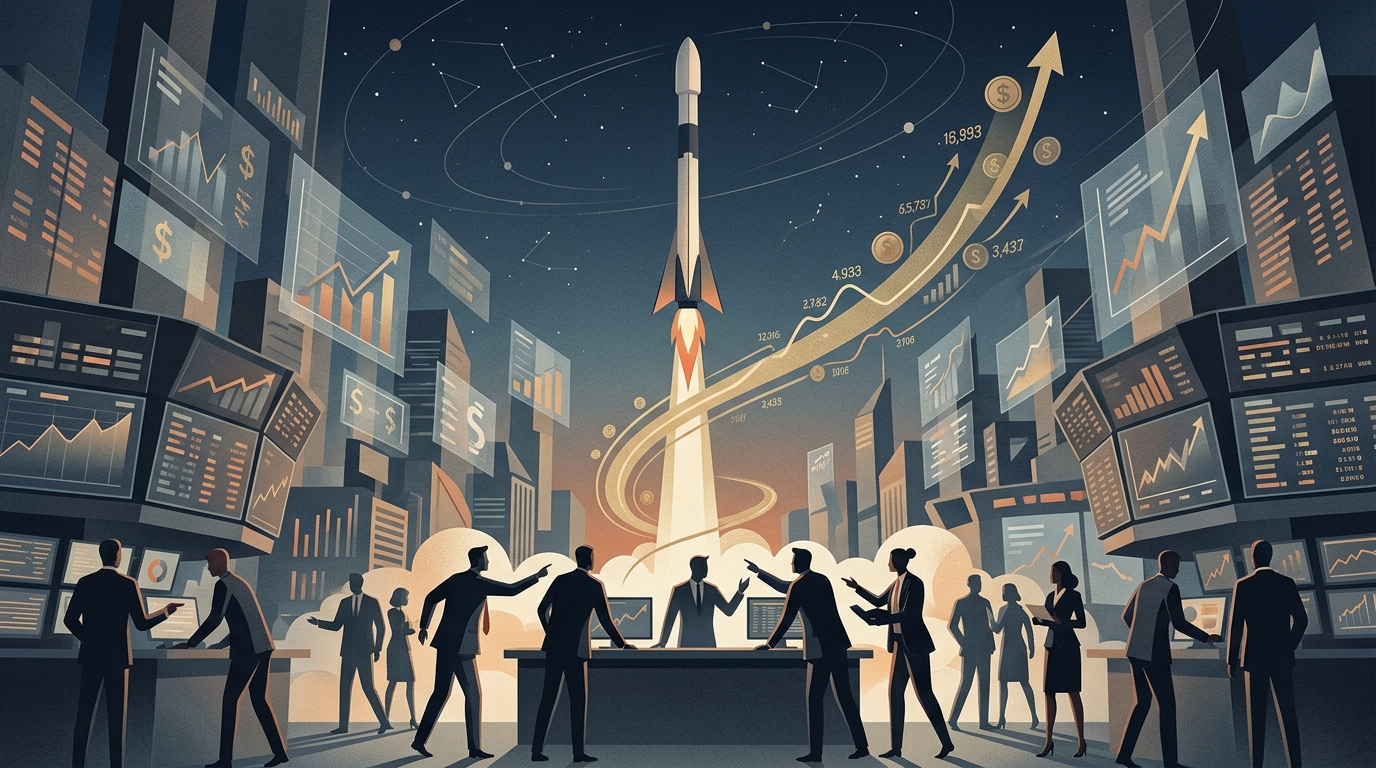
On June 12, 2026, global economic history turned a pivotal page. With the long-anticipated Initial Public Offering (IPO) of SpaceX, the company's market valuation surged to levels previously deemed unthinkable for an aerospace enterprise. As a direct consequence, its founder, Elon Musk, became the first person in history whose personal fortune surpassed the $1.1 trillion mark. To grasp the scale of this wealth, consider the analogy favored by analysts: if one were to save a dollar every second, it would take nearly 35,000 years to accumulate such a sum. This development is not merely a triumph of personal enrichment; it represents a fundamental shift in how humanity values space as an economic domain.
The Strategy of Dominance: From Rockets to Networks
SpaceX's success was not built solely on its ability to launch rockets, but on its ability to land and reuse them. The technology behind the Falcon 9 and, more recently, the full operational readiness of Starship, has reduced the cost of access to space tenfold. This competitive edge allowed the company to monopolize global satellite launches, including critical missions for NASA and the U.S. Department of Defense. However, the true 'treasure' driving the trillion-dollar valuation is Starlink.
Starlink, SpaceX's satellite internet service, has successfully connected the most remote regions of the planet—from sub-Saharan Africa to the remote islands of the Aegean—offering fiber-like speeds from orbit. With over 15,000 satellites in low Earth orbit by the summer of 2026, SpaceX now controls the backbone of global information. Wall Street investors didn't just buy shares in a rocket company; they bought shares in the sole infrastructure provider necessary for the global operation of AI and autonomous systems.
The Starship Factor and Martian Colonization
Starship, the largest and most powerful flight vehicle ever constructed, is the key to Musk’s vision for Mars and his economic omnipotence. The ability to transport 100 tons of cargo into orbit at the cost of fuel alone changes the rules of heavy industry. Asteroid mining, manufacturing in microgravity, and space tourism are no longer science fiction scenarios but business plans with concrete timelines.
Wall Street has recognized that SpaceX is not just a company but an entire economic ecosystem. Just as the railroads created the first tycoons in the 19th century by controlling the flow of goods, SpaceX controls the flow to the 'Final Frontier.' This vertical integration—from manufacturing rockets to providing end-user services—creates a monopoly that regulators struggle to contain, as the technological gap between SpaceX and competitors like Blue Origin or Boeing remains a chasm.
Socio-Economic and Political Implications
The emergence of the world's first trillionaire brings intense debates regarding inequality and the power of private individuals versus nation-states to the forefront. When one person holds wealth exceeding the GDP of many developed nations, their influence on the global political stage becomes inevitable. Already, the use of Starlink in geopolitical conflicts has demonstrated that Musk’s decisions can sway the outcome of wars and diplomatic efforts.
- The concentration of wealth to this degree raises urgent questions about taxing super-profits derived from space resources.
- The reliance of national security agencies on a private entity poses significant risks to national sovereignty.
- Musk’s ability to autonomously fund Martian colonization makes him the de facto 'governor' of a new world.
In conclusion, the $1.1 trillion milestone is not the end of the road but the beginning of a new phase for human civilization. Whether viewed as the ultimate success of innovation or a disturbing concentration of power, it is certain that our future is no longer being written solely on Earth, but among the stars, with the price of entry measured in trillions.





