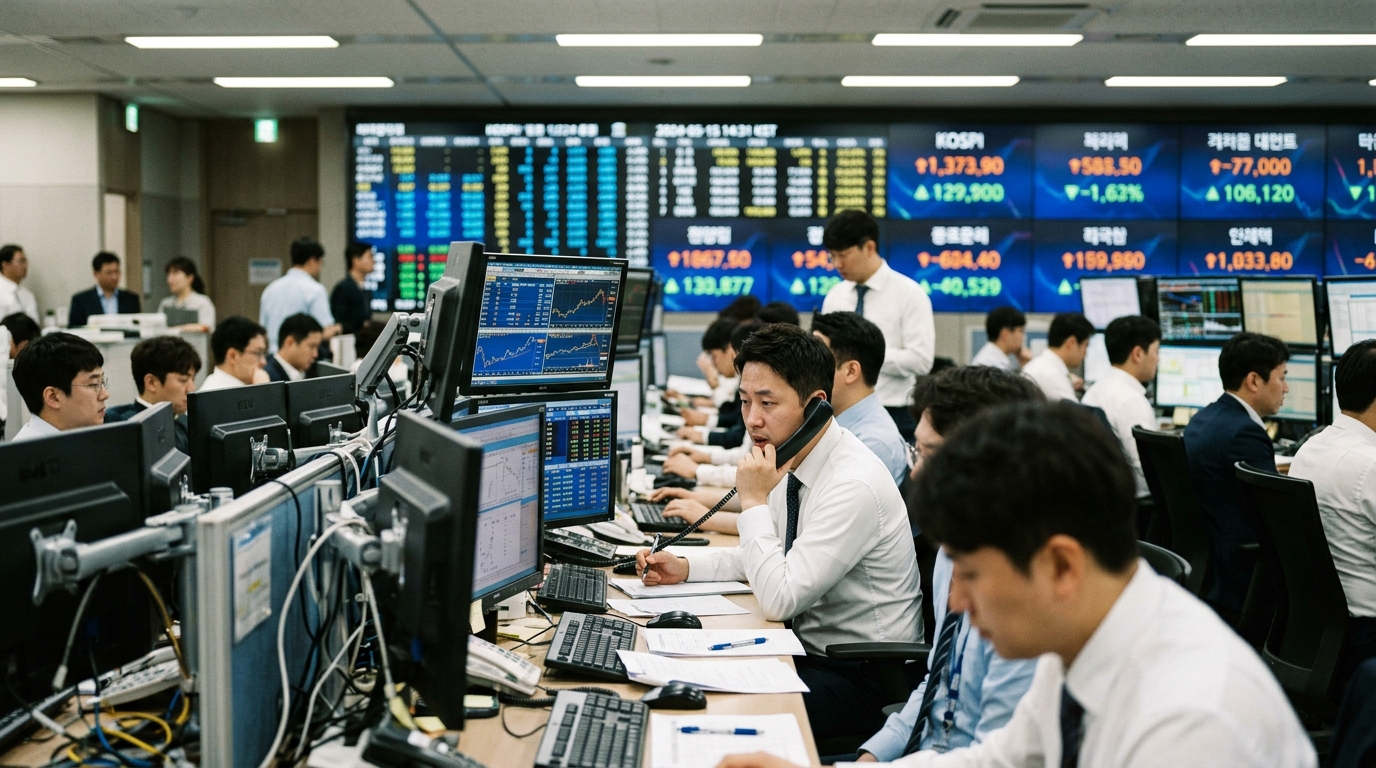
In the heart of Seoul, the KOSPI stock exchange is experiencing one of the most paradoxical periods in its history. As global demand for High Bandwidth Memory (HBM) chips skyrockets due to the AI revolution, shares of Samsung Electronics Co. and SK Hynix Inc. have staged a rally that has defied even the most optimistic expectations. However, this success has turned into an operational nightmare for many international and domestic fund managers. The issue isn't performance; it's regulation.
The Regulatory Trap and the Diversification Rule
Many investment funds, particularly those governed by European UCITS rules or similar restrictions in the US and Asia, are subject to strict diversification mandates. The most prominent is the "10/40 rule": a fund cannot hold more than 10% of its assets in a single stock, and the sum of all positions exceeding 5% cannot surpass 40% of the total portfolio. With Samsung traditionally serving as the heavyweight of the Korean index and SK Hynix rapidly gaining ground, the positions of many funds have "bloated" beyond these limits purely due to price appreciation.
When a stock's value rises so significantly that it breaches a legal threshold, the manager has no choice but to engage in "forced selling." This is a technical move unrelated to the company's fundamentals or future prospects, but rather a matter of compliance. This creates artificial selling pressure in the market, which can stifle momentum even when the news from the earnings front is stellar.
HBM Dominance and AI Momentum
The root of this rally lies in technological supremacy. SK Hynix has established itself as the primary supplier for Nvidia’s HBM3E and HBM4 chips, while Samsung, after a period of adjustment, has successfully closed the gap, securing massive orders for the next generation of AI processors. The market forecasts that earnings for these companies will continue to grow at double-digit rates as data centers worldwide upgrade to support Large Language Models (LLMs).
- SK Hynix now commands approximately 50% of the global HBM market.
- Samsung recently announced massive investments in new 2nm production lines.
- Demand for AI memory is expected to outstrip supply well into late 2026.
This positive outlook is what drives prices upward, while simultaneously pushing institutional portfolios to their limits. For investors following passive strategies (index funds), the situation is even more complex, as the KOSPI 200 index is so heavily dominated by these two companies that maintaining balance without violating internal control rules becomes nearly impossible.
Market Implications and the "Korea Discount"
Forced selling creates a "glass ceiling" effect. Every time Samsung approaches new all-time highs, a wave of liquidations from institutional investors emerges to bring its portfolio weighting back within limits. This contributes to the so-called "Korea Discount" — the phenomenon where South Korean stocks trade at lower price-to-earnings multiples compared to their peers in the US or Taiwan.
"It is the irony of modern fund management: you are penalized for picking the winner," says a market analyst based in Seoul.
Many analysts warn that unless regulators in Korea and internationally adapt rules for "heavyweight" stocks in the era of tech concentration, the market will continue to suffer from this technical volatility. Investors are now seeking alternative ways to gain exposure, such as derivatives or specialized ETFs with different concentration limits, to avoid missing out on the growth promised by artificial intelligence.