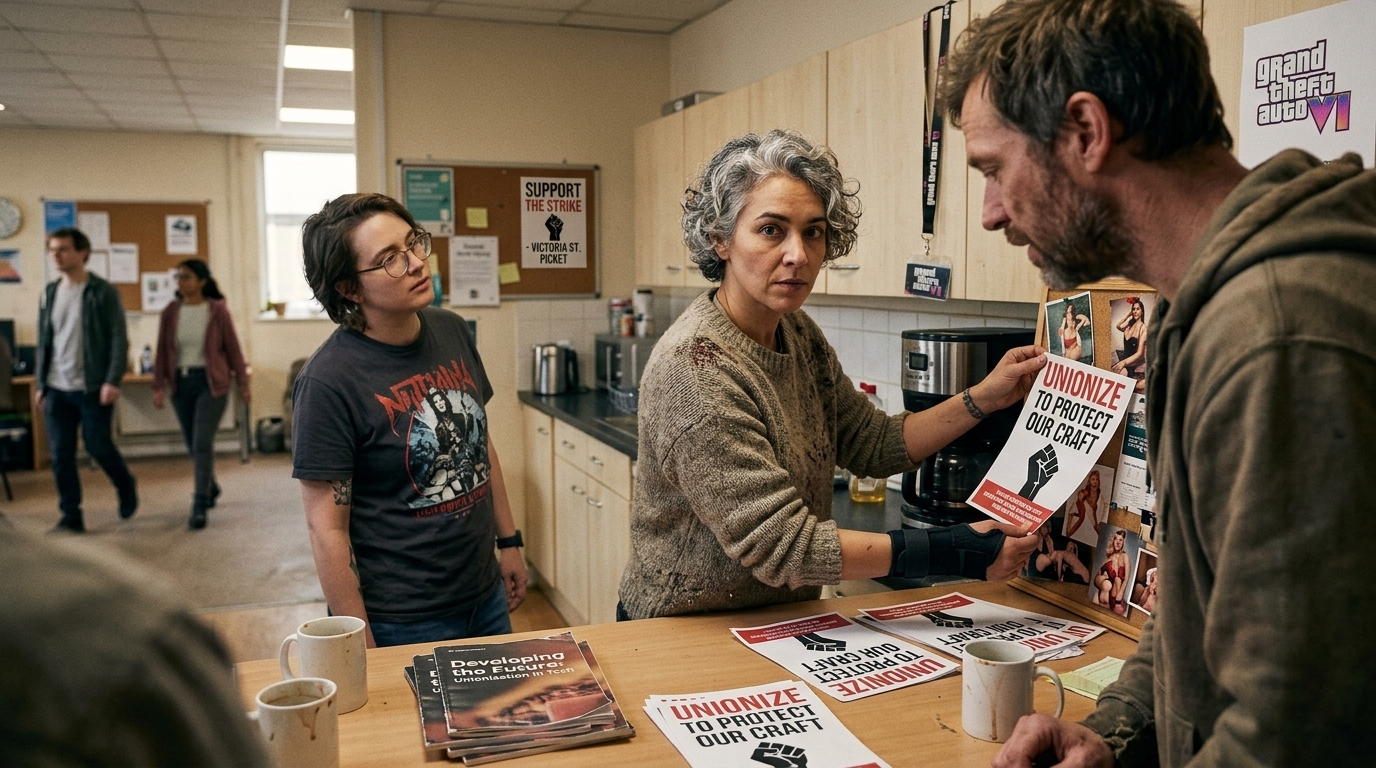
In the high-stakes arena of the video game industry, where digital dreams are forged with multi-billion dollar budgets, the reality behind the screens is often less than idyllic. Rockstar Games, the powerhouse developer behind the global phenomenon Grand Theft Auto (GTA), is currently at the center of a labor firestorm. As the world waits with bated breath for the 2025 release of GTA VI, the people creating it—the programmers, designers, and QA testers—have decided to demand a seat at the table. The IWGB Game Workers Union has formally requested voluntary recognition from the company, marking a historic turning point for labor rights in the tech and entertainment sectors.
The Shadow of 'Crunch' and the Drive for Recognition
Rockstar Games is no stranger to labor controversy. For decades, the studio was synonymous with 'crunch' culture—periods of extreme overtime where employees were reportedly expected to work up to 100 hours a week to meet launch deadlines for titles like Red Dead Redemption 2. While Rockstar's management has claimed significant improvements in workplace culture over recent years, the recent mandate requiring a full five-day return to the office has reopened old wounds. Workers view this move as a regression, disproportionately affecting those with caregiving responsibilities or health issues, while simultaneously ramping up pressure as GTA VI enters its final production phase.
The push for union recognition comes at a time when trust between management and staff is at an all-time low. Last year, Rockstar terminated more than 30 contract workers, a move the IWGB characterized as blatant 'union busting.' These layoffs, according to workers, were designed to intimidate those attempting to organize, fostering a climate of fear in an already high-stress environment.
Corporate Strategy vs. Worker Welfare
The refusal of Rockstar—and by extension its parent company, Take-Two Interactive—to voluntarily recognize the union is unsurprising to industry analysts. In the tech world, unions are often viewed as obstacles to 'agility' and production speed. However, the Rockstar case is unique due to the sheer scale of the upcoming project. GTA VI is projected to be the most profitable entertainment product in history, with a budget estimated near $2 billion. Workers argue that such monumental success should not be built on the backs of an exhausted and precarious workforce.
"We aren't asking for the world; we are asking for a voice in the conditions under which we labor. Rockstar makes billions, and we are the ones generating that value. It is only fair that we have security and respect," says an anonymous member of the union committee.
The company’s return-to-office policy is seen by many as a 'soft layoff' strategy—a way to induce resignations and reduce headcount without the PR nightmare or financial cost of formal redundancies. This trend, increasingly common across Silicon Valley, has sparked a global backlash from labor organizations demanding transparency and fair treatment in the post-pandemic era.
A Broader Crisis in the Gaming Industry
The movement at Rockstar is not an isolated incident. It is part of a growing wave of unionization sweeping through the industry, affecting giants like Activision Blizzard, Bethesda, and Ubisoft. Following a period of explosive growth during the pandemic, the gaming sector is now undergoing a painful correction, with tens of thousands of layoffs worldwide in 2024 and 2025. In this volatile climate, a union offers a sense of protection that individual negotiation simply cannot provide.
The success or failure of the unionization effort at Rockstar will send a powerful signal across the entire sector. If one of the most prestigious and traditionally secretive studios in the world is forced to bargain collectively, the power dynamic in game development will shift permanently. For gamers, this might mean potential release delays, but for workers, it represents the difference between a sustainable career and total professional burnout.
Economic Implications and the Future of Work
From an economic perspective, Take-Two Interactive is in a delicate position. Shareholders are demanding a timely launch for GTA VI to justify the company's high valuation. Any labor unrest, strikes, or a mass exodus of talent could cost hundreds of millions of dollars in lost revenue and development delays. Conversely, suppressing labor demands risks a decline in product quality—a dangerous gamble for a franchise that defines itself by its unparalleled attention to detail.
In conclusion, the battle at Rockstar Games is a fight for the soul of modern creative labor. As AI and automation begin to threaten job security, the need for collective representation becomes even more urgent. GTA VI will eventually hit the shelves and will likely shatter every record in the book. The lingering question is whether it will stand as a monument to an outdated, exploitative era or as the herald of a new age where creativity and workers' rights are finally aligned.