The Greek economy stands at a pivotal juncture. As we navigate through 2026, the discourse regarding the developmental model for the next decade is intensifying. The newly unveiled Reform Plan 2028-2034, developed in close coordination with the Organisation for Economic Co-operation and Development (OECD), is far more than a mere checklist of technocratic goals; it represents an ambitious vision for restructuring the backbone of Greek entrepreneurship: Small and Medium-sized Enterprises (SMEs).
The Productivity Deficit and Digital Lag
For decades, Greek SMEs have been the primary source of employment, yet simultaneously the "Achilles' heel" of national productivity. The overwhelming majority of these businesses are micro-enterprises with fewer than ten employees, a structural characteristic that limits economies of scale and the capacity to invest in cutting-edge technologies. The 2028-2034 Plan acknowledges that without a bold digital push, the gap between Greek wages and the European average will remain unbridgeable.
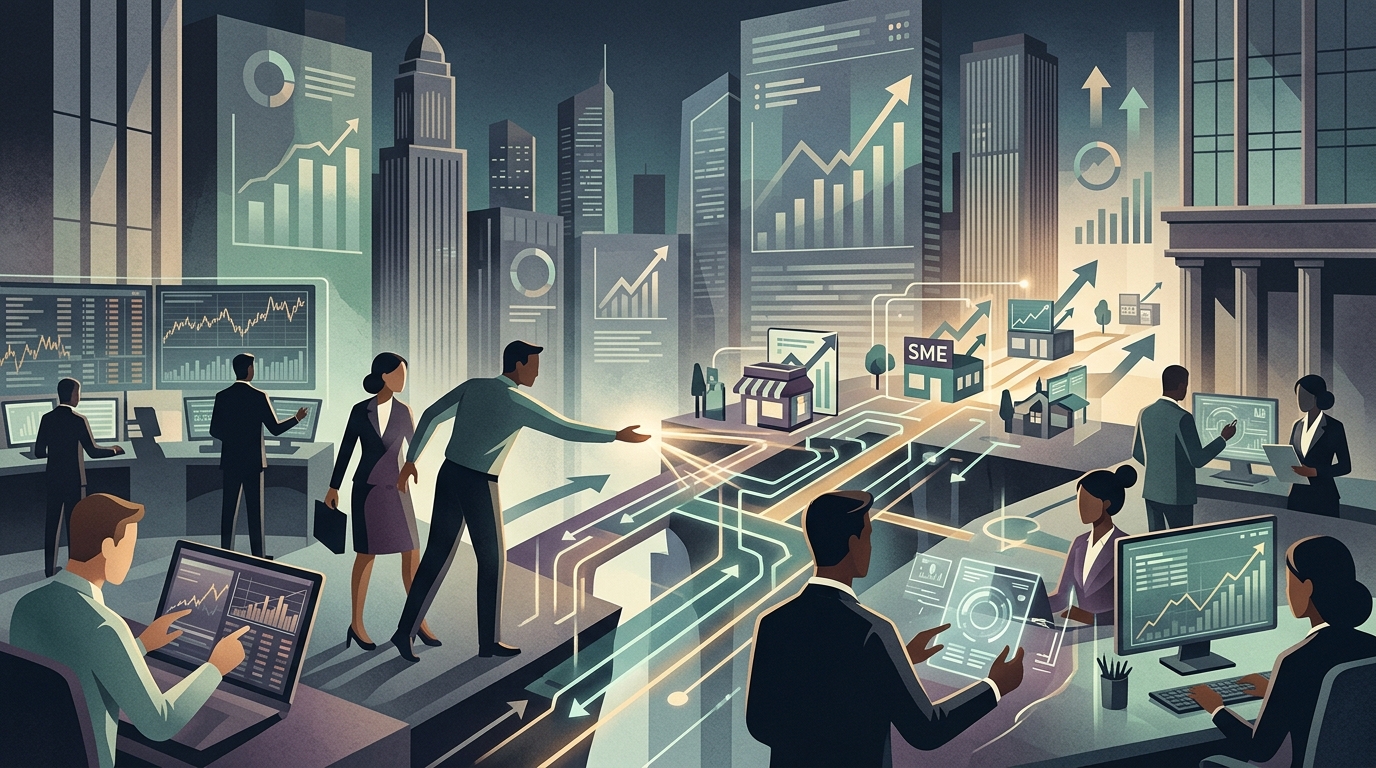
Digitalization is not merely about installing a POS terminal or launching a basic website. The program focuses on the integration of advanced Enterprise Resource Planning (ERP) systems, the extensive use of Cloud Computing, and, most crucially, the adoption of Artificial Intelligence (AI) tools to optimize supply chains and customer service. According to the OECD report, increasing the digital maturity of SMEs by 20% could lead to a rise in value-added per employee of at least 15% over a five-year horizon.
The Nexus Between Productivity and Wages
The core argument of the government's strategy is simple yet provocative: higher wages necessitate higher productivity. In Greece, both minimum and average wages are often constrained by the low profit margins of businesses operating under traditional, inefficient models. Through digitalization, companies can reduce operational costs, expand into new markets via e-commerce, and offer higher-value services.
- Process Automation: Freeing up time from bureaucratic tasks to focus on creativity, strategy, and sales.
- Data-Driven Decision Making: Utilizing analytics to understand consumer trends, thereby significantly reducing the risk of failure.
- Export Orientation: Digital tools dissolve geographical boundaries, allowing a small enterprise from rural Greece to export products globally with minimal overhead.
This surge in profitability creates the necessary "fiscal space" within the firm to increase employee compensation. Furthermore, new technologies demand specialized personnel who, by nature, command higher salaries, thus elevating the overall standard of living.
Challenges and the Education Bet
However, the path to 2034 is fraught with obstacles. The most significant challenge remains the "digital skills gap." Many SME owners and older employees struggle to keep pace with rapid technological shifts. The Reform Plan envisions the creation of "Digital Academies" in collaboration with chambers of commerce, offering continuous reskilling and upskilling opportunities.
"Digitalization is not an end in itself, but the means to make labor more dignified and competitive. A business that fails to evolve technologically condemns its employees to stagnation," the OECD report pointedly notes.
Simultaneously, the government plans tax incentives for businesses that merge or collaborate within digital ecosystems. The small size of the Greek enterprise must cease to be a hindrance and instead become an advantage of agility through digital clusters.
Conclusion: Towards a New Social Contract
The 2028-2034 Plan aspires to be a new social contract. On one side, the state provides the tools, funding through the Recovery Fund, and the institutional framework. On the other, businesses undertake the risk of modernization. The ultimate result, should the endeavor succeed, will be an economy where prosperity is not based on subsidies but on the actual value generated through knowledge and technology. The next eight years will determine whether Greece manages to become a digital hub in the Mediterranean or remains trapped in the models of the past.