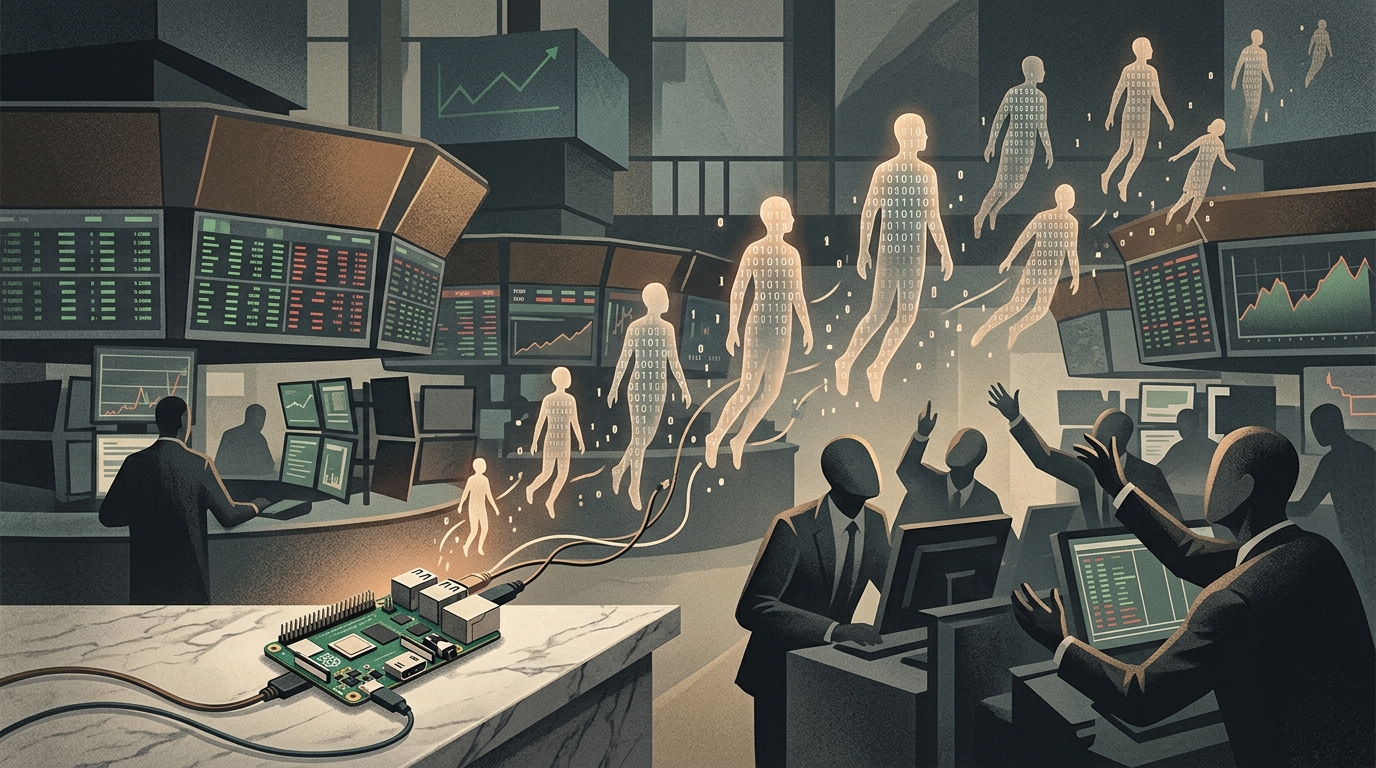
In an era where Artificial Intelligence (AI) is consistently portrayed as the ultimate catalyst for productivity, a surprising voice of caution has emerged from the heart of the British tech ecosystem. Eben Upton, the founder of Raspberry Pi—the company that revolutionized computer accessibility—is warning that the hyper-optimism (or doomsaying) surrounding AI may have a chilling side effect: deterring an entire generation from pursuing careers in technology.
The Illusion of the 'End of Coding'
Upton’s primary concern, as articulated in recent discussions with the BBC, centers on the narrative that "coding is dead." With the advent of tools like GitHub Copilot and advanced large language models, many analysts, and even industry titans like Nvidia’s Jensen Huang, have suggested that young people no longer need to learn how to code, as AI will handle the heavy lifting. Upton fundamentally disagrees, viewing this approach as dangerously short-sighted.
According to Upton, if young people are convinced that programming skills will be obsolete in five years, they will stop enrolling in Computer Science programs. This would create an innovation vacuum that no AI can fill. Writing code is not merely about typing syntax; it is about learning structured thinking and complex problem-solving. If we lose the people who understand how systems work "under the hood," we become hostages to technologies we can neither repair nor evolve.
Economic Implications and the Productivity Trap
The knowledge economy relies on a constant flow of specialized talent. Upton emphasizes that the tech industry is a cornerstone of modern economic growth. If the workforce shrinks due to the fear of automation, the cost of specialized labor will skyrocket, while the ability of companies to develop proprietary technologies will diminish.
- A decline in CS students leads to long-term innovation stagnation.
- Over-reliance on off-the-shelf AI models limits product differentiation.
- A shortage of "digital architects" leaves critical infrastructure vulnerable.
From Consumer to Creator
Raspberry Pi was founded with the mission of turning children from passive consumers of technology into active creators. Upton fears that AI threatens to undo this progress, pushing users back into a "black box" mentality where they issue prompts without understanding the underlying mechanics. Real economic value, he argues, does not lie in simply using AI, but in building new tools and understanding the limitations of existing ones.
"AI is a fantastic co-pilot, but a terrible replacement for human judgment and foundational creativity," Upton suggests.
In conclusion, Upton’s warning serves as a wake-up call for policymakers and educators. The challenge is not to teach children how to avoid AI, but how to master it while maintaining the fundamental knowledge required to build the future. If we fail at this, AI will not be the engine of the economy, but its bottleneck. The long-term health of the global economy depends on a workforce that can think beyond the prompt.