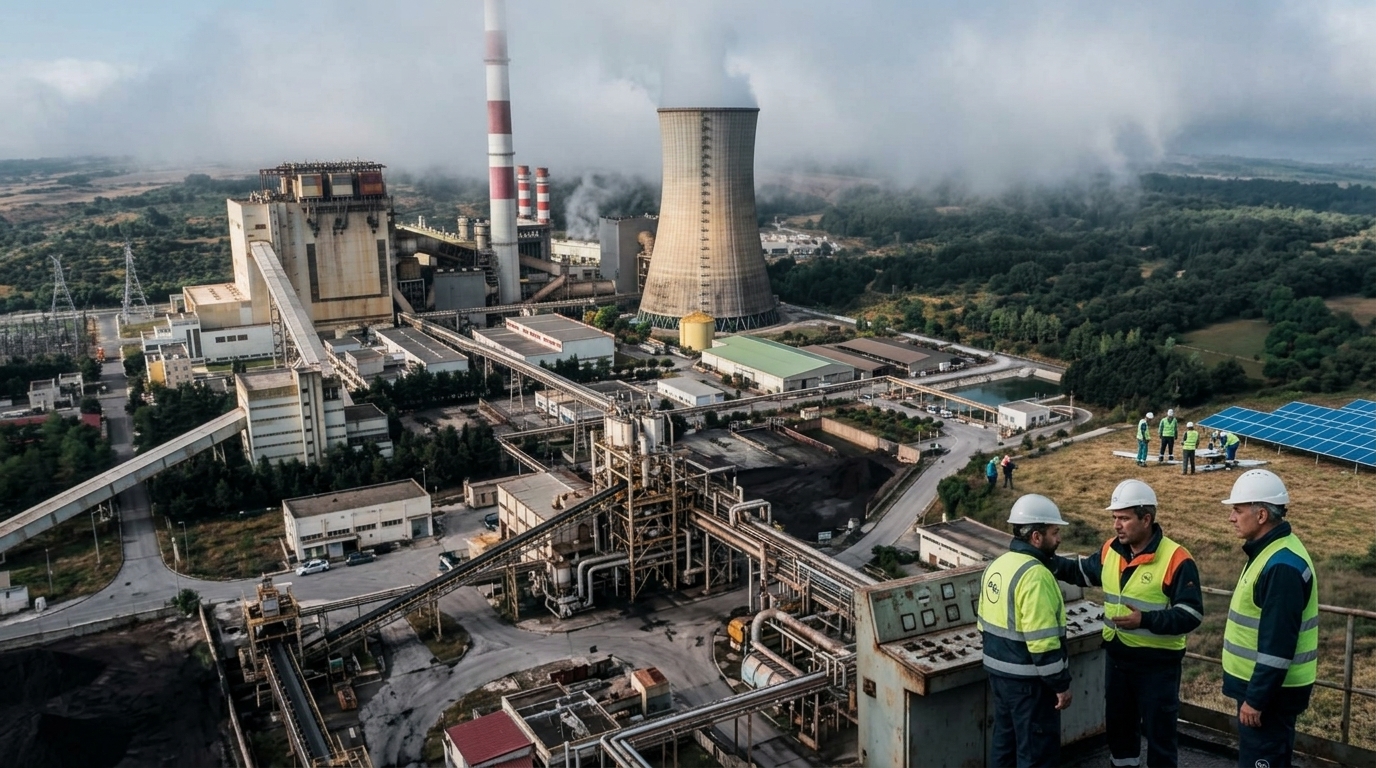
The sight of massive excavators being decommissioned and removed from the Mavropigi mine in Western Macedonia is more than just a technical operation; it is the final chapter of a story that defined the Greek economy and society for over seven decades. Public Power Corporation (PPC), once synonymous with Greece's "indigenous gold"—lignite—recently presented its vision for the region's next phase, confirming that returning to the past is no longer feasible or desirable.
The Economic Death Knell for Lignite
Why has lignite, which once provided Greece with energy independence, become unviable? The answer lies primarily in the European Union's Emissions Trading System (EU ETS). The cost of carbon dioxide emissions has skyrocketed in recent years, turning the operation of lignite-fired power plants into a financial drain for PPC. When the cost of producing electricity from lignite significantly exceeds that of Renewable Energy Sources (RES) or even natural gas, maintaining these plants would mean either massive losses for the utility or unbearable price hikes for consumers.
- Carbon emission costs have made lignite the most expensive energy source in the merit order.
- Aging infrastructure requires constant and costly maintenance to meet safety and environmental standards.
- EU regulations impose strict timelines for decarbonization, penalizing coal-heavy portfolios.
PPC's Strategic Pivot
PPC's management, led by CEO Georgios Stassis, has made it clear: the company's future is green. The 2024-2026 strategic plan envisions transforming the utility into a regional leader in clean energy. Former mines are not being abandoned; they are being repurposed into massive photovoltaic parks, leveraging existing grid connection infrastructure. The restoration of land at Mavropigi is the first step toward creating new economic ecosystems, ranging from industrial zones to high-tech agricultural projects. This shift is essential for PPC to remain competitive in a market increasingly dominated by low-marginal-cost renewables.
"Decarbonization is not just an environmental necessity; it is a strategic choice for survival in the modern energy landscape," company officials state.
The Challenges of a "Just Transition"
However, the transition is fraught with challenges. Western Macedonia, a region that depended almost exclusively on PPC's activities, faces the threat of economic contraction. The "Just Transition" program aims to cushion the blow by offering incentives for new investments and retraining the local workforce. The real test is whether new jobs in RES, green hydrogen, and manufacturing can replace the thousands of roles lost in the mines and power plants. The social cohesion of the region depends on the speed and effectiveness of these initiatives, as local communities feel the weight of a vanishing industrial identity.
Energy Security and the Road Ahead
A critical question often raised is whether phasing out lignite threatens national energy security, especially during times of geopolitical instability. PPC and energy analysts point to energy mix diversification as the solution. By boosting energy storage (batteries and pumped hydro) and utilizing natural gas as a "bridge fuel," the grid can remain stable. Lignite is now kept only as a strategic reserve for extreme emergencies, but its days as the backbone of the Greek power system are over. Greece is evolving from a nation reliant on its subsoil to one that harnesses the sun and wind, fundamentally altering its productive model for the 21st century.