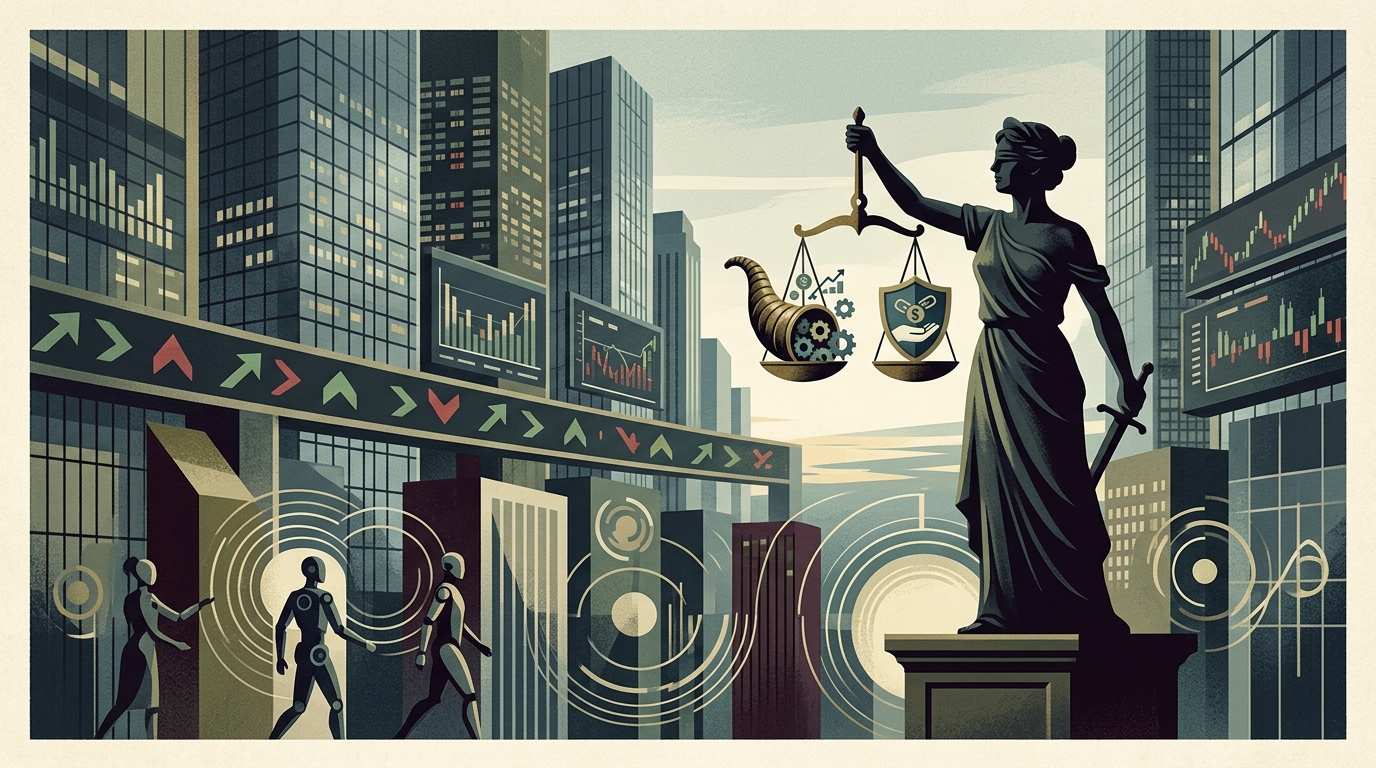
The European pharmaceutical industry stands at a critical juncture. While Europe has historically been the global epicenter of pharmaceutical innovation, it has significantly lost ground over the past two decades to the United States and, more recently, China. A new report highlights a massive economic opportunity: if the European Union manages to modernize its regulatory framework and bolster investment in Research and Development (R&D), the potential benefit to its economy could reach €120 billion over the next decade.
This figure is not merely a statistical projection; it reflects the added value that life sciences can contribute to European competitiveness. The core challenge lies in speed. While science is moving at an exponential pace, the bureaucratic machinery in Brussels often remains trapped in processes from the last century. Integrating Artificial Intelligence into drug discovery and digitalizing clinical trials are the keys to unlocking this wealth.
The Investment Gap and the Threat of Deindustrialization
To understand the scale of the challenge, one only needs to look at the numbers. Twenty years ago, the R&D investment gap between the US and the EU was just $2 billion. Today, that gap has ballooned to over $25 billion annually. Europe risks transitioning from a producer of innovation to a mere consumer of technology developed elsewhere. This loss isn't just about GDP; it's about human capital. Top European scientists frequently migrate across the Atlantic, where access to venture capital and the speed of regulatory approval for new therapies are superior.
The report emphasizes that reversing this trend requires a radical shift in mindset. The pharmaceutical industry should not be viewed solely as a cost to national healthcare systems but as a strategic pillar of growth. Strengthening European health autonomy is now a matter of national and continental security, a lesson underscored by the pandemic experience. The potential €120 billion gain represents a 10% boost to the sector's current contribution, driven by high-tech manufacturing and IP-rich services.
Artificial Intelligence: The Catalyst for a New Era
Artificial Intelligence (AI) is completely reshaping the landscape. From predicting protein folding to using "digital twins" for simulating clinical trials, AI can reduce the development time of a drug from 10-12 years to 5 or fewer. This translates into massive resource savings and faster patient access to life-saving treatments. However, the EU must ensure that the AI Act does not create new hurdles that discourage innovation.
- Accelerated Approvals: The European Medicines Agency (EMA) needs more resources and digital tools to match the speed of the US FDA.
- Data Interoperability: The European Health Data Space (EHDS) is vital for providing researchers with access to large-scale, anonymized data.
- R&D Incentives: Tax breaks and subsidies linked to production within the EU can stem the tide of relocation to Asia.
The EU's strategic autonomy depends on its ability to produce its own medicines. Over-reliance on China and India for active pharmaceutical ingredients (APIs) is an "Achilles' heel" that must be addressed immediately. The €120 billion is the prize for a Europe that dares to invest in its future through automation and smart manufacturing.
The Social Dimension: Access and Innovation
Finally, the discussion of €120 billion cannot be decoupled from the need for affordable medicines. There is a delicate balance between providing incentives for companies to conduct research and ensuring that public health systems can afford the resulting treatments. The solution lies not in price suppression that stifles research, but in increasing efficiency through technology. A more competitive European pharma sector means more high-skilled jobs, higher tax revenues, and ultimately, a more sustainable welfare state.
"Innovation is not a luxury; it is the only path for Europe's survival in a rapidly changing world. If we do not lead in the medicine of the future, someone else will, on their own terms."
In conclusion, the next decade will determine whether Europe remains a global player in health. The €120 billion is within reach, but it requires bold political decisions, the removal of bureaucratic barriers, and sincere cooperation between the public and private sectors. The time for action is now, before the gap with the rest of the world becomes irreversible.