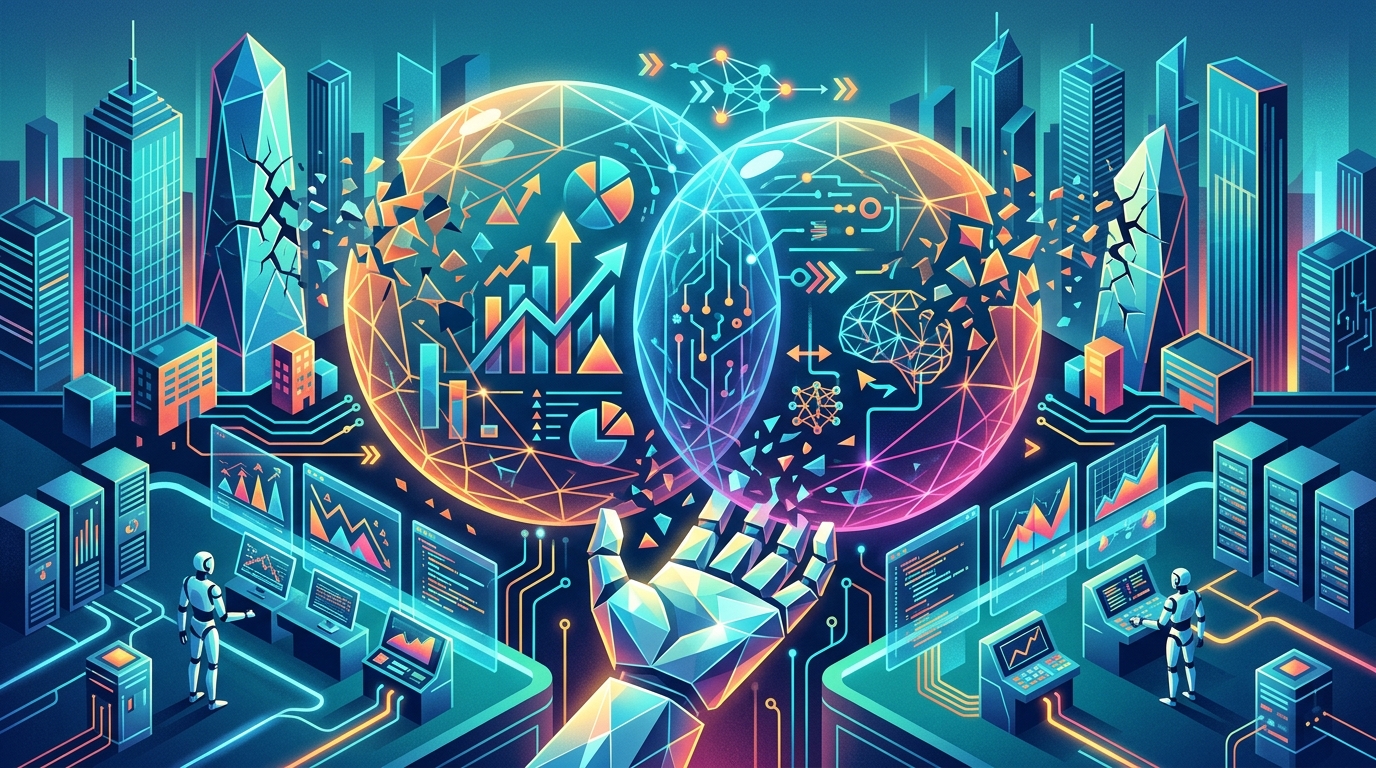
In the ever-evolving landscape of the digital economy, few phenomena are as compelling as the convergence of two of the most powerful technological forces of our time: Artificial Intelligence (AI) and Blockchain technology. The recent surge in activity surrounding the Orbs ecosystem, which boasts a treasury reserve of $437 million, is a prime example of this trend. "Moonshot" traders—those seeking explosive returns on cutting-edge technologies—are increasingly pivoting toward projects that possess both the technical infrastructure and the financial fortitude to survive the coming capital droughts.
The $437 Million War Chest
The strength of a tech firm or a decentralized protocol is no longer judged solely by its code, but by the firepower of its balance sheet. Orbs, operating as a Layer-3 (L3) network, has managed to accumulate a treasury nearing $437 million. In an era where interest rates remain stubbornly high and venture capital (VC) funding has become more discerning, holding such liquidity provides a strategic advantage that is impossible to ignore.
This capital is not just a figure on a spreadsheet. It represents the capacity for aggressive acquisitions, the ability to poach top-tier machine learning talent, and, most importantly, the funding of long-term R&D programs that bridge smart contracts with Large Language Models (LLMs). Traders recognize that Orbs is not at risk of immediate insolvency, a factor that de-risks the speculative thesis and increases its allure for high-stakes positions.
Layer-3: The Bridge to Decentralized AI
To understand why Orbs is being labeled an "AI Moonshot," one must look at its technical positioning. While Layer-1 networks (like Ethereum) focus on security and Layer-2s on scalability, Orbs' Layer-3 acts as an execution layer that allows for complex logical operations on top of existing blockchains. This is critical for AI, as artificial intelligence models require immense computational power and specialized data handling—elements that traditional blockchains struggle to manage natively.
- Decentralized Execution: Orbs enables developers to run AI code that interacts with on-chain data without sacrificing decentralization.
- Cost Optimization: Through L3, the computations required for training or deploying AI models become significantly more cost-effective.
- Interoperability: The ability to connect disparate ecosystems makes Orbs an essential "middleman" in the burgeoning data economy.
This infrastructure places the project at the heart of the "Sovereign AI" movement, where users and organizations seek to control their models away from the walled gardens of Silicon Valley tech giants.
The Psychology of the Moonshot Trader in 2026
By 2026, the archetype of the investor has shifted. Following the collapse of several hype-driven schemes in previous years, traders are now looking for what we call "Fundamental Speculation." Promises are no longer sufficient; proof of power is required. Orbs, with its massive treasury, offers a sense of security that acts as a magnet. Traders on StocksToTrade and other platforms view Orbs not just as a crypto-asset, but as a "tech stock" with explosive upside potential.
"The market is no longer just buying the future; it is buying a company's ability to fund that future," market analysts note.
This shift explains why trading volume has spiked. The expectation is that Orbs will soon announce strategic partnerships with cloud computing providers or acquire AI startups, converting its idle capital into active technological dominance.
Risks and the Regulatory Landscape
Despite the optimism, challenges remain. The intersection of AI and Crypto is squarely in the crosshairs of global regulators. Transparency in managing the $437 million treasury is vital. If there is any hint of mismanagement or if the AI integration promises turn out to be mere "AI-washing" (using the term for marketing purposes), the descent will be as steep as the ascent.
Furthermore, competition is fierce. Other projects, such as Near Protocol and Render, are also vying for a slice of the decentralized AI pie. Orbs must prove that its Layer-3 offers something unique that cannot be easily replicated by larger players. The battle for dominance in AI infrastructure has only just begun, and capital is merely the first step in a long marathon of innovation.