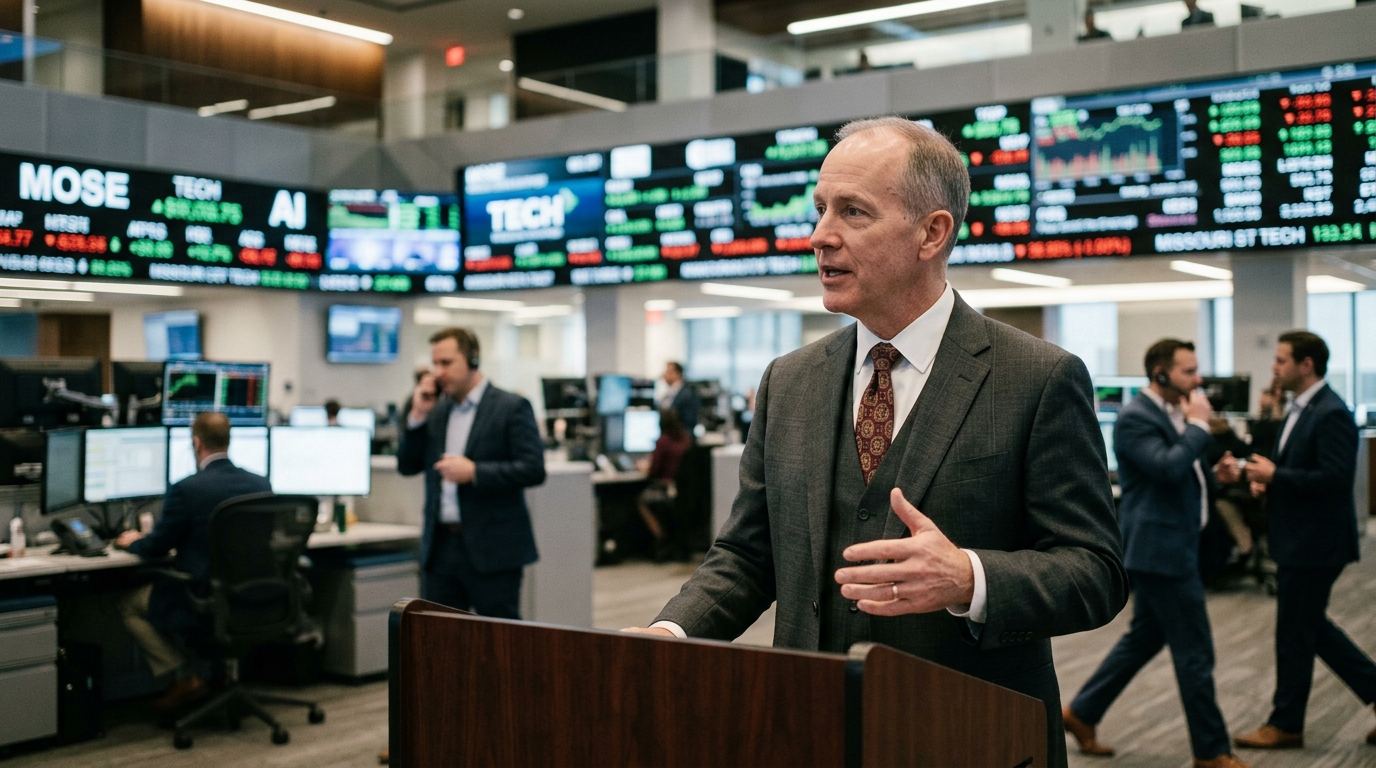
In the heart of the United States, far from the neon glow of Silicon Valley, a quiet but decisive shift in technological gravity is taking place. Missouri Governor Mike Parson is convening a high-level Artificial Intelligence and Data Center Forum at the Missouri University of Science and Technology (Missouri S&T) in Rolla. This move is more than a mere political gathering; it is a strategic manifesto for how traditional Midwestern states intend to claim their stake in the 21st-century economy.
The Rise of the Silicon Prairie
For decades, technological innovation was a coastal monopoly. However, the explosion of Generative AI has rewritten the rules of engagement. AI models demand staggering amounts of computational power, which in turn requires physical space, affordable energy, and vast quantities of water for cooling. Missouri, with its expansive land and relatively low operational costs, is emerging as an ideal destination. The forum at Missouri S&T aims to bridge the gap between academia, energy providers, and government officials to create an ecosystem hospitable to Big Tech investment.
Missouri S&T, renowned for its engineering prowess, provides the perfect backdrop for this dialogue. The synergy between research and the labor market is paramount. Governor Parson has frequently emphasized that retaining talent within the state—combating the perennial 'brain drain'—depends on the availability of high-skill employment. While data centers are often criticized for their low headcount relative to their footprint, they serve as anchors for broader technological infrastructure and service providers.
The Energy and Infrastructure Challenge
A central pillar of the forum is energy capacity. Operating gigawatt-scale data centers places immense strain on the electrical grid. In Missouri, the conversation revolves around how utility giants like Ameren and Evergy can modernize infrastructure without placing an undue burden on residential ratepayers. The balance between courting giants like Google or Meta and ensuring energy stability for the average citizen is a delicate political tightrope.
- Expansion of high-speed fiber optics in rural corridors.
- Incentives for renewable energy integration in data center operations.
- Rapid-response educational programs in cybersecurity and AI management.
Furthermore, Missouri legislation has already moved to provide tax exemptions for data center equipment—a move that has sparked debate among those who argue these funds could be better utilized in public education or healthcare. The forum is expected to address how these incentives translate into long-term economic dividends for local communities in Phelps County and beyond.
The Geopolitics of Compute
In a broader context, Missouri’s initiative reflects a national trend toward the decentralization of critical infrastructure. Post-pandemic, there is a renewed focus on 'onshoring' technological capabilities. AI is no longer just a software tool; it is a matter of national security and economic sovereignty. The fact that a Republican governor in a traditionally conservative state is leaning so heavily into AI underscores that technology has transcended partisan lines to become the ultimate instrument of economic survival.
"We cannot wait for the future to come to us; we must build it here in Missouri," Parson remarked in a recent address, setting the tone for the Rolla summit.
In conclusion, the forum at Missouri S&T serves as a litmus test for the Heartland. Can a region built on agriculture and manufacturing successfully pivot to become a hub of digital intelligence? Success will hinge on the seamless collaboration between the public sector, academia, and private industry, as well as the resilience of the physical infrastructure tasked with supporting the weight of the new digital age.