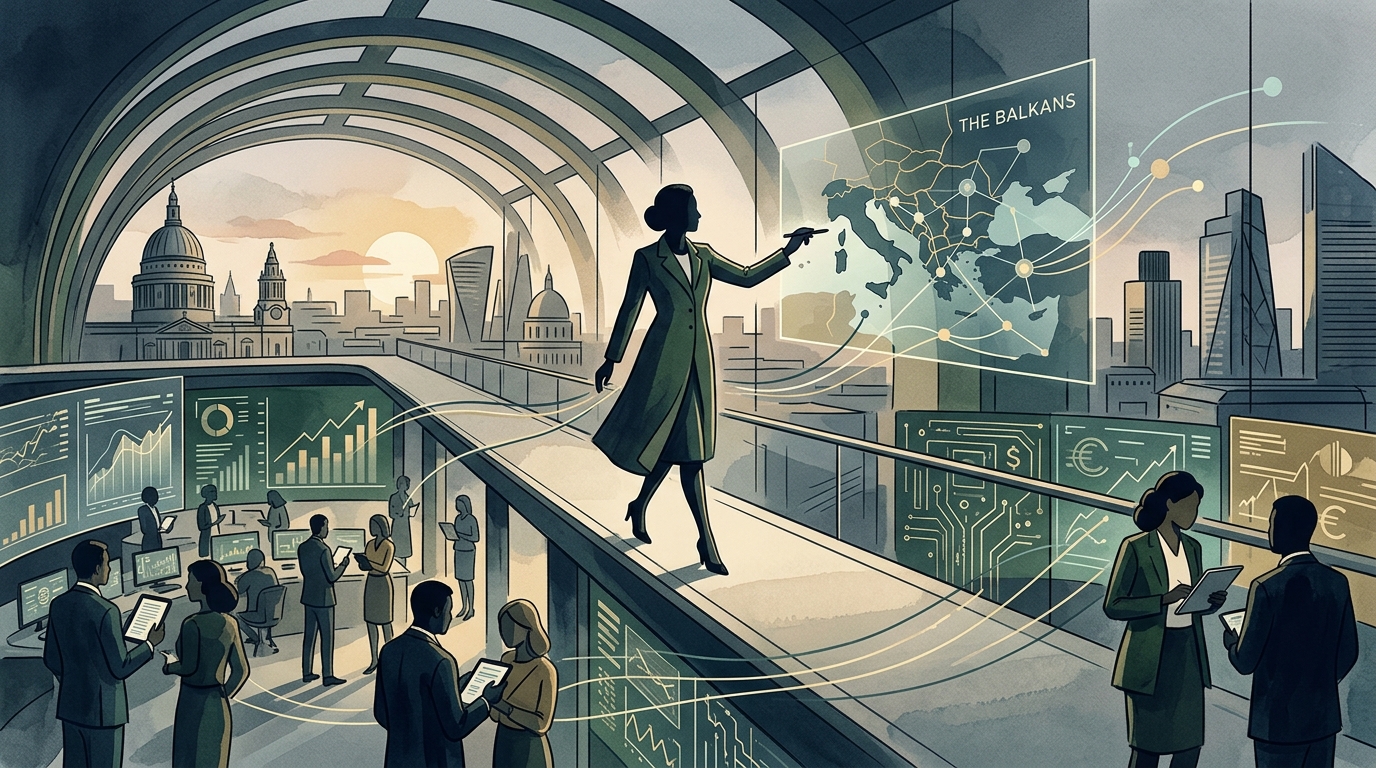
In an era where the geopolitical chessboard of Southeast Europe is being rearranged under the weight of global crises, Linda Rama, a prominent economist and academic, presents a holistic proposal for the rebirth of the Western Balkans. Through her recent interview with Fortune Greece, Rama goes beyond simple economic analysis, describing a necessary transition from a "narrative of survival" to a "narrative of sustainable development."
The Human Capital Challenge and the "Brain Drain"
The central issue raised by Linda Rama is the management of human resources. The Western Balkans have faced the phenomenon of brain drain for decades, with the most capable young people seeking their fortunes in Central and Western Europe. Rama argues that the region cannot develop unless it creates an environment that offers security, perspective, and meritocracy.
Her analysis focuses on the need for investment in education that is directly linked to the labor market. Traditional academic knowledge is no longer enough; it requires the cultivation of skills that respond to the 4th Industrial Revolution. Rama points out that halting migration will not be achieved through administrative measures, but by creating an ecosystem where innovation is rewarded and entrepreneurship is free from bureaucratic shackles.
Digital Transformation: Leaping Over Infrastructure
One of the most interesting aspects of Rama's thinking is the belief that technology can act as an accelerator to bridge the gap with the European Union. While physical infrastructure (roads, railways) requires time and massive capital, digital transformation can happen much faster.
The adoption of Artificial Intelligence and digital services in the state and businesses is, according to Rama, the Western Balkans' unique opportunity to "leapfrog" stages of development. Albania, for example, has made significant strides in digitizing public services, reducing corruption and citizen inconvenience. However, Rama warns that technology without social integration can lead to new inequalities. Digital literacy must be universal so that no part of the population is left behind.
Regional Cooperation and the European Perspective
Linda Rama is a strong advocate for regional cooperation, viewing the Western Balkans as a single market. Initiatives such as "Open Balkan" or the Berlin Process are not just diplomatic tools but economic necessities. With a market of approximately 18 million people, the region can attract serious foreign investment that would not come to individual, small economies.
Regarding EU accession, Rama maintains a realistic stance. She acknowledges the fatigue present in both Balkan societies and EU member states but emphasizes that the European path is the only way to safeguard democratic institutions. The new developmental narrative she proposes positions the region not as a "beggar" for aid, but as a strategic partner offering energy security, human capital, and new markets.
The Social Role of Women in Development
Finally, Rama places particular emphasis on female empowerment. As a woman with significant social involvement, she argues that the economic development of the Balkans is inextricably linked to the full integration of women into economic life. Women in the Balkans remain an untapped pool of talent and creativity. Rama calls for policies that facilitate the reconciliation of professional and family life, as well as a change in mindset to break the patriarchal stereotypes that still survive in the region.
"Development is not measured only by GDP numbers, but by how many people feel they have a future in their homeland," she notes, summarizing her philosophy for a region seeking its new identity in the 21st century.