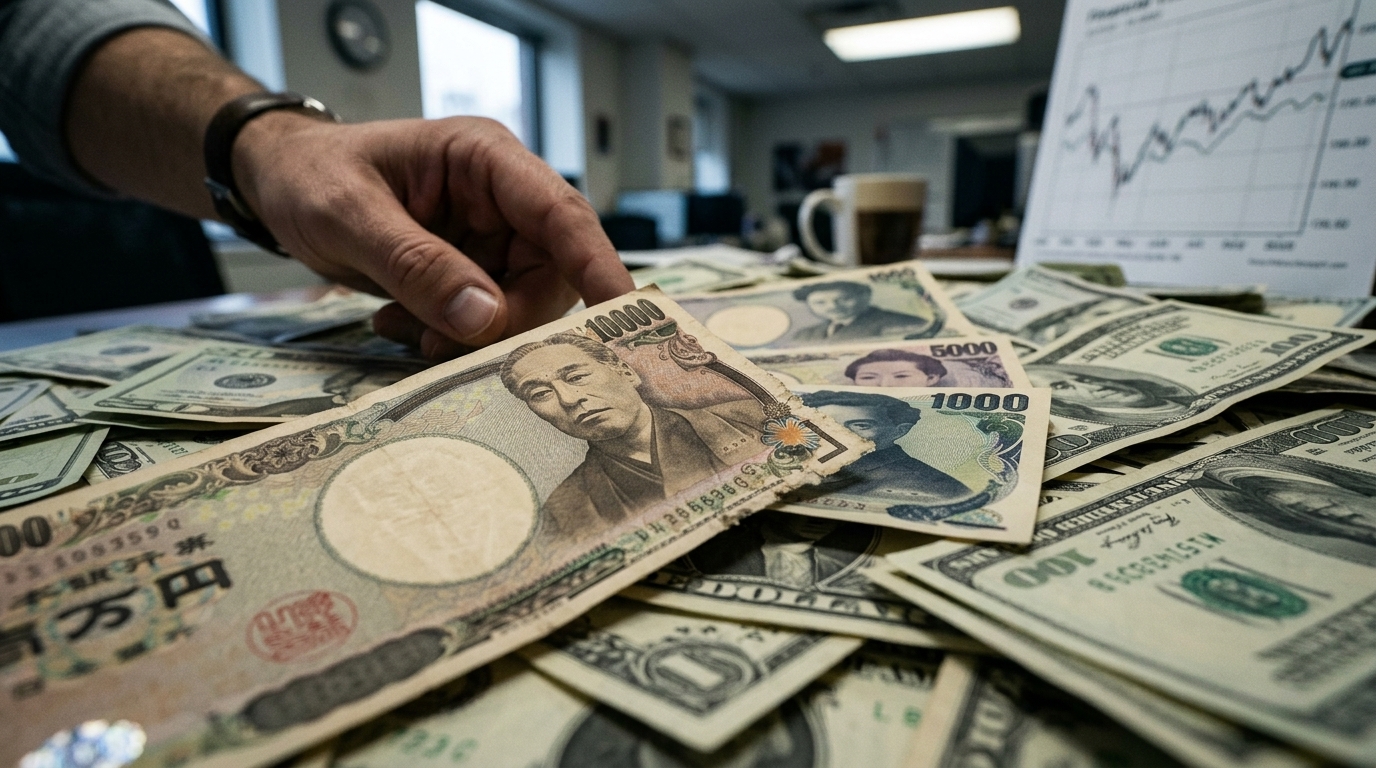
Japan, the world's third-largest economy, finds itself trapped in an economic labyrinth with no clear exit. According to the latest figures, the Japanese Ministry of Finance (MoF) spent a staggering $70 billion (approximately 10.6 trillion yen) in a desperate attempt to bolster its national currency. However, global markets remain unforgiving: the yen continues to hover near 40-year lows against the US dollar, causing friction in domestic consumption and turmoil in international forex markets.
The Anatomy of a Currency Intervention
Intervening in foreign exchange markets is never a decision taken lightly; it is the "last resort" for any central bank. When the Bank of Japan (BoJ) and the MoF decided to inject $70 billion into the market, they did so by selling US Treasuries and purchasing yen. The objective was to create artificial demand to stem speculative selling. Despite a temporary rebound, the effect was short-lived. The forex market, with a daily turnover exceeding $7 trillion, proved too vast to be manipulated by a single nation, even one as economically potent as Japan.
The root of the problem lies in the fundamental divergence of monetary policies. While the US Federal Reserve maintains high interest rates to combat persistent inflation, the Bank of Japan, under Governor Kazuo Ueda, has been moving at a snail's pace to abandon its decades-long policy of ultra-low or negative interest rates. This "interest rate gap" creates the perfect environment for the carry trade: investors borrow cheap yen to invest in higher-yielding dollar assets, perpetually driving the yen lower.
The Trap of Imported Inflation
For the average Japanese citizen, the yen's depreciation is not an abstract economic metric; it is a daily struggle. Japan is a nation heavily reliant on imports for energy and food. As the yen weakens, the cost of these essentials skyrockets. What was once considered a boon for major exporters like Toyota and Sony has become a double-edged sword. While their overseas profits translate into more yen, their production costs and domestic consumer demand are being severely eroded.
- Surging costs for fuel and electricity.
- Erosion of household purchasing power.
- Immense pressure on small and medium-sized enterprises (SMEs) lacking export reach.
- The looming risk of "stagflation" – a stagnant economy paired with rising prices.
Analysts point out that Japan is at a critical crossroads. The traditional strategy of maintaining a weak yen to stimulate exports has reached its logical limit. In a world of fragile supply chains and heightened geopolitical tensions, monetary stability is becoming far more valuable than a fleeting trade advantage.
Kazuo Ueda’s Dilemma
Bank of Japan Governor Kazuo Ueda occupies one of the most precarious positions in the institution's history. If he raises interest rates too sharply to support the yen, he risks triggering a recession and making Japan’s massive sovereign debt unsustainable. If he remains passive, the yen could collapse further, leading to social unrest fueled by the rising cost of living. The $70 billion expenditure was essentially a move to "buy time," hoping that the US Federal Reserve would eventually begin cutting its own rates, thereby narrowing the gap naturally.
"Intervention can slow the descent, but it cannot change the direction of the wind when economic fundamentals are this powerful," noted senior Bloomberg analysts.
In conclusion, Japan’s predicament serves as a stark lesson on the limits of state intervention in globalized markets. The "battle for the yen" is not merely about currency; it is about the future of the Japanese economic model in the 21st century. Without bold structural reforms and a more decisive monetary pivot, the $70 billion spent will be remembered as a costly, yet ultimately futile, attempt to hold back the tide.