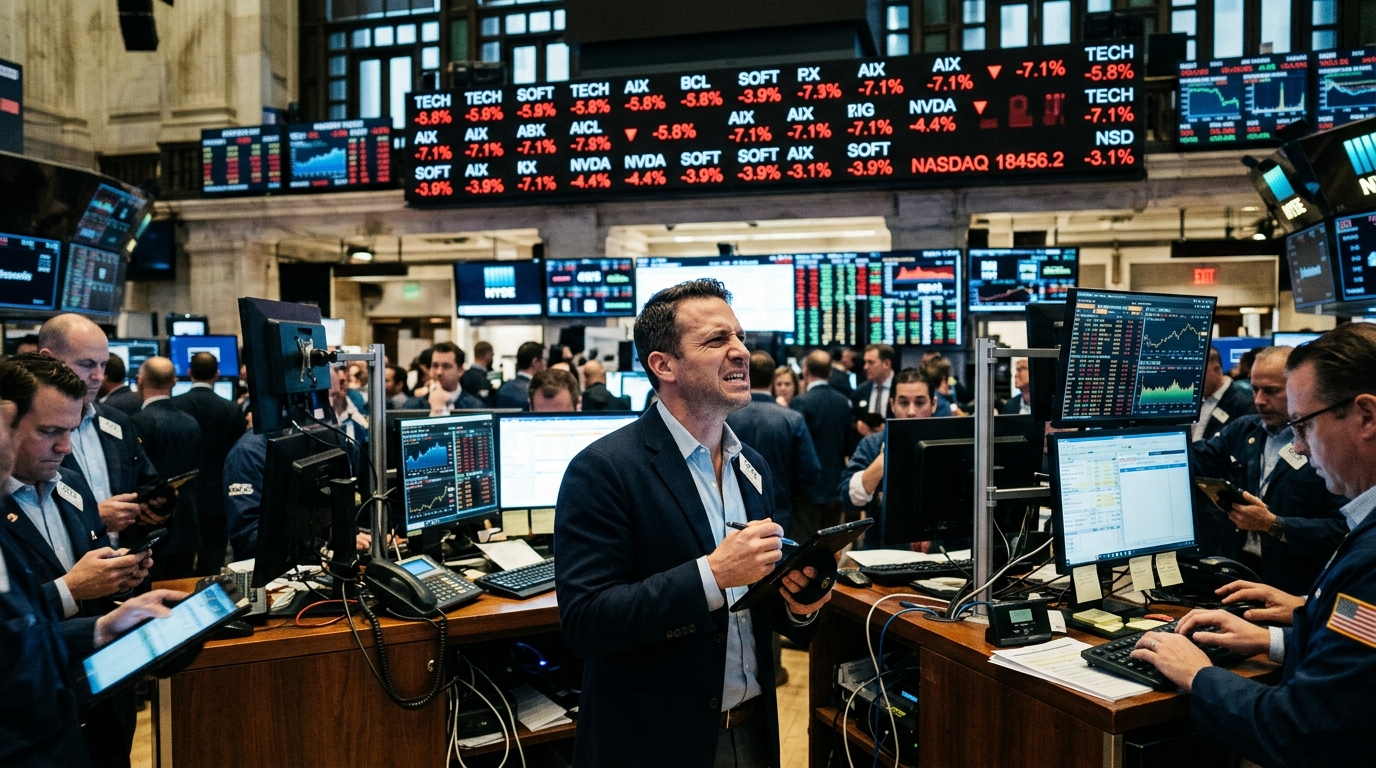
The spring of 2026 finds the markets in a state that many analysts deemed unlikely a year ago: a new, even more powerful surge in Artificial Intelligence (AI) related stocks. After a period of correction and skepticism, tech giants and emerging infrastructure players are seeing their valuations skyrocket once again. For the retail investor with $1,000 to deploy, the question is no longer whether to invest, but how to do so without getting trapped at a potential cycle peak.
The Retail Strategy: Why $1,000 Matters
In a world where a single share of Nvidia or Microsoft can cost hundreds of dollars, $1,000 might seem like a small sum. In reality, it is the perfect size for implementing a disciplined strategy. Modern brokerage tools, specifically fractional shares, allow any investor to build a diversified portfolio that mirrors the structure of large institutional funds.
The key to investing this amount today is not chasing the next 'moonshot' stock, but understanding the AI value chain. AI is no longer just about GPUs and Large Language Models (LLMs). It is about the energy required for data centers, the software integrating these solutions into daily business operations, and the cybersecurity protecting the data. A balanced allocation of $1,000 should cover at least three of these pillars.
Beyond Semiconductors: Seeking Value in Infrastructure
While chipmakers remain the market's bellwethers, the real opportunity in 2026 lies in what analysts call the 'Second Wave' of AI. This includes companies managing the electrical grid and cooling systems for data centers. Energy demand has become the single largest bottleneck for AI growth, and companies providing solutions in this space often present more attractive valuations than the potentially overextended tech giants.
- Technology ETFs: A $400 allocation to a specialized ETF (such as SMH or BOTZ) provides immediate diversification across the sector.
- Software as a Service (SaaS): $300 directed toward companies that have proven they can monetize AI through subscription revenue.
- Energy and Utilities: The remaining $300 in power providers investing in nuclear or renewable energy to feed AI hubs.
This approach mitigates the risk of full exposure to a single company that might disappoint in the next earnings cycle. History teaches us that during a gold rush, those who profit most reliably are the ones selling the shovels (infrastructure), not necessarily the prospectors themselves.
Risk Management and the 'Bubble' Psychology
It is impossible to discuss AI investing without mentioning the word 'bubble.' However, there is a fundamental difference between 2026 and the dot-com bubble of 2000: earnings. The companies leading the current charge are generating billions in free cash flow. We are not investing in promises, but in actual profitability.
"Investing in AI today is not a bet on the future, but a participation in the restructuring of global economic productivity in the present."
For the $1,000 investor, the best defense against volatility is time. The strategy of dollar-cost averaging (DCA)—entering the market gradually with smaller amounts each month—remains the most effective method for mitigating the risk of poor market timing. Instead of deploying all $1,000 in one day, splitting it into four $250 installments over a quarter can provide greater peace of mind and a better average entry price.
Conclusion: The Long-Term Perspective
As we head into the latter half of the decade, Artificial Intelligence will stop being treated as a separate sector and will become the 'operating system' of every successful business. Investing $1,000 today won't make you a millionaire tomorrow, but it serves as the foundation for understanding and participating in the greatest technological shift of our century. Prudence, diversification, and a focus on infrastructure are the three pillars that will turn an enthusiastic buyer into a successful investor.