The history of financial markets is punctuated by periods of "irrational exuberance," as Alan Greenspan famously termed it. Today, as we navigate the second quarter of 2026, the debate over whether Artificial Intelligence (AI) represents a genuine industrial revolution or the most sophisticated "bubble" of all time has reached its zenith. John Hussman, president of the Hussman Investment Trust and one of the most vocal critics of overvalued markets, recently released an analysis that sent shivers through investment circles: the current dynamics of technology stocks do not merely resemble the dot-com bubble of 2000 but adopt characteristics that mimic Ponzi structures.
The Anatomy of a Speculative Mania
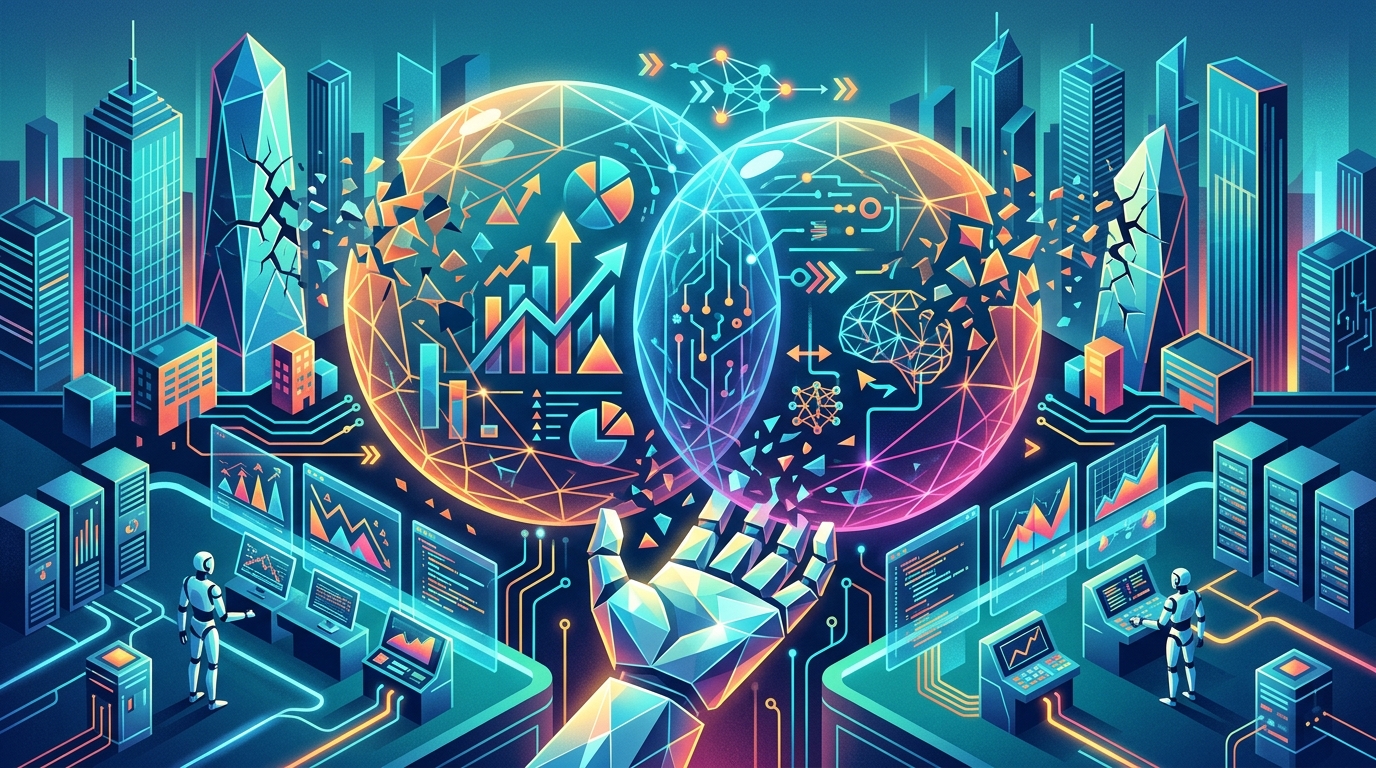
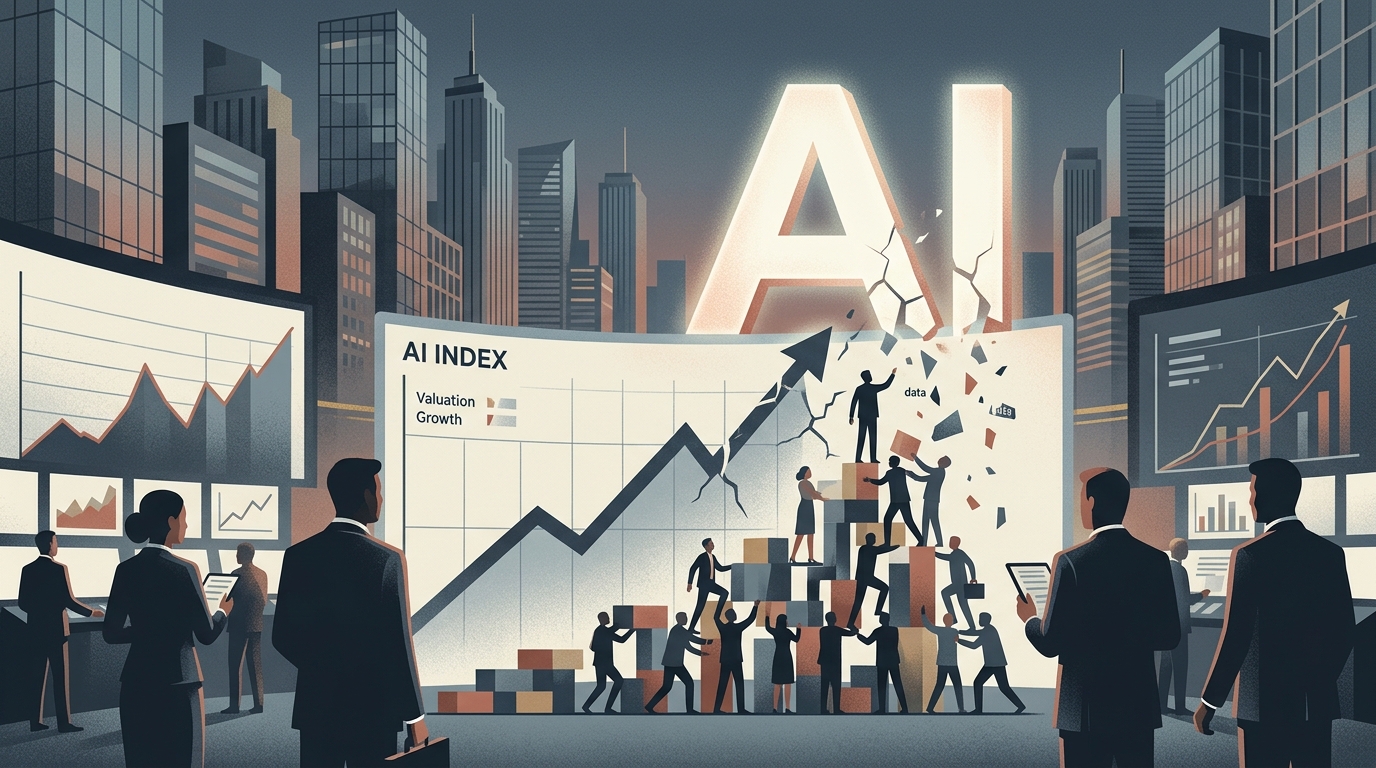
According to Hussman, the problem lies not in the AI technology itself—which is undoubtedly transforming productivity—but in the valuations accompanying it. When stock prices become completely decoupled from fundamental metrics, such as revenue and earnings, and rely solely on the expectation that a "greater fool" will purchase the stock at an even higher price, we enter dangerous territory. Hussman argues that current conditions are marked by an extreme concentration of capital in a handful of giant corporations that support the entire structure of indices like the S&P 500 and the Nasdaq.
The comparison to a Ponzi scheme does not necessarily imply intentional fraud, but rather the mechanism by which price increases are sustained. In a Ponzi scheme, returns for old investors are paid by the capital of new ones. In the current AI market, price appreciation is sustained by a continuous influx of capital chasing "momentum," without regard for whether future profitability can ever justify price-to-earnings multiples that are hitting historical highs.
Historical Parallels and Red Flags
Hussman is no stranger to bold predictions, having accurately warned of the crashes in 2000 and 2008. In his analysis, he presents data showing that market internal dispersion—how many stocks are actually participating in the rally—is exceptionally low. This phenomenon of a "narrow market" is historically a harbinger of major corrections.
- Valuations relative to sales are at levels exceeding even the peak of 2000.
- Market psychology has shifted from optimism to pure speculation.
- The reliance on liquidity, despite high central bank interest rates, is beginning to show signs of exhaustion.
"A bubble doesn't end when the technology fails, but when the oxygen of liquidity and psychological extremity runs out," Hussman notes.
The Challenge for Investors
The big question for 2026 is whether AI can generate enough value to "fill" the valuation gap. While semiconductor and software companies are reporting record revenues, the pace of capital expenditure growth from Big Tech is starting to cause concern. If the return on investment (ROI) in AI does not materialize to the extent analysts expect, the decline could be sharp and violent. Hussman suggests a defensive hedging strategy, reminding us that mean reversion is one of the most relentless laws of economics.
In conclusion, John Hussman’s warning serves as a reminder that markets do not move in a straight line toward infinity. Artificial intelligence may be the future of humanity, but that does not prevent its stocks from being one of the largest financial bubbles in history. The distinction between technological progress and investment discipline is more critical today than ever before.