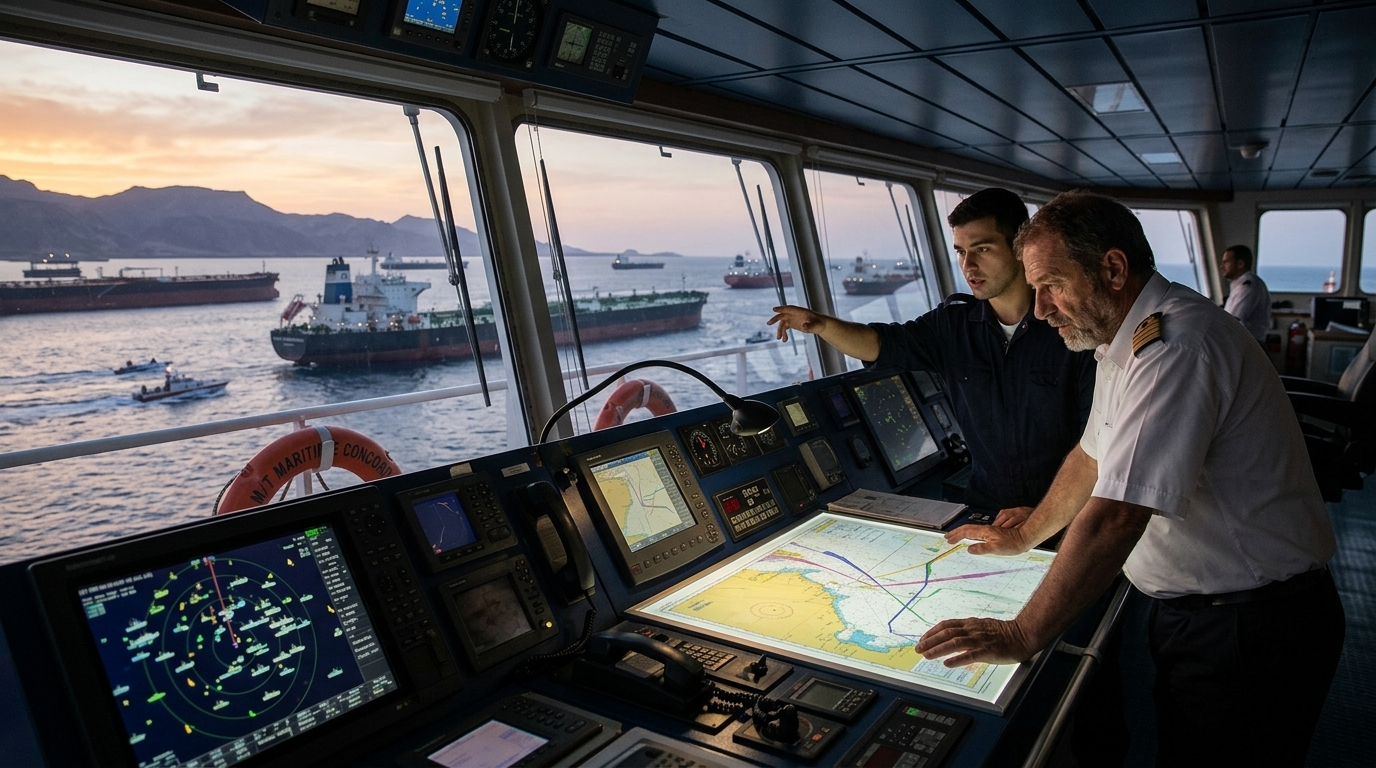
The global energy chessboard is undergoing one of its most dramatic shifts in decades. The first 100-plus days of escalating conflict in the Middle East have not merely caused a temporary spike in prices; they have structurally altered the way oil moves from producers to consumers. The Red Sea, an artery once taken for granted for 12% of global trade, has transformed into a high-risk zone, forcing shipping giants into a violent readjustment that is shifting regional power balances.
The Rise of Yanbu and the Bypass Strategy
One of the most notable developments in this new reality is the emergence of Saudi Arabia’s Red Sea port of Yanbu as a central player. Despite its proximity to the conflict zone, Yanbu serves as the terminus for the East-West Pipeline (Petroline), which allows Riyadh to transport crude oil from its eastern fields to the west, bypassing the Strait of Hormuz. According to recent data, the volume of barrels moving through Yanbu has surged as buyers seek safer loading points that minimize exposure to the Bab el-Mandeb strait.
Simultaneously, Fujairah in the United Arab Emirates is cementing its position as the ultimate storage and bunkering hub. As tankers avoid the Suez Canal and opt for the long route around the Cape of Good Hope, the demand for marine fuels (bunkering) and strategic storage has skyrocketed. Fujairah is now absorbing a massive portion of the demand that was previously distributed across Mediterranean or Northern European ports.
The Ton-Mile Effect and Freight Rate Explosion
The decision by shipowners to avoid Suez is not just a safety choice but an economic one with vast implications. The route via Africa adds approximately 10 to 15 days to a tanker’s journey from the Persian Gulf to Europe. In shipping parlance, this translates to an increase in "ton-miles"—the demand for ships generated by longer distances.
- Reduced Availability: The more time a ship spends at sea, the less available it is for its next charter, artificially tightening vessel supply.
- Insurance Premiums: War risk insurance premiums for those still braving the Red Sea have soared, in some cases reaching 1% of the vessel's value per transit.
- Energy Inflation: Increased transportation costs are eventually passed on to the consumer, creating fresh inflationary pressures on the global economy.
"The tanker market is no longer reacting solely to oil supply and demand, but to the geopolitical survival of supply chains," industry analysts note.
Geopolitical Realignment: Europe vs. Asia
The conflict has also accelerated the bifurcation of energy markets. Europe, in its effort to decouple from Russian oil after 2022, had turned heavily toward the Middle East. Now, the difficulty of access via Suez makes this oil more expensive and less reliable. As a result, we are seeing a shift toward U.S. crude (WTI), West African, and Brazilian oil for European refineries.
Conversely, Asia—primarily China and India—continues to absorb large quantities of Russian oil, which is moved via the so-called "shadow fleet." These vessels often take greater risks, traversing areas the Western fleet avoids, thereby creating a dual shipping system: one official, expensive, and cautious, and another unofficial, risky, and opaque.
Conclusions and Outlook
The shift in oil flow maps is not transitory. Even if the conflict de-escalates tomorrow, trust in traditional routes has been shattered. Investments in infrastructure like Saudi Arabia’s East-West Pipeline and the expansion of Fujairah’s capabilities show that Gulf nations are preparing for a world where strait security is no longer guaranteed. For the global economy, this means permanently higher logistical costs and a constant need for flexibility in an environment that increasingly resembles the era of the great energy crises of the 20th century.