In the Hollywood of June 2026, news of a merger is no longer just a business transaction; it is a declaration of war. The proposed $110 billion acquisition of Warner Bros. Discovery by the Paramount-Skydance consortium has ignited an unprecedented crisis in the entertainment industry. Workers, creators, and political analysts are warning that the creation of this "super-giant" threatens not only jobs but the very diversity of American culture.
The Concentration of Power and the Specter of Monopoly
The deal, which would unite two of the world's most historic studios, comes at a time when traditional television and cinema are struggling to survive against the dominance of tech titans like Apple and Amazon. However, the scale of the proposed entity is so vast that it has sounded alarm bells at antitrust agencies. The merger would place CBS, CNN, HBO, and the combined film libraries of Paramount and Warner under a single controlling interest.
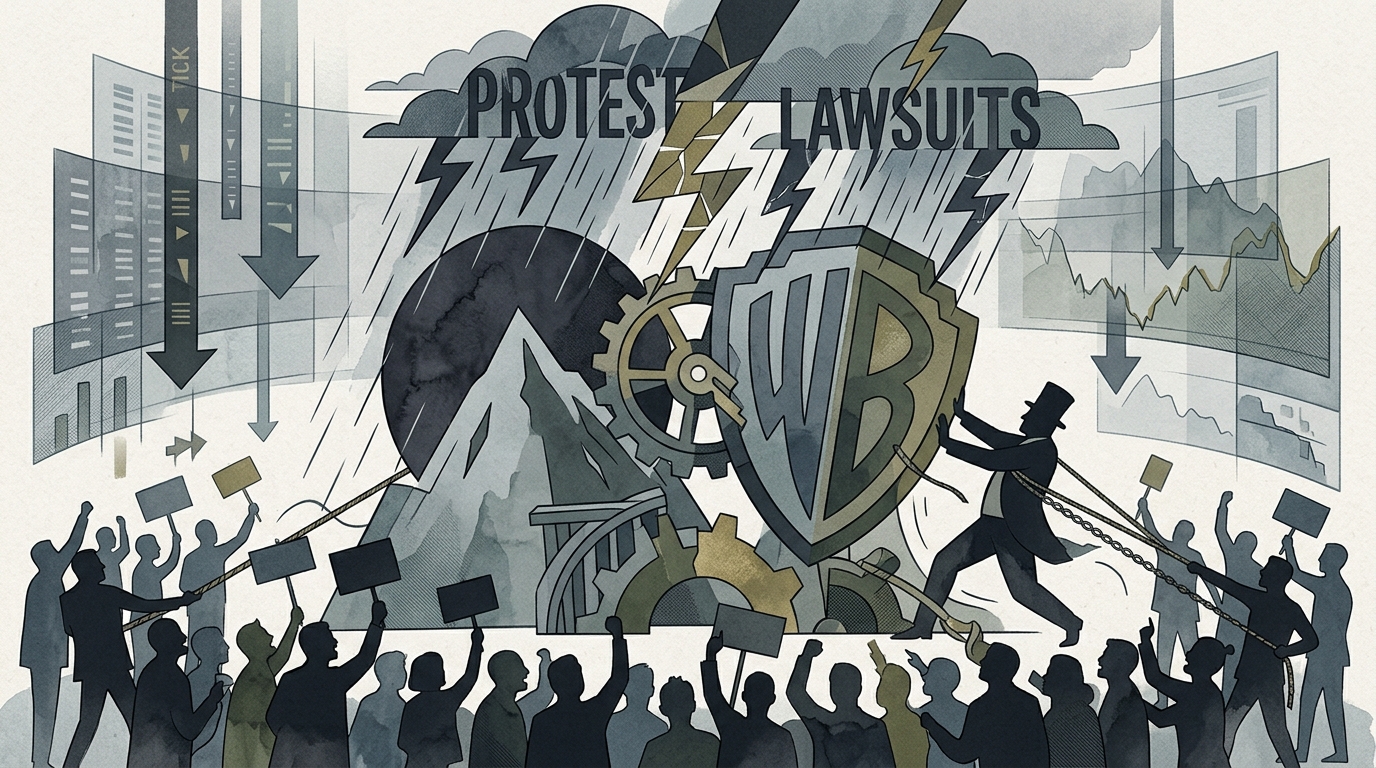
Critics argue that such concentration will lead to a drastic reduction in production, as the new company seeks to "optimize" its content to service the massive debts incurred by the deal. Already, rumors of thousands of job cuts have led the WGA (Writers Guild of America) and SAG-AFTRA to organize warning protests outside corporate headquarters in Los Angeles and New York.
The Labor Front and the AI Threat
The unions' central argument is not just about immediate layoffs. There is a deeper concern regarding the use of Artificial Intelligence (AI) in managing the vast intellectual property that would be consolidated. Workers fear that the new colossus will use algorithmic models to "recycle" old hits, reducing the need for new screenwriters and actors. "We are not just fighting for our wages, but for the right of human creativity to remain the heart of cinema," an IATSE representative stated during a recent demonstration.
The lawsuits filed also focus on antitrust violations. Federal judges are being asked to examine whether the merger will limit consumer choices and lead to increased subscription fees for streaming platforms, which have already seen continuous price hikes over the last two years. The legal battle is expected to be protracted, with the U.S. Department of Justice facing pressure to block the deal entirely.
Economic Necessity or Cultural Catastrophe?
From the management's perspective, the merger is presented as the only path to survival. In an environment where Netflix continues to dominate and the cost of producing high-quality content has skyrocketed, Paramount and Warner claim that only by joining forces can they remain competitive. The financial viability of the streaming model is being questioned, and shareholders are demanding profitability here and now.
However, the history of major media mergers is not always one of success. Previous experience from the Warner-Discovery union showed that "synergies" often translate into the cancellation of completed films for tax write-offs and a degradation of quality. The question looming over Hollywood is whether the industry can withstand another such violent restructuring without losing its soul.
Conclusion
The conflict over the Paramount-Warner merger is a mirror of a broader crisis in Western capitalism: the battle between capital concentration and the need for creative freedom. As courtrooms fill with filings and streets with protesters, the outcome of this showdown will determine what kind of stories we see on our screens for the next decade. If economic efficiency triumphs over artistic integrity, Hollywood may transform from a dream factory into a mere data production line.