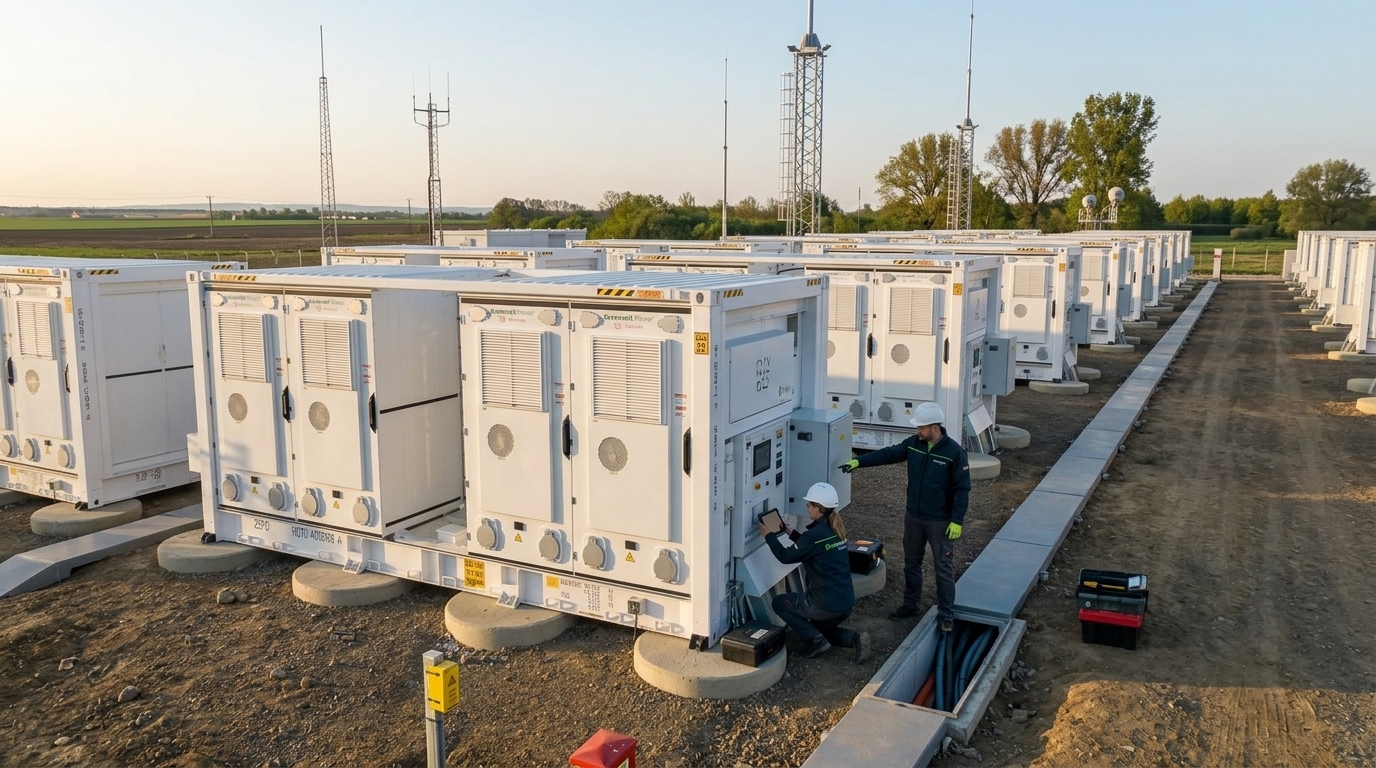
In a move that highlights the rapid transformation of the energy landscape in Central Europe, the Portuguese firm Greenvolt has officially inaugurated the largest operational Battery Energy Storage System (BESS) in Hungary. This investment is not merely a technical addition to the country's infrastructure, but a strategic milestone that underscores the critical role of storage in achieving energy autonomy and grid stability in an era of intense geopolitical volatility.
Technological Excellence and Project Scale
The new system, which is now in full operational status, boasts a capacity of 10 MW and a storage volume of 20 MWh. While these figures might seem modest compared to gargantuan projects in the US or China, within the context of Central Europe and specifically Hungary, they represent a significant upgrade. The project utilizes latest-generation lithium-ion technology, designed to provide balancing services to the national electricity transmission grid.
Greenvolt, through its subsidiary Greenvolt Power, selected Hungary due to the increasing penetration of renewable energy sources (RES) in the country, particularly solar PV systems. The intermittency of solar power—the fact that production does not always coincide with demand—makes storage an essential prerequisite for avoiding blackouts and reducing reliance on natural gas peaking plants.
Strategic Importance for Energy Security
Hungary, a country historically heavily reliant on energy imports and nuclear power, is currently in a phase of redefining its strategy. The operation of Greenvolt's system allows the grid to absorb excess energy during peak solar production hours and release it back into the system when demand rises or production drops. As João Manso Neto, CEO of Greenvolt, stated:
“Energy storage is the key that unlocks the full potential of renewables. Without batteries, the green transition remains incomplete and the grid remains vulnerable.”
This move is part of Greenvolt's broader plan to expand into markets with high balancing needs. The company has already established its presence in several European countries, but Hungary now serves as its stronghold in the Balkan and Central European region.
Economic Implications and the Balancing Market
From an economic perspective, Greenvolt’s project targets the ancillary services market. In these markets, grid operators pay storage owners to keep the grid frequency stable. This is a high-margin business model, as the demand for such services skyrockets as more wind and solar farms are connected to the system.
- Reduction of balancing costs for the end consumer.
- Attraction of further foreign investment in the high-tech energy sector.
- Creation of specialized jobs in the installation area.
Furthermore, the success of this project is expected to act as a catalyst for new regulatory changes in Hungary, encouraging other investors to enter the storage market, which was previously considered high-risk due to material costs.
Conclusions and Future Outlook
Greenvolt’s installation in Hungary is a resonant reminder that the energy transition is not just about producing “clean” kilowatt-hours, but also about managing them. As the European Union pushes for faster decoupling from fossil fuels, projects like this become the backbone of the new economy. For Greenvolt, this is just the beginning, as the company plans to triple its storage capacity in its portfolio by 2027, aiming for pan-European dominance in the BESS sector.
The message is clear: Battery technology has matured enough to be a viable commercial investment, and countries that invest first in these infrastructures will gain a significant comparative advantage in the new global energy order.