

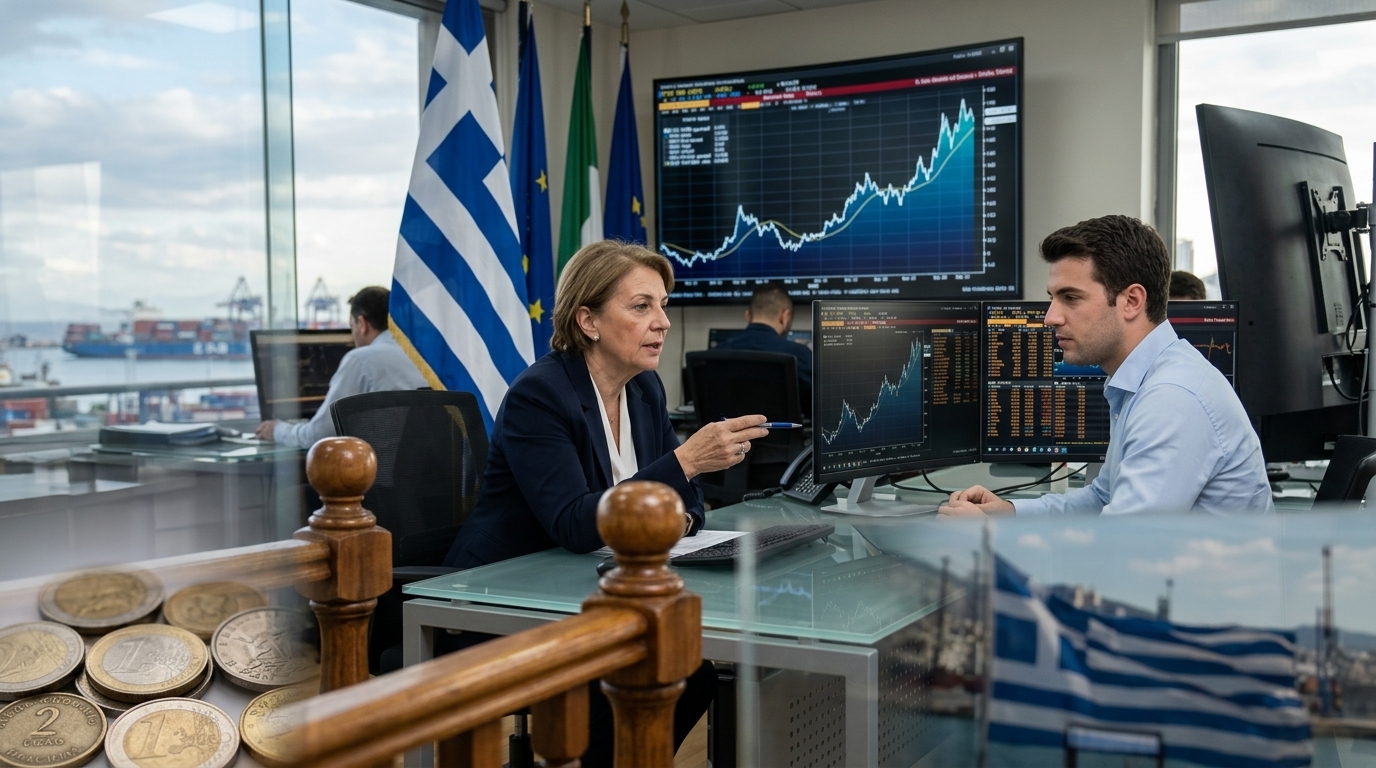
The recent decision by Fitch Ratings to maintain Greece’s credit rating at BBB+ with a stable outlook is far more than a routine update. In a global landscape defined by geopolitical volatility, persistent inflationary pressures, and high interest rates, the agency’s verdict serves as a certificate of resilience for the Greek economy. After a decade-long crisis, Greece appears to be cementing its position within the investment-grade territory, aiming now for meaningful convergence with the European average rather than mere fiscal survival.
Fiscal Discipline as the Bedrock of Stability
According to Fitch's analysis, the primary pillar of the Greek rating remains the government's steadfast commitment to fiscal discipline. Achieving primary surpluses that exceed initial projections is not merely a byproduct of growth-driven tax revenue; it is the result of a coherent expenditure control policy. The agency notes that Greece has managed to reduce its debt-to-GDP ratio at one of the fastest rates globally, a feat that has significantly calmed the bond markets.
However, Fitch does not overlook the fact that the absolute size of the debt remains high. Its long-term sustainability is heavily dependent on maintaining robust growth rates and continuing structural reforms that enhance productivity. "Greece has turned a page, but the book of its fiscal history remains heavy," market analysts suggest, emphasizing that any policy slippage could quickly reverse the positive sentiment.
A Banking Sector Reinvigorated
A critical factor in affirming the BBB+ rating is the ongoing cleanup of the banking system. Fitch acknowledges the substantial progress made in reducing non-performing exposures (NPEs), bringing Greek banks closer to European norms. The successful divestment of the Hellenic Financial Stability Fund (HFSF) from systemic banks is a landmark event, signaling the sector's full return to private ownership.
Improved bank profitability and strengthened capital adequacy are now allowing for better liquidity flow into the real economy, which is essential for financing large-scale investments. Nevertheless, Fitch points out that borrowing costs for small and medium-sized enterprises (SMEs) remain elevated, acting as a bottleneck for the broader economic benefits of growth to reach all levels of society.
Structural Challenges and the Current Account Deficit
Despite the positive performance, Fitch’s report sheds light on the "shadows" haunting the Greek economy. The current account deficit remains a significant vulnerability. The country’s dependence on imports and the need for a deeper transformation of its production model are glaringly obvious. Greece must transition from a model heavily reliant on consumption and tourism toward one that favors the export of high-value-added goods and services.
Furthermore, delays in the judicial system and persistent bureaucracy remain structural issues systematically cited by rating agencies. The effective utilization of the Recovery and Resilience Facility (RRF) funds is viewed as the "key" to overcoming these hurdles. Fitch emphasizes that the speed of fund absorption and its channeling into productive investments will determine the trajectory of the credit rating in the coming years.
Conclusion and Future Outlook
Fitch’s affirmation of the BBB+ rating sends a clear message of stability. For the Greek government, it serves as a validation of its current policy framework, while for investors, it confirms that the country remains on a path of convergence. The next challenge is climbing into the 'A' category, which will require not only maintaining fiscal surpluses but also implementing a bold reform agenda to tackle chronic issues in public administration and the labor market.
"Stability is the foundation, but growth requires constant motion. Greece cannot afford to rest on its investment-grade laurels," the report highlights.
In a rapidly changing world, the Greek economy must prove it can generate wealth sustainably while safeguarding social cohesion. The Fitch rating is a milestone, not the final destination. The road ahead requires precision, persistence, and a clear vision for a modernized state.





