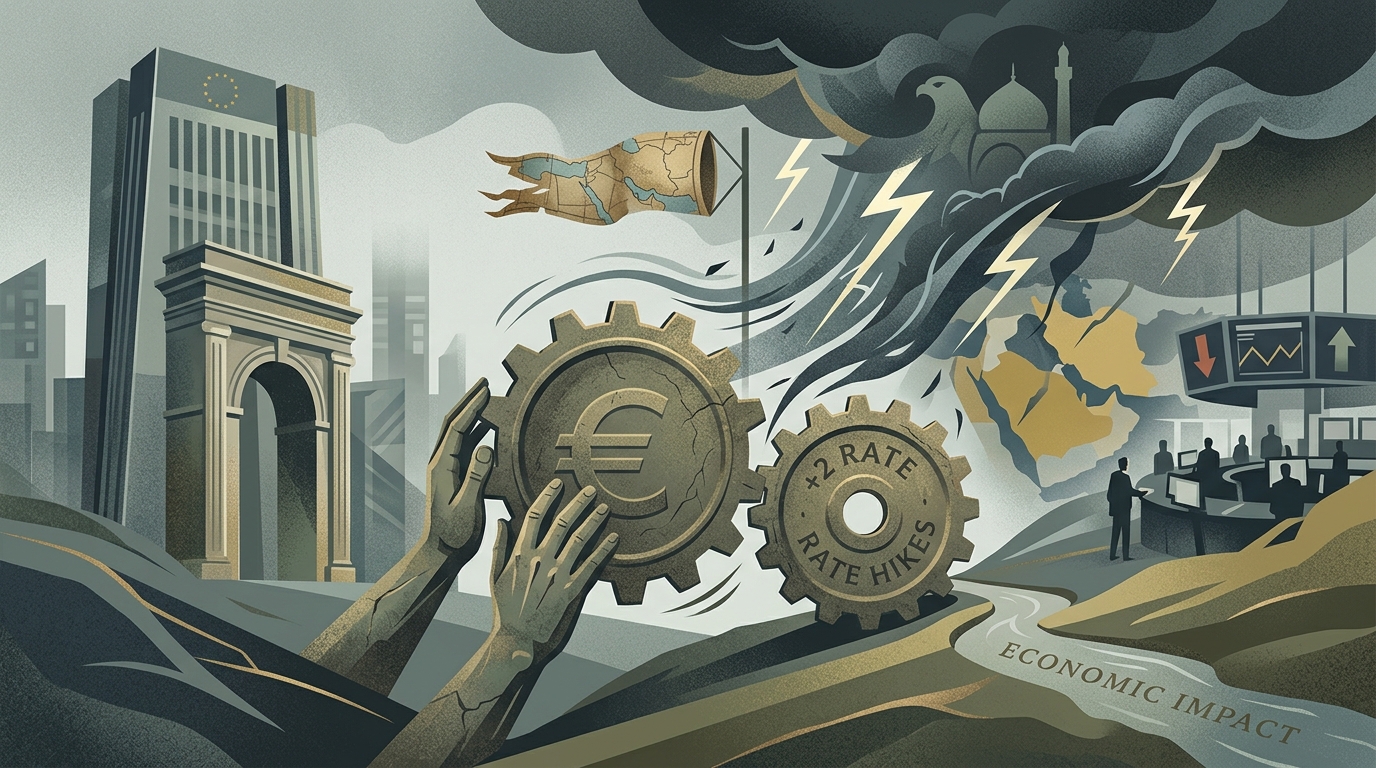
In a dramatic reversal of the economic narrative that prevailed at the beginning of the year, the European Central Bank (ECB) appears to be abandoning its path toward monetary easing, pivoting instead back to an aggressive policy of rate hikes. The news that the Frankfurt-based Governing Council is considering at least two interest rate increases within 2026, with the first potentially arriving in June, has sent ripples through international markets and sparked concern among Eurozone borrowers.
The Geopolitical Equation and Oil
The primary catalyst for this shift is none other than the escalating tension in the Middle East, centered on Iran. The conflict raging in the region has created a climate of uncertainty reminiscent of the oil crises of the 1970s. Brent crude prices have surged past $110 per barrel, fueling a new cycle of inflationary pressures that the ECB previously believed it had brought under control.
For Christine Lagarde and her colleagues, the risk of "secondary inflation" is now palpable. When energy costs rise so sharply, they are inevitably passed down through the supply chain into food prices and services. The ECB, whose primary constitutional mandate is to maintain price stability at 2%, cannot remain idle as inflation threatens to entrench itself once again above 4% or 5%.
The Internal Front in Frankfurt: Hawks vs. Doves
Within the halls of the Eurotower, the debate has intensified. The so-called "hawks," led by representatives from Germany’s Bundesbank and Northern European nations, are pushing for immediate action. They argue that delaying measures will force the Bank to implement even more painful hikes later, potentially triggering a deep recession. Conversely, the "doves" from the South harbor serious reservations. A new round of rate hikes will burden borrowing costs for countries with high public debt, such as Italy and Greece, while simultaneously strangling the Eurozone's already fragile growth.
- The first hike is expected to be in the magnitude of 25 basis points.
- The second hike will depend on the trajectory of natural gas prices in the autumn.
- The risk of stagflation is now the baseline scenario for many institutional analysts.
"We do not have the luxury of waiting. The ECB's credibility is at stake if we allow inflation expectations to become unanchored," said a senior bank official speaking on condition of anonymity.
Implications for the European Economy
The broader impact on the European economy could be profound. While the US Federal Reserve faces similar pressures, the Eurozone is far more vulnerable to energy shocks due to its dependence on external suppliers. Higher interest rates mean more expensive mortgages for millions of households and higher financing costs for businesses already struggling with post-pandemic debt. Furthermore, the European bond market is showing signs of stress, as the "spreads" between German Bunds and Southern European bonds begin to widen again.
The situation is further complicated by the fact that industrial giants like Germany are already flirting with stagnation. If the ECB overtightens in an attempt to curb energy-driven inflation, it risks pushing the continent’s industrial heartland into a prolonged slump. This delicate balancing act is perhaps the greatest challenge the ECB has faced since the sovereign debt crisis of the early 2010s.
Conclusion: A Perilous Path Ahead
The ECB is walking a tightrope. On one side, it must combat inflation fueled by geopolitical conflict; on the other, it must avoid a generalized credit crunch. The June decision will be of historical significance, signaling the start of a new era of uncertainty. In a world rapidly changing due to geopolitical shifts, monetary policy ceases to be a mere technocratic exercise and becomes a survival tool in a hostile global environment. The coming months will test the resilience of the Euro and the unity of the 20-nation bloc like never before.