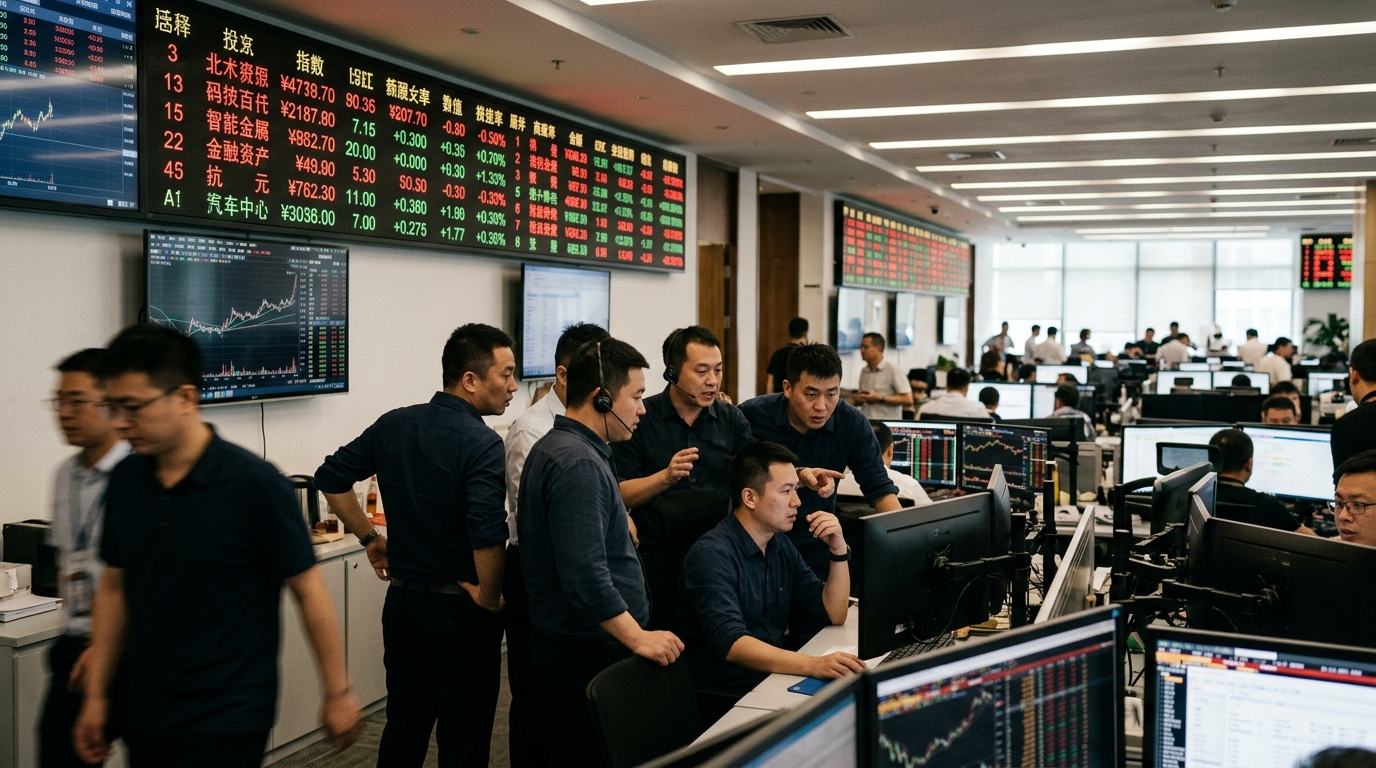
In the heart of Beijing, a company that was until recently considered an underdog in the Chinese tech scene, DeepSeek, has managed to send tremors through the foundations of domestic giants. With a strategy that blends technological efficiency with an almost cannibalistic pricing policy, DeepSeek is not merely competing with its rivals; it is forcing them to re-evaluate their entire business model in the age of generative AI.
The 'Race to the Bottom' Strategy
The recent release of the DeepSeek-V3 model was not just a technical display of prowess; it was an economic declaration of war. The company announced API pricing that is a fraction of the rates offered by Alibaba, Baidu, and ByteDance. This move triggered a domino effect across the Chinese market, where major players were forced to slash their prices by up to 90% within weeks just to maintain their market share.
However, DeepSeek holds a critical advantage: its model is exceptionally efficient in terms of computational resource usage. While its competitors often rely on massive, energy-hungry infrastructures, DeepSeek utilized innovative architectures—such as Mixture of Experts (MoE)—to achieve high performance with significantly lower training and operational costs. This allows it to maintain sustainable margins, or at least smaller losses, at price points that are ruinous for others.
The US Sanctions Factor
One cannot analyze the rise of DeepSeek without considering the geopolitical context. Strict US restrictions on the export of advanced semiconductors (such as NVIDIA’s H100 cards) to China have created a desperate hunger for compute power. In this environment, a company's ability to produce powerful AI models using less energy and older hardware is not just an advantage; it is a matter of national survival.
DeepSeek has demonstrated that Chinese engineering can bypass the physical barriers of sanctions through software optimization. Instead of trying to beat the West with raw compute power, they are focusing on clever architecture. This has alarmed not only Chinese competitors but also observers in Silicon Valley, as it proves that the 'chip barrier' might not be as absolute as previously anticipated.
Market Implications and the Future
The price war ignited by DeepSeek is leading to a rapid commoditization of Large Language Models (LLMs). When access to AI becomes this inexpensive, value shifts from the model itself to the applications and data surrounding it.
- Market Consolidation: Smaller startups lacking the capital of DeepSeek or the infrastructure of Alibaba face potential extinction.
- Accelerated Adoption: Low pricing allows traditional Chinese enterprises (manufacturing, retail) to integrate AI without massive financial risk.
- Margin Pressure: Investors are beginning to question when real profitability will emerge in an industry that seems to be economically self-destructing for the sake of dominance.
"DeepSeek isn't just selling technology; it's selling proof that efficiency is the new currency in the AI economy," says a Beijing-based market analyst.
In conclusion, DeepSeek has managed to turn a technological race into a war of attrition. In its quest to become the 'price-setter' of the Chinese market, it may force the entire global AI ecosystem to reconsider whether the multi-billion-dollar training strategy is still the only path to the top.