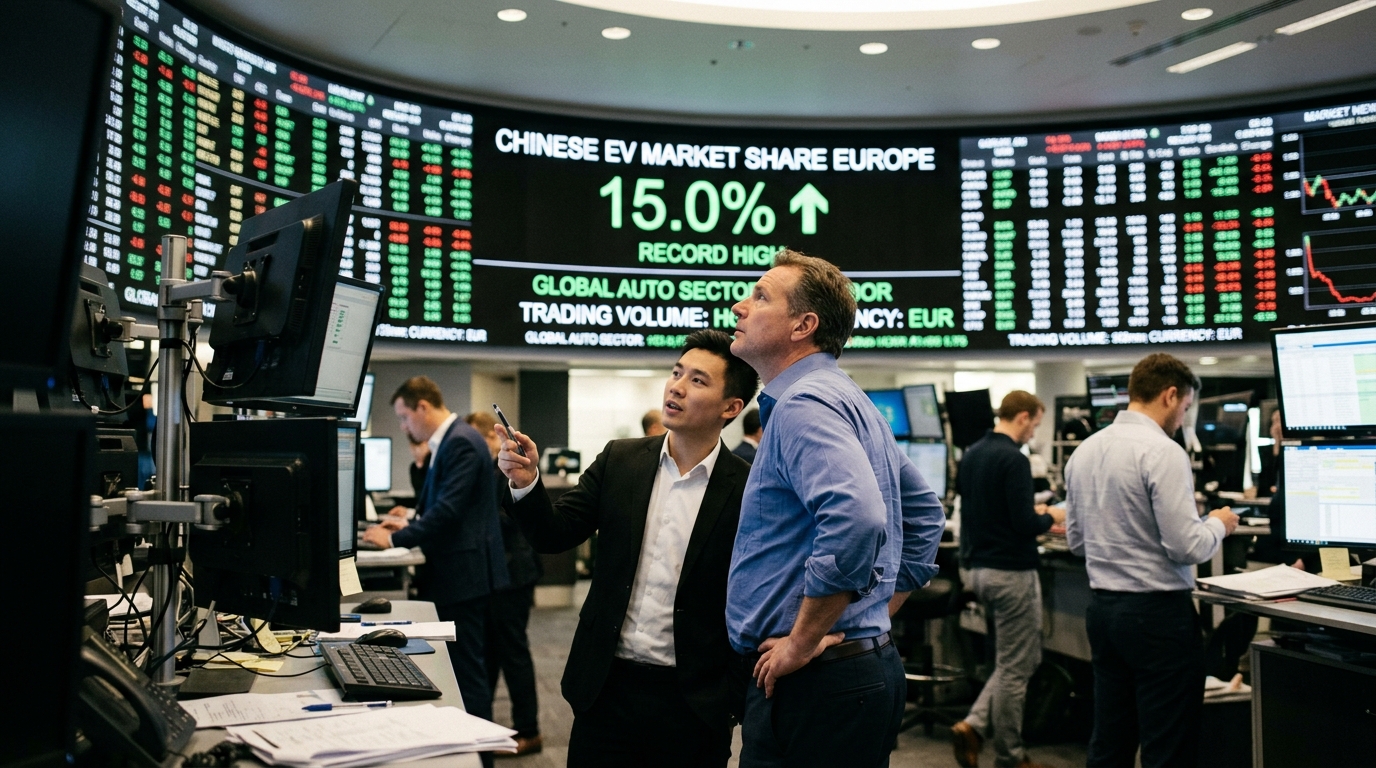
May 22, 2026, will likely be recorded in the annals of the global automotive industry as the moment the "silent invasion" became the established order. According to the latest market data, Chinese electric vehicle (EV) brands captured a historic 15% share of total sales in Europe last month. This milestone is not just a number; it is confirmation that the Old Continent, the cradle of the internal combustion engine, is now struggling to keep pace with the East in the age of electrification.
The Strategy of Vertical Integration
The advantage of companies like BYD, MG (owned by SAIC), and NIO no longer lies solely in low prices, but in their absolute dominance of the supply chain. While European manufacturers, such as the Volkswagen Group and Stellantis, are still scrambling to secure stable lithium supplies and build their own gigafactories, their Chinese competitors control the process from the mine to the steering wheel. This vertical integration allows Chinese firms to absorb the tariffs recently imposed by the European Union, keeping their prices at levels that the average European consumer finds irresistible.
Furthermore, technological superiority in software has become the new battlefield. Chinese vehicles in 2026 are no longer seen as "cheap alternatives." On the contrary, they offer infotainment and autonomous driving systems that often surpass those of German premium brands. Xiaomi and Huawei, entering the sector aggressively, have turned the car into a "smartphone on wheels," an approach that resonates deeply with younger generations of buyers in cities like Berlin, Paris, and Athens.
Political Reactions and the "Fortress Europe"
The reaction from Brussels has been defensive so far. The tariffs imposed on Chinese-made EVs were intended to "level the playing field," but the results are questionable. Many analysts point out that these tariffs act as a double-edged sword: on one hand, they protect jobs in European factories, but on the other, they slow down the green transition by increasing costs for the final consumer. Chinese companies, showing remarkable agility, have already begun announcing the construction of factories on European soil—in Hungary, Poland, and Spain—thereby bypassing trade barriers.
"We are not just facing a trade competitor, but a new industrial paradigm," says a leading market analyst. "Europe must decide whether it will become a closed, high-cost market or if it will dare a radical transformation to survive."
Consumer Psychology and the End of Taboos
Perhaps the most significant change is psychological. A decade ago, the idea of a Chinese car evoked skepticism regarding safety and quality. Today, five-star ratings in Euro NCAP tests are the norm for brands like Zeekr and XPeng. The reliability of their batteries and warranties exceeding seven years have eliminated buyer reservations. In reality, for many consumers squeezed by inflation, the dilemma is not "German or Chinese," but "Electric or nothing," and China is the only one providing affordable solutions.
As we head toward 2030, the milestone year for the ban on new internal combustion vehicles in the EU, the pressure on traditional manufacturers will only intensify. If Europe fails to reduce its production costs through innovation rather than just protectionism, the 15% share of May 2026 will soon look like a modest figure compared to what lies ahead.