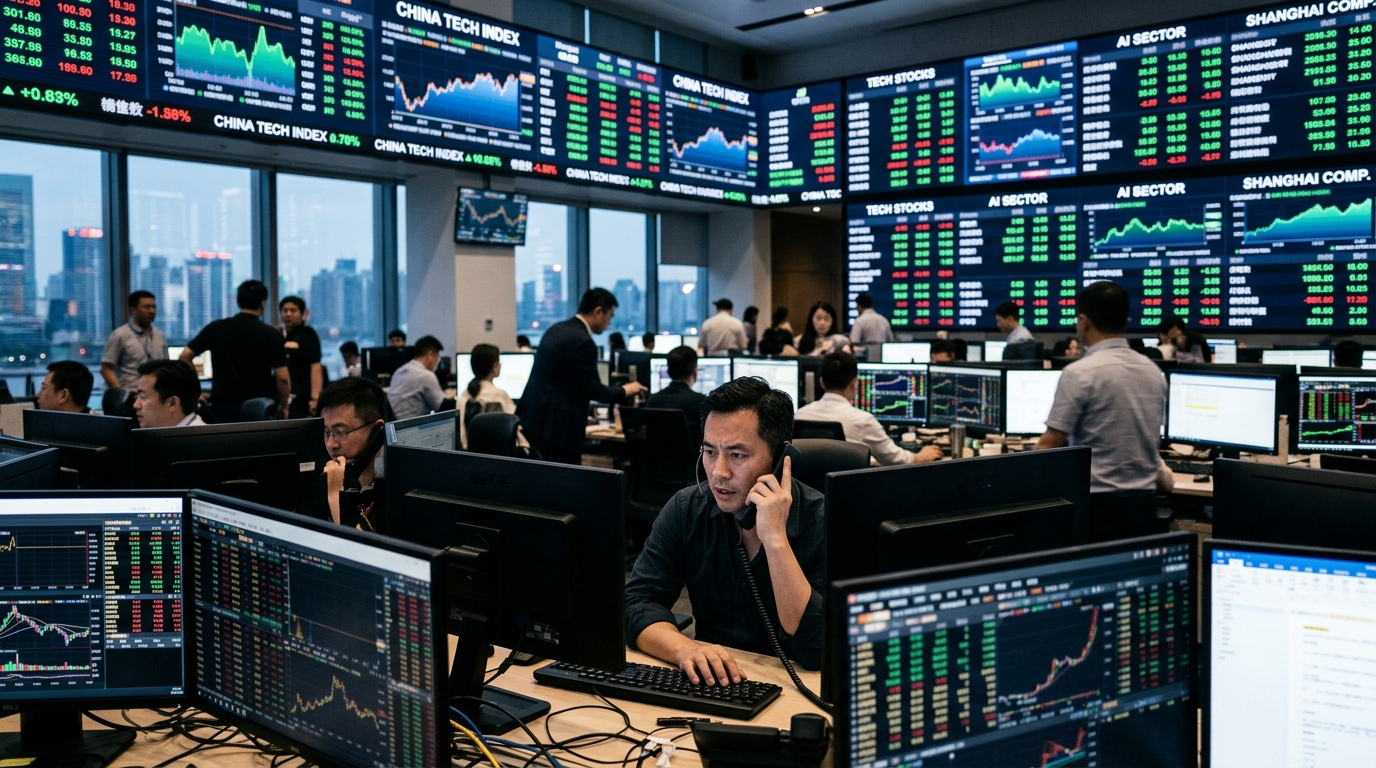
The global artificial intelligence race is entering a new, more aggressive phase where power is no longer measured solely by parameters and raw compute, but by the cost per token. In China, a quiet revolution is underway as domestic tech giants have unleashed a relentless price war, making access to sophisticated Large Language Models (LLMs) cheaper than ever. This shift toward a "token economy" is not only changing how businesses adopt AI but is also creating a new generation of winners in the Chinese stock market, upending traditional power balances.
The "Scorched Earth" Pricing Strategy
While OpenAI and Google focus on achieving Artificial General Intelligence (AGI), Chinese firms like Alibaba, Tencent, and Baidu have adopted a different approach: the commoditization of intelligence. In recent months, we have witnessed price cuts of 90% or even 99% in some cases for API access to their flagship models. ByteDance, the parent company of TikTok, shook the market with its Doubao model, offering prices that make AI integration almost free for startups and developers.
This strategy is far from accidental. The goal is ecosystem dominance. In China, the AI market is no longer viewed as a race for the "smartest" model, but as a battle for who can provide the most reliable infrastructure at the lowest price. This approach mirrors the rise of e-commerce in China two decades ago, where dominance was achieved through scale and razor-thin margins. The companies that can afford this period of loss-making, investing billions in data centers, are the ones that will control the data flows of the future.
Identifying the New Market Winners
The token economy revolution has sparked a new wave of investor interest. It is no longer just the "Big Tech" incumbents reaping the rewards. Investors are now pivoting toward companies that provide the essential infrastructure for this low-cost AI era. Specialized semiconductor manufacturers, cloud service providers, and power management firms for data centers are seeing their valuations soar. The token economy demands extreme efficiency, favoring those who can optimize software to run on less powerful hardware—a necessity given U.S. export restrictions on high-end chips.
Furthermore, we are seeing the rise of "AI application factories." These are companies that do not develop their own underlying models but instead leverage cheap tokens to build specialized applications for manufacturing, agriculture, and customer service. These businesses now operate with significantly lower overhead, improving their profit margins and making them highly attractive to institutional investors. The market is beginning to distinguish between the "shovel-sellers" and the "gold miners" in the digital AI age.
Geopolitical Implications and Global Reach
Despite U.S. efforts to curtail China’s technological ascent, the low cost of Chinese AI models makes them exceptionally attractive to emerging economies. Across Southeast Asia, the Middle East, and Africa, developers are increasingly turning to Chinese APIs. The choice is often not ideological but purely economic: when you can get 80% of GPT-4’s performance at 1/10th of the cost, the business decision is clear.
This "price diplomacy" allows China to build a global network of dependence on its technological infrastructure. The new market winners are those capable of exporting this expertise efficiently. The Chinese government, for its part, supports this push through subsidies and favorable regulations, viewing AI as the key to the next phase of domestic economic growth. However, the question remains: is this low-price model sustainable in the long run, or are we heading toward a bubble that will burst when venture capital runs dry?
Challenges and the Road Ahead
Despite the optimism, significant hurdles remain. Restrictions on accessing Nvidia’s top-tier processors force Chinese companies to be exceptionally creative in code optimization. While this can be an advantage, it also sets a ceiling on model capabilities. Moreover, internal competition is so fierce that many startups risk burning out before they can reach profitability.
In conclusion, China’s token economy revolution is reshaping the global tech landscape. The new winners are not necessarily those with the flashiest marketing, but those who can transform artificial intelligence into a cheap, accessible, and ubiquitous utility. For investors, the challenge lies in identifying the companies with the capital depth and technical ingenuity to survive the price wars and dominate the next era of the digital economy.