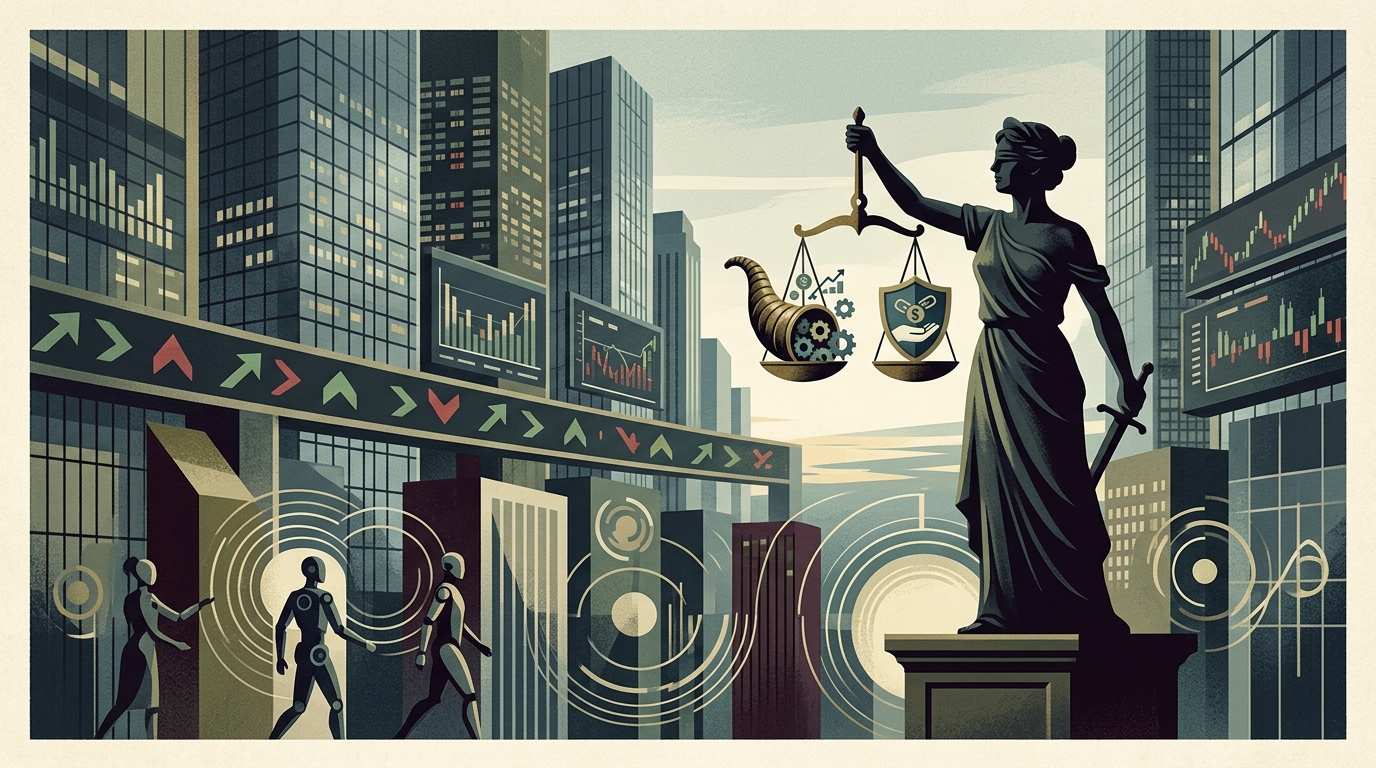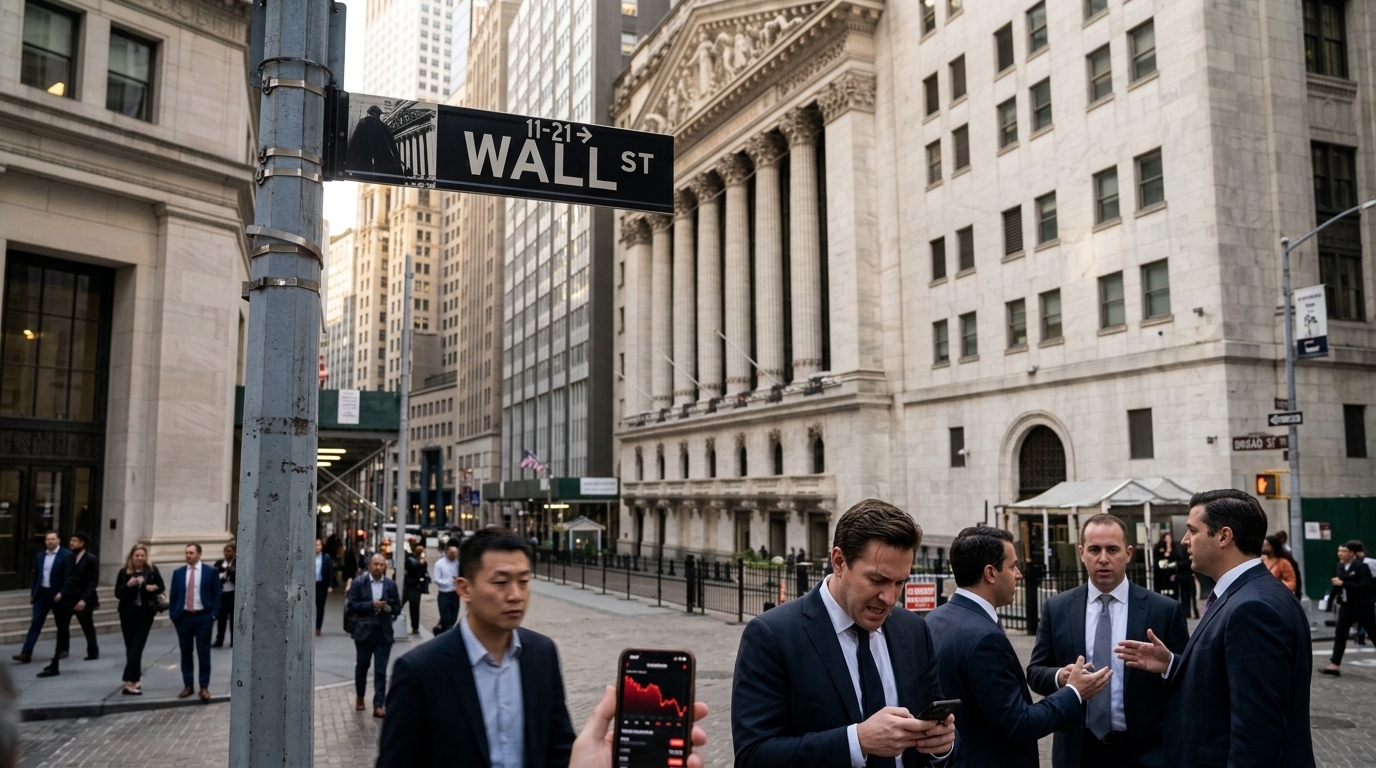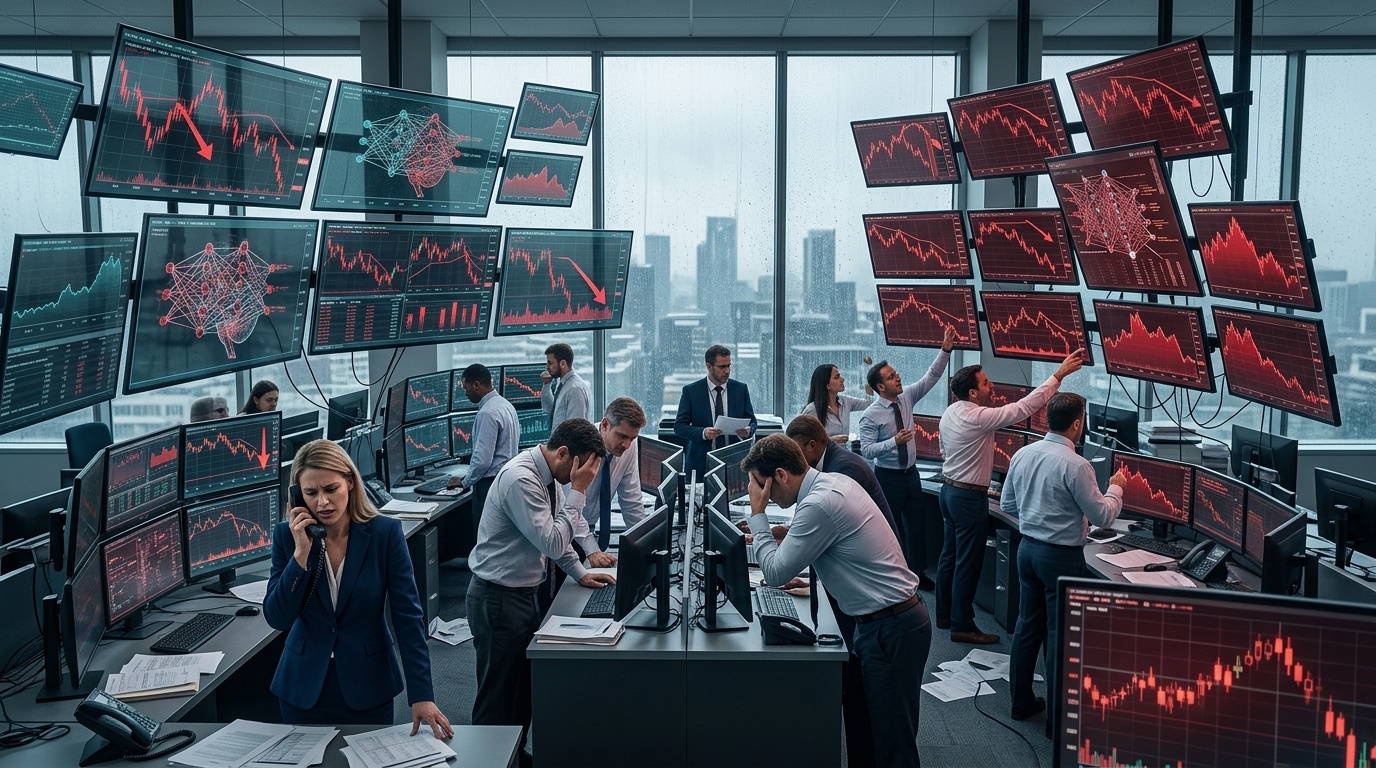
The history of financial markets is punctuated by cycles of euphoria that inevitably lead to sharp corrections. This week is shaping up to be the moment when the Artificial Intelligence 'bubble'—or at least its excessive optimism—collided with the cold reality of the balance sheet. Following a spectacular first quarter of 2026, where the S&P 500 and Nasdaq reached consecutive record highs, this 'black week' serves as a stark reminder that no rally is linear, especially one built on future promises that take time to translate into immediate profits.
The Dethroning of Semiconductors
Semiconductor manufacturers, the 'standard-bearers' of the recent bull market, are now facing the most intense pressure. Giants like Nvidia, Broadcom, and AMD have seen their market capitalizations shrink by billions of dollars within a few trading sessions. The root cause isn't a lack of demand—data centers are still ravenous for GPUs—but rather the realization that current valuations priced in growth that borders on the statistically impossible. When a stock trades at earnings multiples that require decades of uninterrupted dominance, any sign of a slowdown or geopolitical friction acts as a catalyst for mass liquidations.
Analysts suggest the market has entered a phase of 'expectation fatigue.' Investors are no longer satisfied with vague announcements about 'AI integration.' They are demanding concrete evidence of Return on Investment (ROI). The massive Capital Expenditure (CapEx) from tech titans like Microsoft, Alphabet, and Amazon to build AI infrastructure is starting to cause jitters, as the revenue generated from these investments is not yet scaling at the same pace.
The Ghost of 2000 and Geopolitical Headwinds
Comparisons to the dot-com bubble of 2000 are inevitable, if perhaps a bit hyperbolic. Unlike 2000, today's tech leaders possess massive cash reserves and proven profitability. However, market psychology remains fragile. Recent export restrictions on advanced chips to China, combined with uncertainty regarding the Federal Reserve's interest rate trajectory, have created a volatile cocktail. The market appears to be 'punishing' overexposure to AI, rotating capital toward defensive sectors or traditional value stocks that were neglected during the hype cycle.
- The Nasdaq's decline reflects fears of overvaluation across the tech sector.
- Geopolitical tensions directly impact the semiconductor supply chain and future earnings.
- Fed policy and interest rate expectations remain the primary governors of market liquidity.
- Investors are shifting from 'growth' to 'value,' prioritizing safety over speculation.
"We are not witnessing the end of Artificial Intelligence, but rather the end of investor naivety," remarked a senior strategist at a major investment bank.
The Road Ahead: Correction or Collapse?
Despite the grim outlook of the past few days, many experts view this correction as a healthy development. A market that only moves upward tends to accumulate systemic risks. Removing the 'speculative froth' allows companies with genuine value and sustainable business models to stand out. Artificial Intelligence remains a transformative technology, but its integration into the global economy is a marathon, not a sprint. The investors who survive the current 'hangover' will be those capable of distinguishing between the noise of the ticker tape and substantive technological progress.